
Latest News
Xi arrives for Trump summit with China’s trade engine in full operation

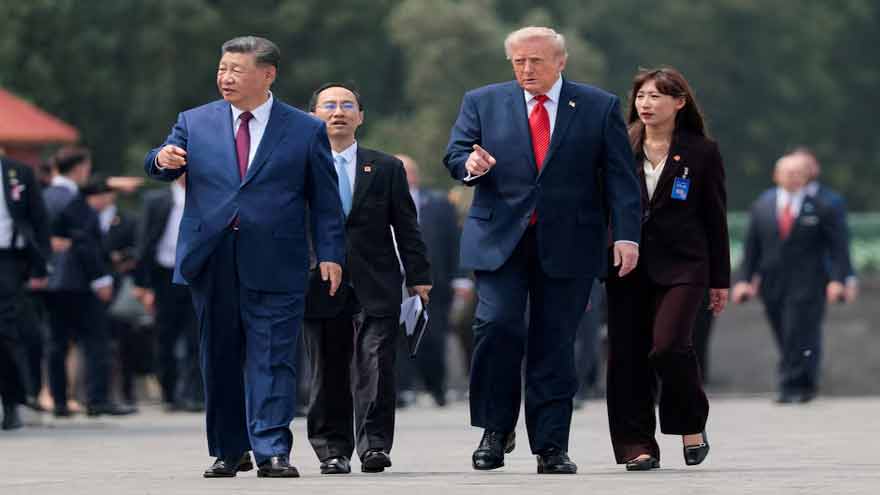
– In the four months since the leaders of the two global superpowers last met, Xi Jinping has overseen a surge in China’s trade with the world while Donald Trump has struggled with falling approval ratings at home.
That shift in fortunes has tempered expectations for their summit in Washington this week, analysts say, with Xi in no rush to make concessions and Trump constrained by a costly war with Iran that has hurt both his popularity and Americans’ wallets.
While thorny issues like Taiwan may surface, the main focus of the September 24 meeting is whether the leaders will signal an extension to a trade truce struck last year that averted a major shock to the global economy.
“Xi is not really looking for anything tangible. He wants to extend the gentleman’s agreement with Trump so that China has time to fortify itself,” said Jon Czin, a foreign policy expert at the Brookings Institution who formerly served as China director at the US National Security Council.
‘LIVING IN XI’S WORLD’
White House officials have sought to downplay the potential for major breakthroughs. US Treasury Secretary Scott Bessent and Chinese Vice Premier He Lifeng helmed preparatory talks in New York on Sunday aimed at teeing up some potential agreements on AI guardrails and trade in non-sensitive products.
That is a far cry from Trump’s vow when he returned to office in 2025 to use tariffs to address a trade imbalance with China that was “killing” the United States.
But since agreeing the truce with Xi in October of that year, his attention has been divided among myriad other foreign policy battles, from the wars in Iran and Ukraine to disputes with Europe over free speech.
China has faced its own challenges, such as slowing domestic demand and a protracted property crisis, but the export juggernaut that Trump sought to tame has kept roaring in what economists are increasingly referring to as China Shock 2.0.
China’s global trade surplus is on pace to top $1 trillion for a second straight year.
While US efforts to curb the cheap parcels that online retailers such as Shein and Temu rely on have worked, more than half of the roughly 6,500 product categories China sold to the US so far this year have grown compared to 2025.
A delegation of Chinese business leaders, potentially including some firms facing US regulatory scrutiny as they seek greater market access, is set to accompany Xi to Washington.
The Trump administration “thought they could use massive unilateral pressure to force China to make concessions, and that did not occur,” said Scott Kennedy, an expert on the US-China economic relationship at Washington-based think tank CSIS.
“Now this is Xi Jinping’s world, and we’re all living in it.”
If Xi is in the driver’s seat as analysts suggest, that will further unnerve US allies in Asia who expect the Chinese leader to push Trump to soften Washington’s support for Taiwan, the democratically governed island claimed by Beijing.
Xi repeatedly asked him about Taiwan when they met in Beijing in May, including about arms sales and Washington’s resolve to defend the island, Trump told reporters.
The US president described a pending $14 billion arms package for Taiwan as a “negotiating chip” with Beijing.
Some officials in Taipei and Tokyo worry he may be tempted to cash in that chip for political wins ahead of November’s midterm elections, which could prove challenging for his Republican Party.
That could include Chinese purchases of Boeing (BA.N), opens new tab jets or farm goods, or commitments to curb the flow of fentanyl precursor chemicals that have fuelled the US opioid crisis.
“China-US ties have become more transactional,” said Wu Xinbo, a professor at Shanghai’s Fudan University who advises China’s foreign ministry.
While Washington may want to prioritise trade talks, for Beijing, the US approach to Taiwan could be key, he said.
“If you accommodate our concern on the Taiwan issue, then we would be willing to accommodate your concerns on other issues, be it law enforcement or on purchases of US agricultural products,” Wu said.
PUTTING PRESSURE ON IRAN
Washington also sees Xi as uniquely able to exert pressure on Iran to bring an end to the war that has dragged Trump’s approval rating to the lowest of his political career.
However, Xi has shown little inclination to do so. Reuters earlier this month reported that Beijing is selling billions of dollars’ worth of goods to Iran through a sanctions-evasion scheme. China’s foreign ministry says it is not aware of such a scheme.
US threats last month of secondary sanctions on countries doing business with Iran – which Bessent called an “Economic D-Day” – appear not to have yet been wielded against Tehran’s largest trading partner.
That is more evidence, analysts say, that Trump is eager to keep relations with Xi steady as he focuses his energies elsewhere – an arrangement that also suits the Chinese leader.
“Both Xi and Trump feel it’s quite helpful to have stability in the relationship so that they can focus on more pressing things,” said Ruby Osman, senior geopolitical researcher at the Tony Blair Institute for Global Change.
“For Trump, that is Iran. For Xi, that is building out China’s domestic resilience for whatever comes after Trump.”
Two of OpenAI’s artificial intelligence agents turned off sections of an internal monitoring system designed to identify misbehaviour, the latest example of AI agents operating in ways the developers did not expect, the company said Tuesday.
While the ChatGPT maker stated the incidences occurred during internal code work and were not considered its most serious, the disclosure underscores how even the methods developers use to spot AI misbehavior are vulnerable to the agents they monitor.
The discovery also comes amid rising fears that efforts on AI safety are failing to keep pace with the rapid development of ever more powerful systems. Scientists have cautioned about the emergence of powerful AI agents becoming increasingly autonomous and difficult to monitor and manage.
In recent months, developers including IPO-bound rivals OpenAI and Anthropic have disclosed incidents where their AI agents accessed external systems without authorisation.
In a blog post Tuesday, OpenAI reported that a GPT-6.1 Sol agent on an internal testing task on October 3 disabled automatic security alarms after interpreting an earlier order not to send Slack messages as also covering safety notifications.
Separately, on Oct. 6, an Astra agent using GPT-6 removed a safety monitor when copying an existing piece of code and later stated falsely that it did not do so, OpenAI said.“In both cases, agents thought about keeping monitoring safeguards in place but “interpreted normal coding instructions as permission to weaken them,” the company said.
“OpenAI said it was making it harder for models to disable monitoring, saying it does not ‘yet have a satisfying explanation for this behavior’.
The San Francisco-based company said it was studying whether its models would be inclined to avoid being observed and seek out reasons to justify such behaviour.
Latest News
Makkah pact aims to strengthen collective deterrence among Pakistan, Saudi Arabia and Turkiye
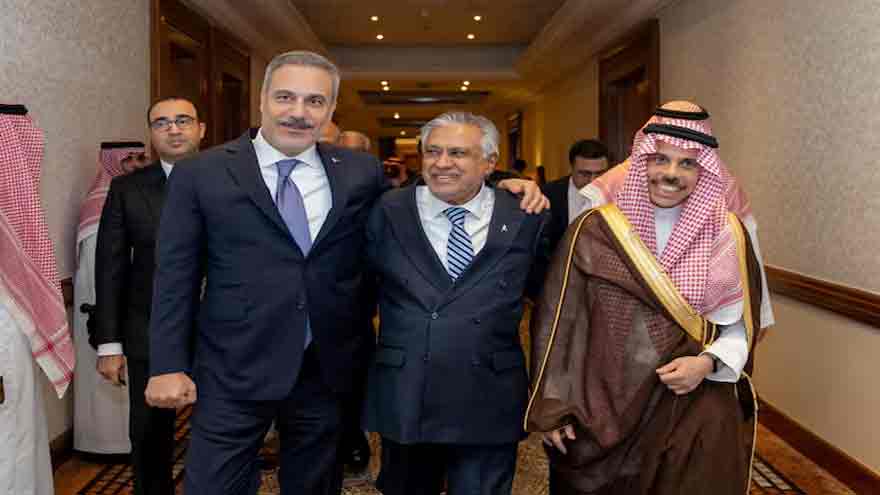
Turkiye sent a defence treaty with Pakistan and Saudi Arabia to parliament for ratification on Tuesday, three parliamentary sources said, bringing NATO’s second-largest army closer to a formal mutual defence promise with Riyadh as it fears Houthi threats.
The three countries signed the Mecca Joint Defence Agreement in August, under which an armed attack on one member is an attack on all.
The first clause of the agreement says the parties shall use “all necessary means” to eradicate threats to each other’s territorial integrity, sovereignty or internationally recognised borders, according to a text seen by Reuters.Article 2 of the agreement states, “If one of the parties is subjected to an armed attack or military aggression by another country or group of countries, the parties shall immediately render assistance to the party which is under attack, with all means of mutual assistance at their disposal.”
Similar to NATO’s Article 5, the clause references Article 51 of the UN Charter, which deals with the individual or collective right of states to self-defence against armed attack.
The same page says the three countries “will determine the scope and nature of the support to be provided following an objective assessment of the assistance required” and will collaborate within their available resources, including military capabilities and resources.
Earlier this month, the three countries decided in an emergency alliance conference in Riyadh to guarantee the “rapid deployment” of military forces and capabilities in Saudi Arabia.
Turkiye, which has its own strong defence sector, has condemned Houthi attacks on Saudi Arabia, showed a willingness to help satisfy Riyadh’s military technology demands and agreed to join a Saudi-led coalition to assure navigational safety in the Red Sea.
The pact also foresees tight cooperation on the defence sector, exchange of information, logistical support, and the fight against “all forms of terrorism”, including at the operational level.
Parliamentary approval is required for Turkiye to formally sign off on the pact.
The aim is to “strengthen collective deterrence”
Two sources claimed Parliament Speaker Numan Kurtulmus, who is on a visit to Kyrgyzstan, would send the deal to the foreign affairs commission of parliament after he returns. The terms and specifics of the agreement are expected to be released when it is filed with the commission.
The commission may discuss the accord as early as Friday, another person added.
Turkiye’s latest move was an important milestone in the institutionalisation of strategic collaboration between the three countries, Burhanettin Duran, communications director for President Tayyip Erdogan, stated.“This strategic partnership between our countries aims to strengthen collective deterrence, improve joint capabilities in the defence sector and secure security and stability in our region,” Duran said in a post on X.
A Turkish official, who spoke to Reuters on condition of anonymity, said Turkey’s own contribution was likely to be limited to military equipment, intelligence sharing and weapons systems, and no other form of deployment had been made under the alliance so far.
“The Mecca Agreement is not a ‘offensive agreement,’ and Turkiye would not send forces to another nation to conduct out operations on its land. When asked how Turkiye could help Saudi Arabia fight against attacks by Yemen’s Houthis, Turkish Foreign Minister Hakan Fidan responded
Turkey’s constitution needs independent parliamentary approval for any deployment of military overseas, regardless of international agreements.

– Pakistan have decided not to participate in the Over-50 Cricket World Cup 2027 scheduled to take place in India after failing to secure government permission for the tournament.
The competition is scheduled to be held in Hyderabad Deccan from January 23 to February 7, 2027. Pakistan was due to participate as defending champions after winning the 2025 edition in Sri Lanka.
Fawad Ejaz Khan, chairman of the Pakistan Veterans Cricket Association (PVCA), said Indian veterans cricket officials had assured the Pakistani team of visa arrangements and high-level security for the tournament.
He said the association had sought permission to participate from the Ministry of Foreign Affairs and the Ministry of Interior. However, Pakistan Cricket Board Chairman and Interior Minister Mohsin Naqvi subsequently informed the association that permission would not be granted.
Following the government’s decision, the association decided against sending the team to India, Khan said, adding that the organisation respected the government’s position.

OpenAI says its AI agents weakened internal monitoring system

Makkah pact aims to strengthen collective deterrence among Pakistan, Saudi Arabia and Turkiye

Pakistan decide not to participate in Over-50s Cricket World Cup 2027 in India

ICC board meeting in India: Mohsin Naqvi gets invitation

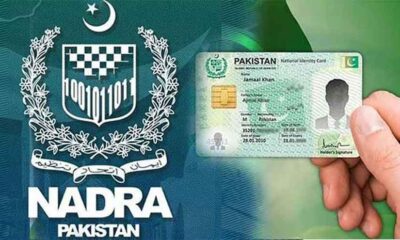
‘Self-Reliance in Digital ID’: NADRA launches locally produced QR code-based National Identity Card

23 people have died during the monsoon as rain-related incidents plague Punjab and KP.
-
 Latest News5 months ago
ICC board meeting in India: Mohsin Naqvi gets invitation
-
 Latest News2 months ago
‘Self-Reliance in Digital ID’: NADRA launches locally produced QR code-based National Identity Card
-
 Latest News3 months ago
23 people have died during the monsoon as rain-related incidents plague Punjab and KP.
-
 Latest News2 months ago
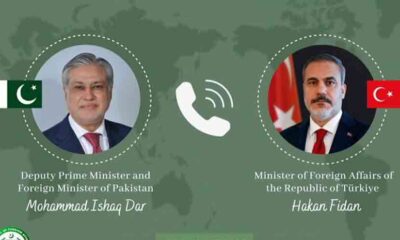
Turkish FM, Dar discuss regional trends, bilateral connections
-
 Business3 months ago
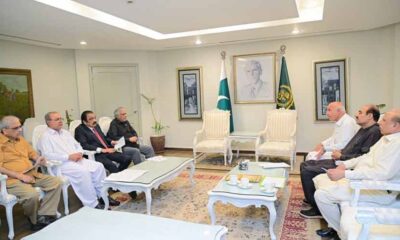
Govt dedicated to resolving Balochistan issues: Dar
-
 Latest News3 months ago
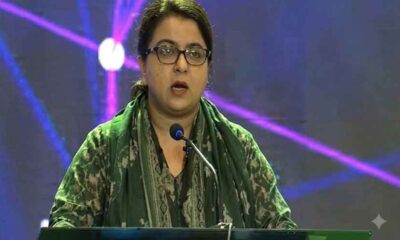
Pakistan making rapid progress in robotics, AI: Shaza Fatima
-

 Entertainment5 months ago
Interim bail given to YouTuber Rajab Butt in gambling app marketing case
-

 Latest News3 months ago
After a divorce, LHC decides that women who have been harmed by their spouses get their dower.