
Business
Yen slips ahead of central bank bonanza, dollar firms on tech rebound

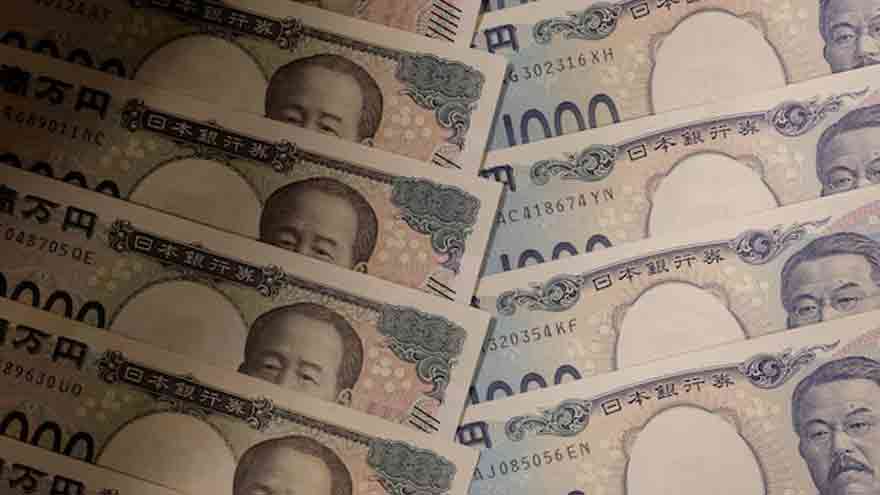
The Japanese yen eased against the US dollar on Tuesday, further eroding last week’s safe-haven gains, underpinned by a risk-on mood and a weaker euro ahead of key central bank meetings this week that will influence the global rates outlook.
The yen was 0.16% weaker at 157.73 per dollar, inching further away from the one-month high it touched last week ahead of the Bank of Japan policy decision later this week. The yen had lost ground on Monday too.
The BOJ is set to keep interest rates steady at 1.25% in a two-day meeting concluding on Friday, but signal its readiness to continue raising borrowing costs on mounting price pressures.
A key gauge of Japan’s service-sector inflation rose 3.7% in September from a year earlier, data showed on Tuesday, a sign of increasing price pressures that will likely keep the central bank on track for further interest rate hikes.
“We expect the BOJ will conclude that the underlying rate of consumer price inflation is at a level generally consistent with the 2% price stability target,” analysts at MUFG said in a note.
However, simply touching the target once is not enough, the analysts said, adding that the BOJ will now shift from a focus on the downside risks to inflation to a stance of monitoring risks in both directions.
The yen was among the best-performing major currencies last week, as AI jitters in the equity market spurred a haven rush into the currency.
Markets price slightly better-than-even odds of a December BOJ hike, so there is plenty of room for a rebound in the yen should Governor Ueda strike a hawkish note, said Ebury analysts in a note.
“We still favour another hike at the last meeting of the year, though whether the BOJ will be prepared to commit to that just yet is unclear.”
Apart from the BOJ, four other major central banks will announce policy decisions this week. The BOJ’s meeting follows that of the Fed, which is seen skipping a hike at its two-day meeting concluding on Wednesday.
The video player is currently playing an ad. You can skip the ad in 5 sec with a mouse or keyboard
The European Central Bank is also set to keep rates unchanged at 2.5% on Thursday. New Zealand’s and Canada’s central banks are expected to raise rates this week.
DOLLAR FIRMS ON RISK-APPETITE REVIVAL
The dollar index held steady near a one-week high on Tuesday at 102.04 as a tech-led rebound on Wall Street revived appetite for risk, while investors await megacap earnings and the US midterm elections.
Risk appetite returned overnight after Anthropic’s IPO filing and Meta’s (META.O), opens new tab $95 billion equity plan rekindled the artificial intelligence trade.
The dollar was also underpinned by a weaker euro , which fell to a near two-week low against the greenback as worries over France’s fiscal health piled pressure on the single currency. The euro last fetched $1.1165, down about 1.4% this month.
A selloff in French government bonds that drove the country’s debt-risk premium to its highest since the 2011 sovereign debt crisis has rekindled concerns about financial stress across the euro zone.
The Brazilian real stabilised after it fell sharply against the US dollar after President Luiz Inacio Lula da Silva won a historic fourth term on Sunday against Senator Flavio Bolsonaro, the eldest son of former President Jair Bolsonaro.
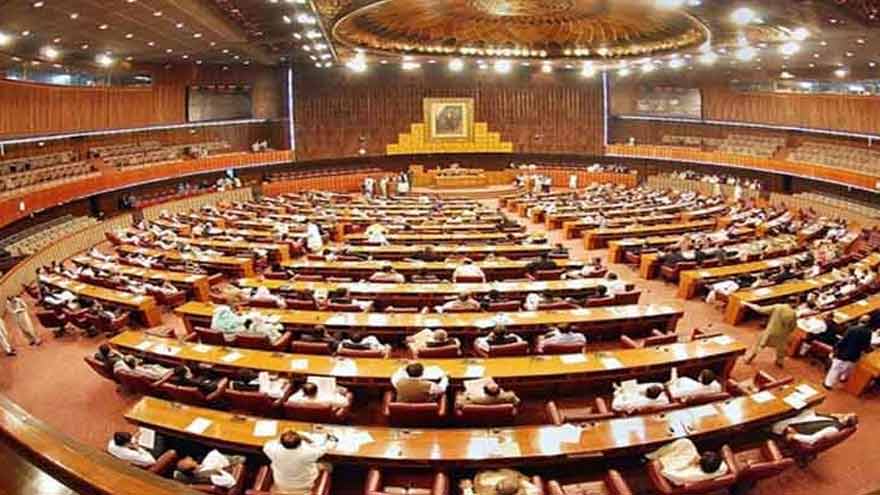
– Prime Minister Shehbaz Sharif has not yet forwarded the summary to the president for convening the National Assembly session, with the sitting now likely to be held next week.
According to parliamentary sources, the Ministry of Parliamentary Affairs had sent a summary to the prime minister seeking to convene the National Assembly session on Monday at 5pm.
Sources said a decision to reschedule the session was taken during a meeting between the president and the prime minister.
Parliamentary sources added that the National Assembly session is now expected to be summoned next week.
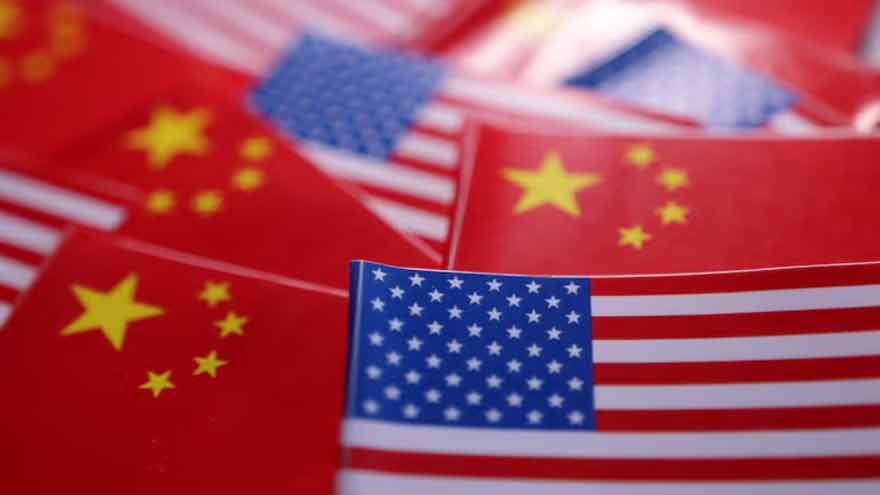
China and the United States discussed tariff cuts, agricultural trade and other issues at their first trade council meeting on Friday, China’s Commerce Ministry said on Saturday, days ahead of a leaders’ meeting in Shenzhen next week.
The Ministry of Commerce said: “The two sides had open, in-depth and constructive exchanges on issues of common concern, such as the implementation of the results of the previous China-US economic and trade consultations, including tariffs, the “US$30 billion for US$30 billion” mutually beneficial tax reduction regime, and agricultural trade.” It did not disclose whether any agreement had been reached. The Ministry of Commerce added that both sides will continue to use the council to resolve trade issues, expand cooperation and reduce outstanding issues. After a summit between President Xi Jinping and President Trump in Washington in September, the two sides proposed a $60 billion plan to cut reciprocal tariffs that would cover $17 billion worth of Chinese imports of U.S. agricultural products by 2024, but the plan has not yet been finalized.
A Reuters analysis of customs data earlier this month showed that China’s purchases of U.S. agricultural products, excluding soybeans, will hit a seven-year low this year, despite an agreement for $17 billion a year through 2028, underscoring lingering uncertainty over the deal. Beijing has repeatedly called on Washington to implement a $60 billion tariff reduction deal, saying it is a prerequisite for increased purchases of US agricultural products.
The White House said Trump will meet with Xi Jinping on Thursday on the sidelines of the Asia-Pacific Economic Cooperation Forum in Shenzhen.

The International Monetary Fund (IMF) has reiterated its call for Pakistan to phase out its fuel subsidy program, stressing that any future government support to deal with rising oil prices must be limited, temporary and within the framework of the current fiscal year’s budget.
An IMF spokesman told Arab News that existing fuel subsidy programs should be phased out because of their broad reach. If international oil prices unexpectedly rise, any further assistance should be directed to deserving groups through established social security programs and kept within the fiscal year 2027 budget, the spokesman said.
Pakistan launched a fuel subsidy program in September to protect low-income motorists from rising oil prices amid the US-Iran war. Under the program, motorcycle and rickshaw users get weekly petrol vouchers worth Rs 500 ($1.80), while owners of vehicles with an engine capacity of up to 800 cc get a discount of Rs 100 ($0.36) per liter, subject to a limit of 10 liters every 10 days.
The IMF had also called for an immediate end to the program in a statement last month, citing its high costs and wide coverage. Pakistan is trying to transition from economic stability to growth under the International Monetary Fund’s $7 billion Enhanced Funds Program (EFF). The spokesman said that under the plan, Pakistani authorities are committed to bringing domestic oil prices in line with international oil prices, while protecting the most vulnerable sections of society. Pakistan’s Finance Minister Mohammad Aurangzeb, Finance Minister Bilal Azhar Kayani and Finance Adviser Khurram Shehzad did not respond to Arab News’ requests for comment on the IMF’s latest position.
Like several other countries, Pakistan raised oil prices after the US-Israeli war on Iran that began in February. Petrol prices hit a record high of Rs 458.41 per liter on April 3, but gradually eased to Rs 330 per liter as tensions eased in the region.
great economic pressure
A representative of the International Monetary Fund said that the current conflict in the Middle East is a major challenge for Pakistan, which depends on oil and gas imports from the Persian Gulf countries. Disruption of international shipping routes, especially in the strategically important Strait of Hormuz following Iran’s blockade, has raised concerns about economic growth in developing countries, including Pakistan.
International Monetary Fund officials said rising international oil prices have added to domestic inflationary pressures. The IMF said Pakistan’s policy priorities should focus on maintaining macroeconomic stability and implementing reforms to strengthen public finances, improve competition, increase productivity and competitiveness, and strengthen social protection and human capital.
It also emphasized the need for reforms in state-owned enterprises, improved public service delivery and greater viability of the energy sector. Last month, the IMF reached a staff-level agreement with Pakistan after talks with officials in Karachi and Islamabad. The contract must be approved by the fund’s management. Once approved, Pakistan is expected to receive approximately $1 billion from the EFF program and an additional $210 million through the Resilience and Sustainability Fund (RSF), bringing the total expenditure of the two programs to approximately $5.7 billion.
An IMF spokesman said an executive meeting to review Pakistan’s EFF and RSF review and the 2026 Article IV consultation would be held in December, subject to program requirements.

NA sesssion likely to be rescheduled for next week

China, US discuss tariffs, farm trade ahead of Xi-Trump meeting

KP healthcare system faces acute shortage of doctors, hospital beds

ICC board meeting in India: Mohsin Naqvi gets invitation

‘Self-Reliance in Digital ID’: NADRA launches locally produced QR code-based National Identity Card

23 people have died during the monsoon as rain-related incidents plague Punjab and KP.
-
 Latest News6 months ago
ICC board meeting in India: Mohsin Naqvi gets invitation
-
 Latest News3 months ago
‘Self-Reliance in Digital ID’: NADRA launches locally produced QR code-based National Identity Card
-
 Latest News4 months ago
23 people have died during the monsoon as rain-related incidents plague Punjab and KP.
-
 Latest News3 months ago
Turkish FM, Dar discuss regional trends, bilateral connections
-
 Business4 months ago
Govt dedicated to resolving Balochistan issues: Dar
-

 Latest News4 months ago
Pakistan making rapid progress in robotics, AI: Shaza Fatima
-

 Entertainment6 months ago
Interim bail given to YouTuber Rajab Butt in gambling app marketing case
-
 Latest News4 months ago
After a divorce, LHC decides that women who have been harmed by their spouses get their dower.