
Latest News
Zelenskyy Meets New British Leader Over Drone Projects, Missile Defense For Kyiv

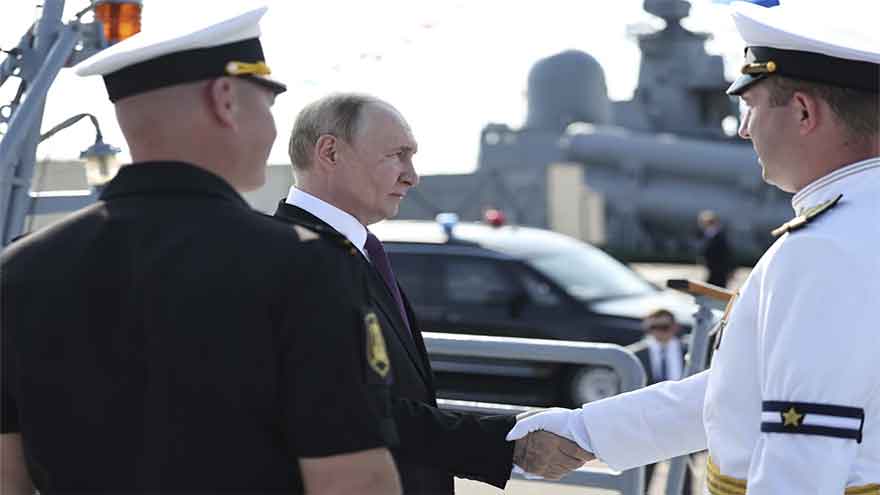
Ukrainian President Volodymyr Zelenskyy and new U.K. Prime Minister Andy Burnham met Monday at a British naval base and discussed joint drone projects and Ukraine’s urgent need for ballistic missile interceptors to counter Russian attacks.
Zelenskyy’s visit was the first by a foreign leader since Burnham took office a week ago, and the prime minister said it signaled the U.K.’s “unwavering” support for Kyiv to defend itself against Russia’s 4-year-old, full-scale invasion.
His predecessor, Keir Starmer, was in the Ukrainian capital less than two weeks ago in his last overseas trip before leaving office, and Burnham said he planned to visit soon.
Burnham is the fifth British prime minister Zelenskyy has dealt with since Russia launched the war in 2022.
“You are the first leader I have welcomed in person since taking office, and that is no accident,” Burnham told Zelenskyy. “It is intended to send a very clear message: we are with Ukraine 100%, I am personally with you 100%, and I will honor every commitment this country has made to Ukraine in full.”
Zelenskyy said the two countries’ relationship was “stronger than ever.”
The meeting, aboard the aircraft carrier HMS Queen Elizabeth docked at Portsmouth on England’s south coast, came a day before Zelenskyy is expected to visit U.S. President Donald Trump in Washington.
Burnham said they had “talked at length” about Kyiv’s need for more interceptors to shoot down Russian ballistic missiles, “particularly in terms of Ukraine protecting critical national infrastructure during the winters.”
“We’ve taken away some things that we will now follow up with our partners,” Burnham said after the meeting.
Russia has intensified strikes on gas stations, power facilities and other infrastructure this year in a broad campaign to strain Ukraine’s logistics and energy networks.
Zelenskyy said on X that the leaders also discussed “joint defense production.” Britain and Ukraine already have a deal to work together on new drones, and Zelenskyy told Sky News beforehand that he hoped to build a “big, big factory” in Britain.
They also met more than 200 Ukrainian military personnel who have spent three weeks in Britain for an exercise aimed at strengthening their fighting capabilities and measures to counter mines in the Black Sea, the U.K. government said.
Burnham announced that the U.K. will give Ukraine the intellectual property behind its new “Stone Cloak” electronic warfare system, which is capable of jamming Russian air defenses to stop drones from being detected.
Ukraine has expanded its campaign of frequent drone attacks deep inside Russia that have targeted oil facilities, military factories and, most recently, logistical centers, bringing the war home to millions of Russians and raising pressure on President Vladimir Putin.
The raids have shattered Putin’s narrative of the conflict as something that doesn’t affect the lives of ordinary people in his country. But he has remained undeterred and Russia has ramped up its aerial campaign, regularly bombarding Ukraine with missiles and drones.
Russia again attacked Ukraine overnight with 147 long-range drones, according to Ukraine’s air force, which said it intercepted or jammed 123 of them.
In Zaporizhzhia, one person was killed and two injured in attacks on the city that damaged a residential high-rise and several private homes overnight, according to regional administration head Ivan Fedorov.
A Russian strike on the town of Balakliia in the Kharkiv region killed one person and wounded eight, according to Vitalii Karabanov, head of the city military administration.
In the Nikopol district of the Dnipropetrovsk region, Russian strikes damaged a kindergarten, residential buildings and infrastructure, injuring a woman and a 6-year-old boy, according to administration head Oleksandr Hanzha.
In the eastern Kharkiv region, regional council member Oleksandr Skoryk said Russian forces destroyed every gas station along the highway between Kharkiv and Poltava, a distance of about 150 kilometers (93 miles). The highway is a key supply route linking Kharkiv, the country’s second-largest city and a regional hub close to the Russian border, with central Ukraine.
Romania’s Ministry of National Defense said a drone briefly entered its airspace before crossing the river border into Ukraine, where explosions were subsequently reported. It said two F-16 fighter jets were deployed to monitor airspace.
The drone’s incursion into Romanian airspace marked the fourth such incident in as many days. The three previous drones were all shot down by the NATO member.
In Moscow, Russia’s Defense Ministry said air defenses downed 276 Ukrainian drones overnight.
Rostov regional Gov. Yuri Slyusar said five people, including a child, were killed when a Ukrainian drone hit an apartment building in Rostov-on-Don. Ukraine’s military General Staff said Ukrainian forces struck an export terminal in Rostov-on-Don, setting it ablaze.
The Ukrainian military said other strikes in the Moscow-held part of the Kherson region targeted a ground relay station used to control drones and a bridge over the Henichesk Strait that Russia uses for military logistics. Russian fuel and supply depots were also hit.
In the city of Belgorod in southwestern Russia near the border with Ukraine, a Ukrainian drone attack injured 12, including two children, according to regional emergency officials.
Iranian Foreign Minister Abbas Araghchi said Ukraine struck an Iranian vessel in the Caspian Sea, killing a sailor.
In a statement on X on Sunday, Araghchi denounced the attack as a “blatant U.N. Charter violation done at Israel’s behest to drag Europe into its war.” He said he made it clear in calls with the European Union foreign policy chief Kaja Kallas and Russian Foreign Minister Sergey Lavrov that the attack “can’t go unanswered.”
Zelenskyy said on X that Ukrainian long-range strikes in the Caspian Sea over the weekend achieved “very good results,” adding the targets included “vessels involved in transporting military cargo linked to Iran, as well as a warship.”
Ukrainian Foreign Minister Andrii Sybiha rejected Iran’s threats of retaliation as unjustified and groundless, saying Tehran’s weapons supplies to Russia have made it a direct accomplice to Moscow’s aggression. “Iran has no standing to pretend to be a victim,” he posted on X, and called its references to the U.N. Charter “absurd.”
Sybiha said Iran’s statements were an attempt to divert attention from Russia’s attacks on civilian shipping in the Black Sea, which would be a focus of an emergency U.N. Security Council meeting Monday.

Major Wajahat Waheed of the Pakistan Army, who fell a martyr in the line of duty while defending the country in Pasni, Balochistan, was buried in his hometown Lahore with full military honours.
Funeral prayers were performed for him at Bahria Town, Lahore which was attended by Governor Punjab, Lahore Corps Commander, key provincial ministers, civil and military authorities and a huge number of local residents.
A smartly turned out contingent of Pakistan Army presented guard of honour to the body of martyr, wrapped in national flag.
Major Wajahat Waheed was martyred on October 18 in an improvised explosive device (IED) detonation in Pasni of Gwadar district of Balochistan.
He leaves behind his mother, widow and small daughter.
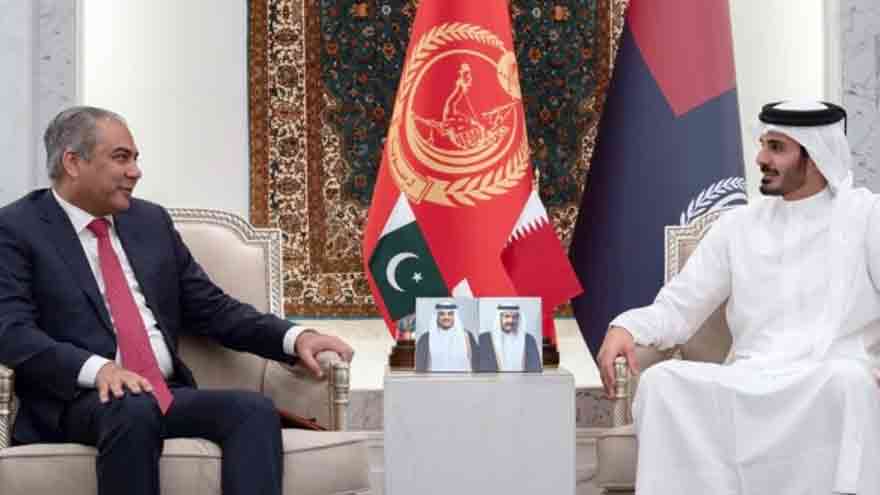
Pakistan and Qatar have agreed to expand their bilateral cooperation on internal security and further strengthen their security partnership.
The agreement was struck during a meeting between Interior Minister Mohsin Naqvi and his Qatari colleague Sheikh Khalifa bin Hamad bin Khalifa Al Thani, who is also head of Qatar’s Internal Security Force, in Doha.
The meeting examined methods to improve collaboration in the fields relating to internal security and pledged to strengthen the ties between the relevant ministries.
The discussions also covered the current situation in the region and issues related to peace and stability in the region.
Pakistan and Qatar are working together for regional peace and stability, said Mohsin Naqvi. He stressed the need of ongoing cooperation between the two countries.
Sheikh Khalifa bin Hamad bin Khalifa Al Thani, however, said Qatar paid considerable importance to its relations with Pakistan.
Both sides agreed to further strengthen their security collaboration and to continue to work together on issues of common interest.
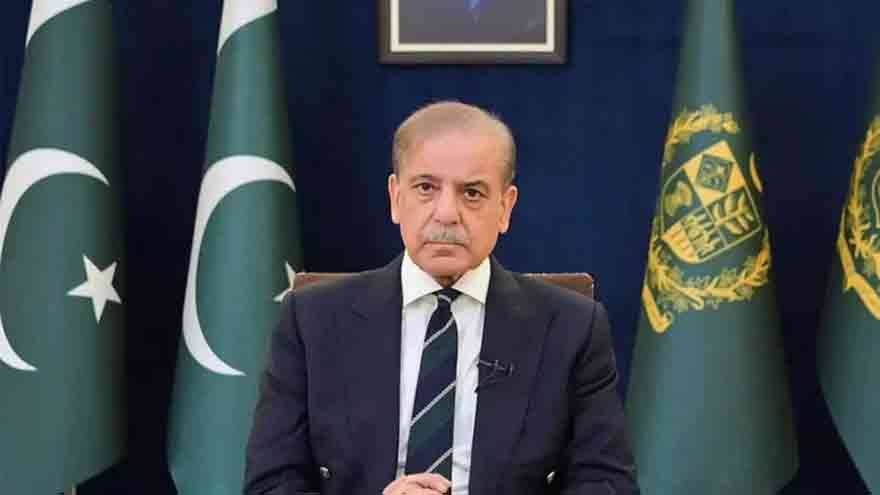
Sources said the visit of Prime Minister Shehbaz Sharif to Peshawar scheduled for Tuesday has been cancelled due to his official activities.
The prime minister was anticipated to be briefed on the general situation in Khyber Pakhtunkhwa including law and order, administrative matters and development projects under implementation.
Sources added that a high-level meeting, headed by the prime minister, was also scheduled to be held at Governor House in Peshawar to evaluate significant provincial concerns and recent developments.
The prime minister would be accompanied on the tour by the deputy prime minister and foreign minister, Ishaq Dar, and the interior minister, Mohsin Naqvi.
However, sources stated the visit was cancelled due to engagements of the prime minister. No specifics were offered concerning a rescheduled visit.

Major Wajahat Waheed laid to rest with full military honours in Lahore

Pakistan, Qatar agree to strengthen security partnership

PM Shehbaz’s visit to Peshawar cancelled due to official commitments

ICC board meeting in India: Mohsin Naqvi gets invitation

‘Self-Reliance in Digital ID’: NADRA launches locally produced QR code-based National Identity Card

23 people have died during the monsoon as rain-related incidents plague Punjab and KP.
-
 Latest News5 months ago
ICC board meeting in India: Mohsin Naqvi gets invitation
-
 Latest News2 months ago
‘Self-Reliance in Digital ID’: NADRA launches locally produced QR code-based National Identity Card
-
 Latest News3 months ago
23 people have died during the monsoon as rain-related incidents plague Punjab and KP.
-

 Latest News2 months ago
Turkish FM, Dar discuss regional trends, bilateral connections
-
 Business3 months ago
Govt dedicated to resolving Balochistan issues: Dar
-
 Latest News3 months ago
Pakistan making rapid progress in robotics, AI: Shaza Fatima
-

 Entertainment5 months ago
Interim bail given to YouTuber Rajab Butt in gambling app marketing case
-

 Latest News3 months ago
After a divorce, LHC decides that women who have been harmed by their spouses get their dower.