
Latest News
1971 War: India’s alleged role in training Mukti Bahini fighters in East Pakistan


According to the report, after its defeat in the 1965 war, India adopted a new political and military strategy allegedly aimed at dividing Pakistan.
India began to influence Bengali youth through misleading propaganda and turn them against West Pakistan. The report claims that the Mukti Bahini, an armed group created under the auspices of the Indian intelligence agency Research and Analysis Wing (RAW), has killed hundreds of thousands of Pakistani patriots with the aim of disrupting the alliance between the Pakistani army and the people of Bengal.
PM Modi acknowledges India’s role in fall of Dhaka
For this purpose, a headquarters would have been established in Calcutta under the command of Rameshwar Nath Kao, and the Indian Eastern Army would have overseen the operation. Six separate training centres were established to train Mukti Bahini fighters, each operating under the command of an Indian Army brigadier.
According to the report, approximately 100,000 Mukti Bahini fighters received training at these six camps, while another 800 operatives were formally trained at the Indian Military Academy in Dehradun. Additionally, 600 Mukti Bahini fighter jets were assigned to attack various ports in East Pakistan.

The Punjab government has approved an additional Rs 2.35 billion to meet the rising cost of the Gulfstream jet used by Chief Minister Maryam Nawaz.
According to an official document obtained by Dunya News, the state cabinet has approved the allocation of additional funds to cover the operating costs of VIP aircraft and other expenses. The documents show that the Punjab government requested additional financial resources due to the increasing maintenance and operating costs of the aircraft. Funding of Rs 2.35 billion was then approved urgently. Sources said the additional allocation was specifically meant to cover expenses related to the Gulfstream aircraft currently being used by the chief minister.
The approval has drawn renewed attention to government spending on the plane, with questions emerging about the use of public funds and the financial burden associated with its operation.
Latest News
President, PM Shehbaz warn against hate speech and irresponsible allegations on Tolerance Day
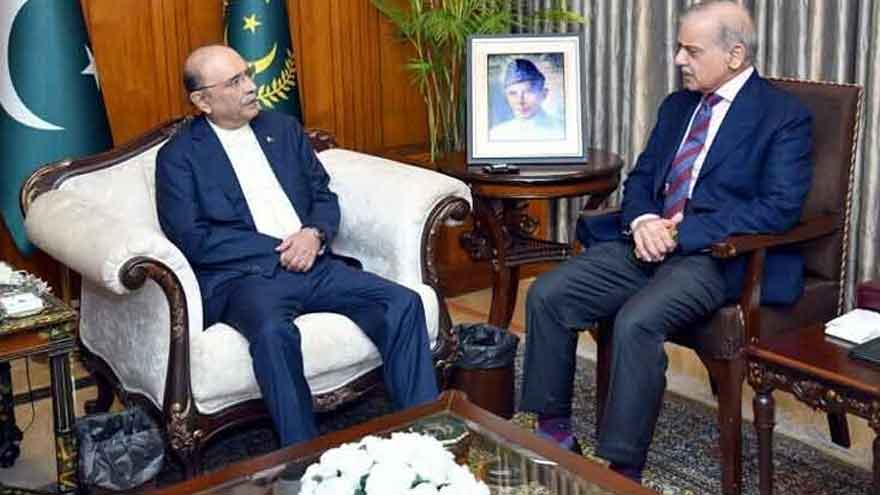
President Asif Ali Zardari and Prime Minister Shehbaz Sharif have warned that irresponsible accusations and messages of hate can pose a threat to human lives as the world marks the International Day of Tolerance.
In his message on the occasion, President Zardari said that Islam teaches compassion, justice and respect for human dignity. He emphasised that all citizens are equal before the law and entitled to equal protection.
He said young people should demonstrate the same respect in their online activities, warning that careless allegations and hateful messages could endanger human lives. The President stressed that government institutions must take strict measures against discrimination and incitement to violence.
Prime Minister Shehbaz Sharif said in his message that the true meaning of tolerance is respecting the beliefs and opinions of others despite their differences. He said Islamic teachings provide guidance on patience, tolerance, compassion, justice and respect for humanity.
The prime minister called on theologians, teachers, the media and especially young people to abandon their prejudices.
Latest News
ECO meeting: Ishaq Dar links regional cooperation with Afghanistan to action against terrorism
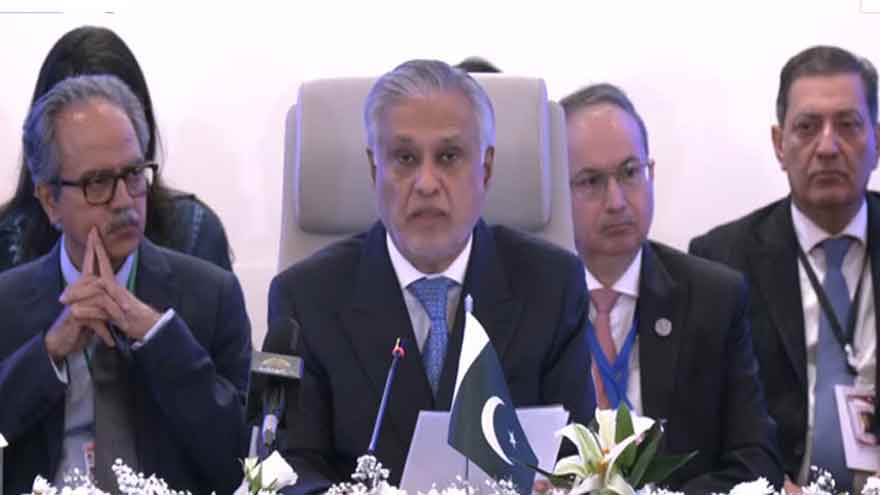
Ishaq Dar, Deputy Prime Minister and Minister of Foreign Affairs, stressed the need to resolve differences through dialogue to foster regional development, and said close cooperation between Member States is essential to address common challenges and unlock economic opportunities.
Addressing the 30th meeting of the Economic Cooperation Organization (ECO) Council of Ministers in Islamabad on Monday, Prime Minister Dar welcomed the participating delegations and said Pakistan would play a role in strengthening ties between member states. He stressed the need for regional countries to work together to overcome common challenges.
Dar said Pakistan wants to promote trade and investment, adding that mutual cooperation will open new avenues for development. He stressed the need for practical measures to achieve economic progress across the region.
Expressing concern over the tense situation in the Middle East, the deputy prime minister said disputes must be resolved through dialogue. He added that regional ties need to be strengthened given the rapid development of technologies.
He said Pakistan was keen to resolve issues through dialogue and diplomacy and remained committed to promoting peace and stability in the region. Dar described the revival of regional cooperation as a continuation of previous efforts, reflecting both the challenges facing the region and its future opportunities.
He said the need for stronger regional cooperation had increased amid geopolitical uncertainty, economic pressures and rapid technological changes. Many of the challenges facing Member States transcend national borders and require close collaboration and collective action.
Dar said there was no need to start from scratch to revive regional cooperation. Rather, we must strengthen existing foundations and honor previous commitments with renewed determination. He stressed that regional cooperation must become more effective and more adapted to the needs of society. He said the strength of a region depends not only on its ability to solve problems, but also on its willingness to proactively solve them. Building strong partnerships is equally important to solving future problems. The Deputy Prime Minister said that the ministerial and sectoral meetings held within the CEO during the year contributed to maintaining continued cooperation in key areas.
He said the roadmap agreed by CEE trade ministers in November 2025 provides a framework for moving regional trade agreements forward. He added that the ECO Council’s informal meeting in New York in September reaffirmed Member States’ common commitment to deepening economic integration and connectivity.
Mr. Dahl said the work to finalize the Strategic Economic Cooperation Goals for 2026-2035 helped determine the direction of future efforts and provided a solid foundation for the organization’s next phase of work. He said the priority now was to translate this progress into practical measures that could strengthen economic ties and bring long-term benefits to the region’s people.
Dar noted that the region’s natural resources, energy reserves, agricultural potential and strategic location provide important opportunities for closer economic cooperation. However, he added that geographic proximity alone is not enough to realize the region’s economic potential.
He announced that Pakistan would focus on five priorities during its CEE presidency in 2026-2027.
The first priority is the promotion of trade and investment. Pakistan will support improved access to regional markets, stronger value chains and greater private-sector participation, with particular attention to the inclusion of small and medium-sized enterprises. Mr Dahl said closer ties between the business communities could create more trade and investment opportunities.
The second priority concerns regional communications. Pakistan will work with member countries to improve transport and transit links between Central Asia, South Asia and Pakistani ports on the Arabian Sea. He said harmonizing customs procedures, improving border management and establishing reliable transit systems were essential for efficient trade routes.
He added that making better use of existing ECO transport and transit arrangements would be important to facilitate the movement of goods across the region.
The third priority is advancing the ECO Trade Agreement. Mr. Dar said the negotiation strategy and roadmap approved by CEE trade ministers in November 2025 provides a framework to modernize the agreement. Pakistan will support enhanced engagement of member states to build an efficient and inclusive digital regional trade system. The fourth priority is to strengthen the region’s resilience in the face of natural and economic challenges. He said climate change, natural disasters and increasing pressure on water and energy resources are severely impacting the region’s economies and livelihoods. Mr. Dahl emphasized the importance of cooperation in the areas of disaster preparedness, early warning systems, sustainable water management, and climate-resilient infrastructure.
Our fifth priority is investing in people and human resources. He cited the region’s young population as one of its greatest strengths, saying expanding opportunities for education, research, innovation and technical training will give young people the skills they need in a changing economy.
He added that by promoting entrepreneurship and professional exchanges, the human base for regional integration will be further strengthened.

Additional Rs2.35b approved to cover Punjab CM’s plane expenses

President, PM Shehbaz warn against hate speech and irresponsible allegations on Tolerance Day

1971 War: India’s alleged role in training Mukti Bahini fighters in East Pakistan

ICC board meeting in India: Mohsin Naqvi gets invitation

‘Self-Reliance in Digital ID’: NADRA launches locally produced QR code-based National Identity Card

23 people have died during the monsoon as rain-related incidents plague Punjab and KP.
-
 Latest News6 months ago
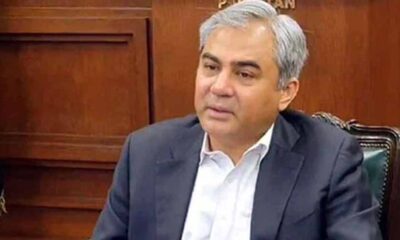
ICC board meeting in India: Mohsin Naqvi gets invitation
-
 Latest News3 months ago
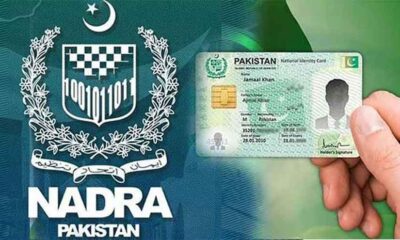
‘Self-Reliance in Digital ID’: NADRA launches locally produced QR code-based National Identity Card
-
 Latest News4 months ago
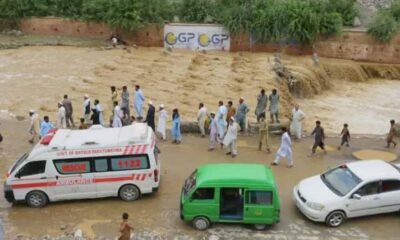
23 people have died during the monsoon as rain-related incidents plague Punjab and KP.
-
 Latest News3 months ago
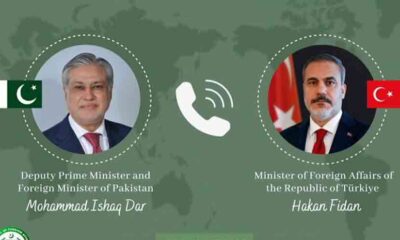
Turkish FM, Dar discuss regional trends, bilateral connections
-
 Business4 months ago
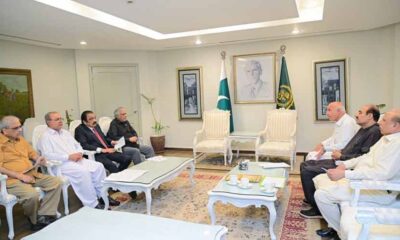
Govt dedicated to resolving Balochistan issues: Dar
-
 Latest News4 months ago
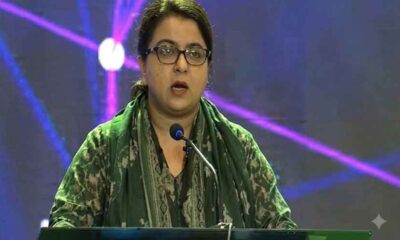
Pakistan making rapid progress in robotics, AI: Shaza Fatima
-

 Entertainment6 months ago
Interim bail given to YouTuber Rajab Butt in gambling app marketing case
-
 Latest News4 months ago
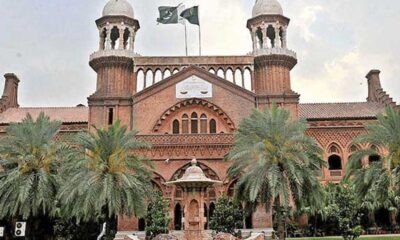
After a divorce, LHC decides that women who have been harmed by their spouses get their dower.