
Latest News
ECO meeting: Ishaq Dar links regional cooperation with Afghanistan to action against terrorism

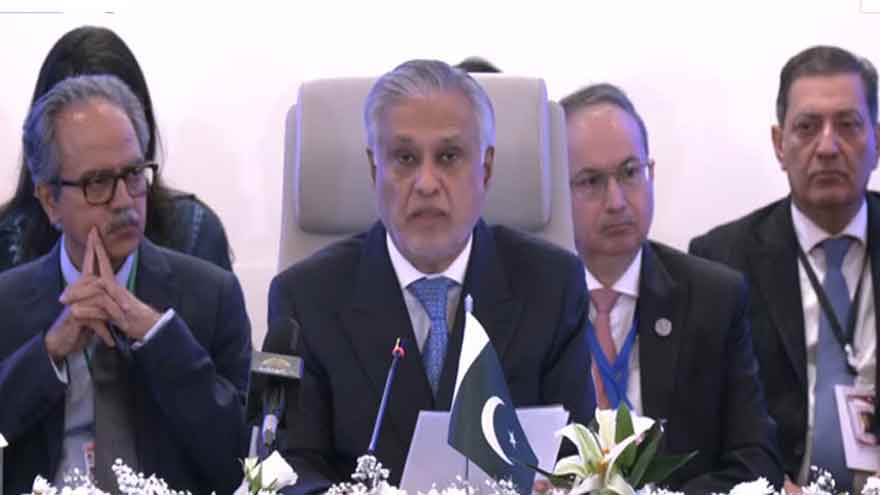
Ishaq Dar, Deputy Prime Minister and Minister of Foreign Affairs, stressed the need to resolve differences through dialogue to foster regional development, and said close cooperation between Member States is essential to address common challenges and unlock economic opportunities.
Addressing the 30th meeting of the Economic Cooperation Organization (ECO) Council of Ministers in Islamabad on Monday, Prime Minister Dar welcomed the participating delegations and said Pakistan would play a role in strengthening ties between member states. He stressed the need for regional countries to work together to overcome common challenges.
Dar said Pakistan wants to promote trade and investment, adding that mutual cooperation will open new avenues for development. He stressed the need for practical measures to achieve economic progress across the region.
Expressing concern over the tense situation in the Middle East, the deputy prime minister said disputes must be resolved through dialogue. He added that regional ties need to be strengthened given the rapid development of technologies.
He said Pakistan was keen to resolve issues through dialogue and diplomacy and remained committed to promoting peace and stability in the region. Dar described the revival of regional cooperation as a continuation of previous efforts, reflecting both the challenges facing the region and its future opportunities.
He said the need for stronger regional cooperation had increased amid geopolitical uncertainty, economic pressures and rapid technological changes. Many of the challenges facing Member States transcend national borders and require close collaboration and collective action.
Dar said there was no need to start from scratch to revive regional cooperation. Rather, we must strengthen existing foundations and honor previous commitments with renewed determination. He stressed that regional cooperation must become more effective and more adapted to the needs of society. He said the strength of a region depends not only on its ability to solve problems, but also on its willingness to proactively solve them. Building strong partnerships is equally important to solving future problems. The Deputy Prime Minister said that the ministerial and sectoral meetings held within the CEO during the year contributed to maintaining continued cooperation in key areas.
He said the roadmap agreed by CEE trade ministers in November 2025 provides a framework for moving regional trade agreements forward. He added that the ECO Council’s informal meeting in New York in September reaffirmed Member States’ common commitment to deepening economic integration and connectivity.
Mr. Dahl said the work to finalize the Strategic Economic Cooperation Goals for 2026-2035 helped determine the direction of future efforts and provided a solid foundation for the organization’s next phase of work. He said the priority now was to translate this progress into practical measures that could strengthen economic ties and bring long-term benefits to the region’s people.
Dar noted that the region’s natural resources, energy reserves, agricultural potential and strategic location provide important opportunities for closer economic cooperation. However, he added that geographic proximity alone is not enough to realize the region’s economic potential.
He announced that Pakistan would focus on five priorities during its CEE presidency in 2026-2027.
The first priority is the promotion of trade and investment. Pakistan will support improved access to regional markets, stronger value chains and greater private-sector participation, with particular attention to the inclusion of small and medium-sized enterprises. Mr Dahl said closer ties between the business communities could create more trade and investment opportunities.
The second priority concerns regional communications. Pakistan will work with member countries to improve transport and transit links between Central Asia, South Asia and Pakistani ports on the Arabian Sea. He said harmonizing customs procedures, improving border management and establishing reliable transit systems were essential for efficient trade routes.
He added that making better use of existing ECO transport and transit arrangements would be important to facilitate the movement of goods across the region.
The third priority is advancing the ECO Trade Agreement. Mr. Dar said the negotiation strategy and roadmap approved by CEE trade ministers in November 2025 provides a framework to modernize the agreement. Pakistan will support enhanced engagement of member states to build an efficient and inclusive digital regional trade system. The fourth priority is to strengthen the region’s resilience in the face of natural and economic challenges. He said climate change, natural disasters and increasing pressure on water and energy resources are severely impacting the region’s economies and livelihoods. Mr. Dahl emphasized the importance of cooperation in the areas of disaster preparedness, early warning systems, sustainable water management, and climate-resilient infrastructure.
Our fifth priority is investing in people and human resources. He cited the region’s young population as one of its greatest strengths, saying expanding opportunities for education, research, innovation and technical training will give young people the skills they need in a changing economy.
He added that by promoting entrepreneurship and professional exchanges, the human base for regional integration will be further strengthened.
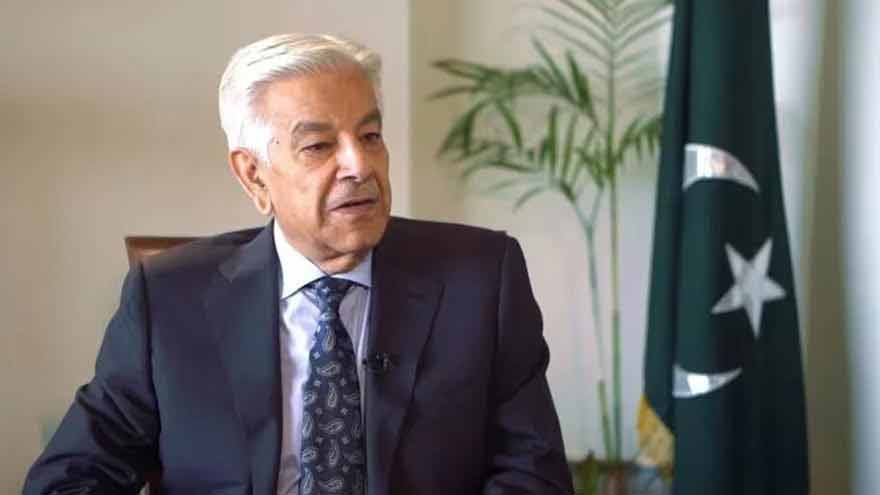
n of new provinces, adding that the political landscape could change rapidly once an agreement is reached.
Asif said the establishment of new administrative units or provinces would not threaten the political interests of any individual or party but would instead be a welcome development for Pakistan. He clarified that the military establishment never asked political leaders to discuss the creation of new provinces, adding that he was also not aware of the proposed mechanism to create new administrative units or provinces.
The defense minister said the Pakistan Tehreek-e-Insaf (PTI) founder should not oppose the creation of new provinces, arguing that accepting the proposal could also open up new political opportunities for him. Mr. Asif said there had been positive progress in the ongoing talks and stressed that politics is the art of creating possibilities.
He added that confidence had been expressed in all political parties and expressed hope that a mutually acceptable solution would be found.
He further said that differences and reservations could be transformed into consensus over the next few weeks, adding that a new administrative or political system could also emerge in the new year.
Browse Topics
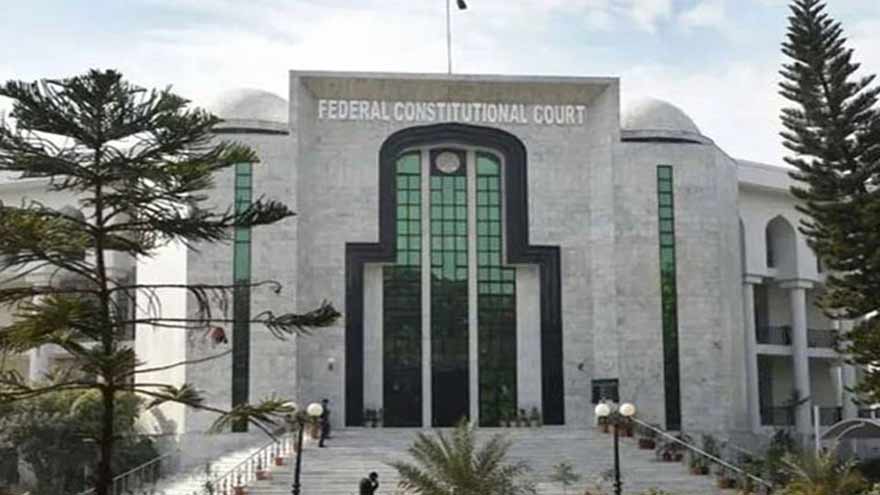
The Federal Constitutional Court has amended the suspension order regarding arrests under Article 3 of the Maintenance of Public Order Ordinance (MPO) in Khyber Pakhtankhwa Province.
A two-judge bench of the Federal Constitutional Court, comprising Chief Justice Aminuddin Khan and Justice Aamir Farooq, heard the matter and approved the Pakistan Tehreek-e-Insaf (PTI) petition and modified the November 5 stay order. During the hearing, PTI’s lawyer, Barrister Gohar, argued that the Constitution Court’s November 5 order had affected the proceedings in the Peshawar High Court and stopped the practice of lawyers.
The Constitutional Court noted that its stay order relates to matters relating to the rule of the Governor and the MPO, adding that the Peshawar High Court can continue to hear other cases under Article 199 of the Constitution.
Justice Aamir Farooq remarked that a straightforward reading of Article 245 suggested that cases under Article 199 could not be heard. However, he said that adopting a plain reading of Article 245 would bring the entire judicial system to a standstill. The court also allowed the Peshawar Bar Council to become a party to the case.
Lawyer Gohar argued that no review committee had been established in Khyber Pakhtunkhwa province yet and sought assistance in cases involving arrests under Article 3 of the MPO. The Advocate General of Khyber Pakhtunkhwa informed the court that a monitoring committee would be formed within three months.
Chief Justice Aminuddin Khan told Gohar’s advocate that various applications have been filed in the Peshawar registry and will be heard on arrival in the court. The Federal Constitutional Court postponed hearing the case.
Browse topics
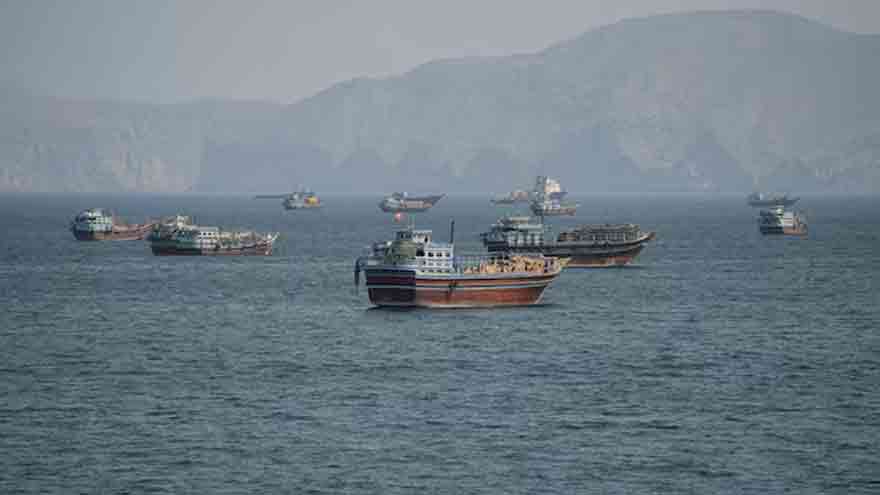
Oil prices fell on Monday on hopes of a glut as supplies to the Middle East through the Strait of Hormuz returned to near pre-war levels and the United States took steps to help move fuel goods between inland ports.
At around 1:45 a.m. Japan time, Brent crude oil futures fell 47 cents, or 0.49%, to $95.37 per barrel. US West Texas Intermediate (WTI) crude oil fell 23 cents, or 0.26%, to $88.33.
Oil prices closed lower on Friday as markets weighed signs of easing geopolitical risks from the US-Israel-Iran war, which has entered its ninth month. Last week, the indexes fell 16% and 13%, respectively.
The International Energy Agency said on Friday that the global oil market will return to surplus in the fourth quarter of this year as Middle East exports recover faster than global oil demand, despite continued attacks on ships. “For the first time since the start of the US-Iran conflict, traders are actively considering the possibility of oversupply rather than continuing shortages. This change in rhetoric clearly lowers the tone,” said Tim Waterer, chief analyst at KCM Trade. Oil supplies averaged 105 million barrels per day in the fourth quarter, exceeding forecast demand by 1.7 million barrels per day, the IEA said. The IEA had previously predicted a supply shortage in the fourth quarter. The agency also provided further details about the remaining volume from member countries’ record release of emergency stockpile crude oil pledged in March, saying 71 million barrels, including 15 million barrels of diesel, would be made available by the end of February to ease market tensions.
A U.S. decision to expand shipping laws to make it easier for foreign-flagged vessels to transport fuels such as oil, gasoline and diesel between U.S. ports also put pressure on prices. President Donald Trump has extended for 90 days the repeal of the Jones Act, which requires U.S.-flagged vessels to transport cargo between U.S. ports, a White House spokesperson announced Friday.
Repealing this rule would increase the number of tankers that can transport goods between U.S. ports. However, Waterer noted that despite tight supply, transportation charges remain high, keeping oil prices in check.
Rates remain high due to the risks tankers face when transporting crude through the Strait of Hormuz and the dwindling supply of crude oil as many ships are stuck plying the waterway to transfer cargo to other ships carrying cargo to refineries.
On Sunday night, Iran’s navy said that an oil tanker caught fire after striking a naval mine east of the Strait of Hormuz, state media reported.
Reuters could not independently verify the report.

Political consensus on new provinces in the making: Khawaja Asif

Federal constitutional court amends stay order on 3-MPO arrests in KP

Oil prices fall on expectations of coming supply surplus

ICC board meeting in India: Mohsin Naqvi gets invitation

‘Self-Reliance in Digital ID’: NADRA launches locally produced QR code-based National Identity Card

23 people have died during the monsoon as rain-related incidents plague Punjab and KP.
-
 Latest News6 months ago
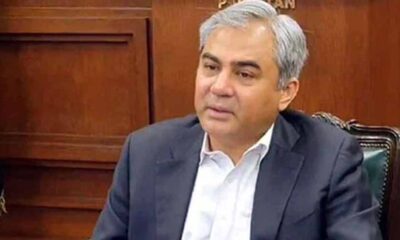
ICC board meeting in India: Mohsin Naqvi gets invitation
-
 Latest News3 months ago
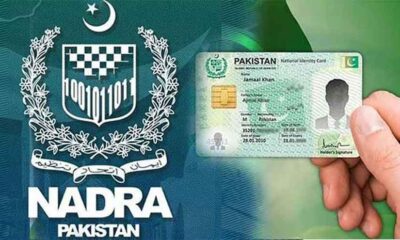
‘Self-Reliance in Digital ID’: NADRA launches locally produced QR code-based National Identity Card
-
 Latest News4 months ago
23 people have died during the monsoon as rain-related incidents plague Punjab and KP.
-
 Latest News3 months ago
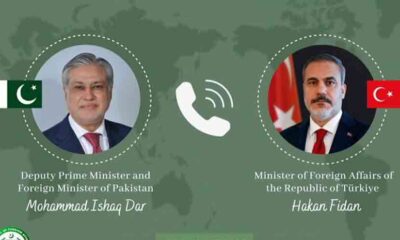
Turkish FM, Dar discuss regional trends, bilateral connections
-
 Business4 months ago
Govt dedicated to resolving Balochistan issues: Dar
-
 Latest News4 months ago
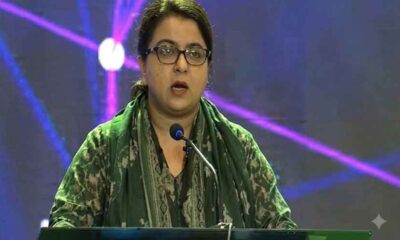
Pakistan making rapid progress in robotics, AI: Shaza Fatima
-

 Entertainment6 months ago
Interim bail given to YouTuber Rajab Butt in gambling app marketing case
-

 Latest News4 months ago
After a divorce, LHC decides that women who have been harmed by their spouses get their dower.