
Business
Saudi Aramco profits surge 34.6% in third quarter

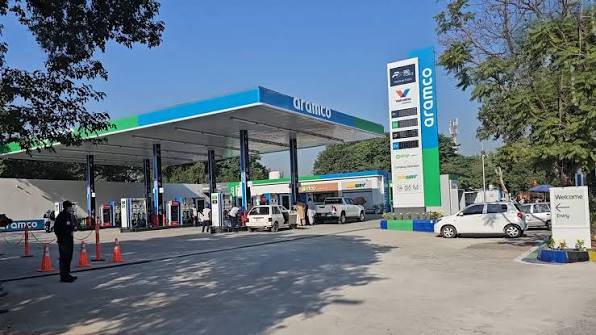
Saudi oil company Aramco said Tuesday its third-quarter net earnings soared 34.6 percent as the Middle East war has kept crude prices high and the kingdom’s energy infrastructure regularly struck.
Since hostilities erupted in July, Yemen’s Iran-aligned Houthis have routinely targeted Saudi tankers, pipelines, storage facilities and refineries but have stepped up their attacks in recent weeks.
The monarchy also has had to deal with the Houthis and Iran disrupting commerce in the straits of Bab al-Mandeb and Hormuz making exports more difficult.
But Aramco, Saudi Arabia’s economic engine and one of the world’s most valuable firms, posted soaring earnings in the third quarter, powered in large part by stubbornly high oil prices.
The company stated net profit in the third quarter was 135.9 billion riyals ($36.2 billion), compared with roughly 101 billion riyals in the same time a year earlier.
The results come as energy majors throughout the world have seen profits jump on the back of interruptions to oil and gas supplies in the Middle East pushing up refining margins and prices.
But the head of Aramco cautioned the dispute was still a major drag on energy security.”Geopolitical uncertainty and attacks on key energy facilities continued to amplify the global energy supply crisis in the third quarter of 2026, with serious implications for global energy security,” said president and CEO Amin H. Nasser in a statement.
Adjusted net income, excluding exceptional items, was 116.9 billion riyals.
An outside estimate based on 12 experts estimates puts the median analyst expectation for third-quarter adjusted net income at $30.66 billion.”The earning results are likely to be rosier (compared) to a year ago, when oil prices were much lower, but less promising compared to last quarter,” Robert Mogielnicki, a research fellow at the Arab Gulf States Institute, told AFP.
Aramco’s net profit rose 44 percent year-on-year to 122.6 billion riyals in the second quarter.
The Middle East war, which began on February 28 with Israeli and U.S. assaults on Iran, has disrupted global energy markets, triggered a global run on critical reserves, and fed inflation.
And as conflict continues to rage in the Gulf, Ukrainian drones have also struck Russian energy infrastructure, causing Moscow to block shipment of several items – particularly petrol and diesel.
The Houthis said last month they attacked Aramco’s headquarters, a sprawling complex of buildings and housing in the eastern part of the kingdom.
Saudi officials stated a structure was damaged in the region housing the operations center of Aramco, while two employees of the business, who spoke to AFP on condition of anonymity, said a tower in the headquarters was hit.
- A tight spot – With the Strait of Hormuz in dispute, US Navy naval escorts have been allowing millions of barrels of crude to flow through the vital waterway each day.
US Central Command said last month it had assisted Gulf nations export more than 1.5 billion barrels of crude oil through the strait since the summer, and enabled more than 3,000 commercial boats transit over the past six months.
But the rise in Gulf exports has done nothing to stop market volatility.
Oil prices dropped more than seven percent on Monday as signals that Tehran and Washington were resuming communication raised hopes for an end to the Middle East turmoil.
Back in the kingdom, months of uncertainty have compounded economic challenges.
Saudi Arabia has raised its estimated budget deficit for 2026 to 245 billion riyals, or 4.9 percent of gross domestic product, from an initial forecast of 165 billion riyals. Government receipts were higher than previously forecast.
Government spending will rise 9.3 percent more than previously predicted, but the finance ministry expects the Saudi economy would shrink 3.6 percent in 2026, as oil-related activity will fall 21.8 percent.
The kingdom aims to lower its deficit to 191 billion riyals in 2027, or 3.6 percent of GDP, while continuing to invest in economic diversification programs.
The IMF now expects Saudi Arabia’s GDP to shrink by 3.3% at the end of the year, five percentage points less than its previous prediction in July.

Binance announced on Monday that it will reopen withdrawals for more assets on networks including as BSC, ETH, SOL, XRP and SUI.
Reopenings will commence at 04:00 GMT on Tuesday, the business said.
Some crypto-assets on networks ARBITRUM, OPTIMISM, TRX, and BASE will also be restored for withdrawals at the same time.
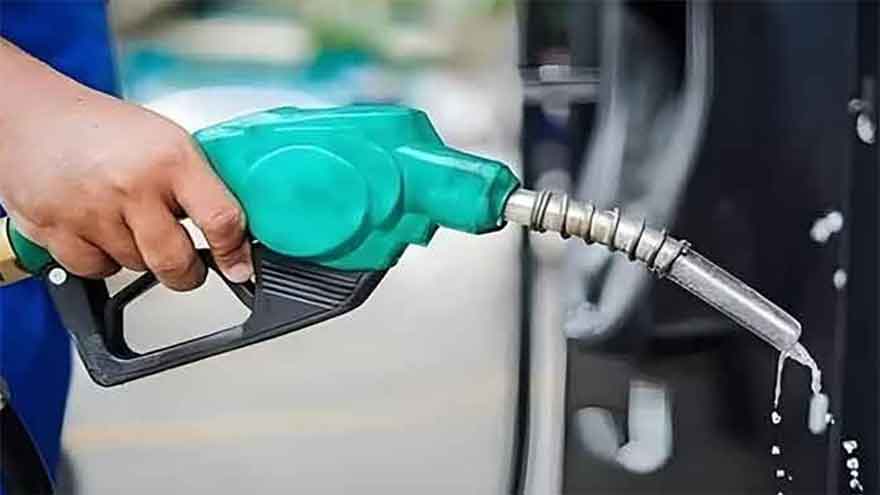
The federal government has reduced the price of petroleum, lowering the price of high-speed diesel by Rs7.76 per litre and petrol by Rs3.40 per litre, an official statement issued by the Petroleum Division said on Monday.
Petrol will now cost Rs374.51 per litre while high-speed diesel will be priced at Rs395.20 per litre after the cut.
The lowered prices are likely to bring some respite to petrol and diesel consumers, especially motorists and businesses that depend on petroleum goods.
In a notification, the Petroleum Division said the price adjustment will be effective for a day — November 3.

KARACHI: The Pakistan Stock Exchange (PSX) saw a strong bullish trend on Tuesday as the benchmark KSE-100 Index recovered the 168,000-point mark.
The trade opened on a good note on the second day of the business week with the index gaining over 1,900 points to settle at 168,469 points.
The KSE-100 Index had finished at 166,564 points during the previous trading session, showing a rise of 154 points.

LHC issues show-cause notice to senior police officer

Saudi Aramco profits surge 34.6% in third quarter

Binance to reopen withdrawals for more assets on several networks

ICC board meeting in India: Mohsin Naqvi gets invitation

‘Self-Reliance in Digital ID’: NADRA launches locally produced QR code-based National Identity Card

23 people have died during the monsoon as rain-related incidents plague Punjab and KP.
-
 Latest News6 months ago
ICC board meeting in India: Mohsin Naqvi gets invitation
-
 Latest News3 months ago
‘Self-Reliance in Digital ID’: NADRA launches locally produced QR code-based National Identity Card
-
 Latest News3 months ago
23 people have died during the monsoon as rain-related incidents plague Punjab and KP.
-

 Latest News2 months ago
Turkish FM, Dar discuss regional trends, bilateral connections
-
 Business4 months ago
Govt dedicated to resolving Balochistan issues: Dar
-

 Latest News3 months ago
Pakistan making rapid progress in robotics, AI: Shaza Fatima
-

 Entertainment6 months ago
Interim bail given to YouTuber Rajab Butt in gambling app marketing case
-
 Latest News3 months ago
After a divorce, LHC decides that women who have been harmed by their spouses get their dower.