
Business
As Pakistan announces its daily fuel pricing, the price of petrol has increased by Rs5.44, while diesel has increased by Rs31.50.

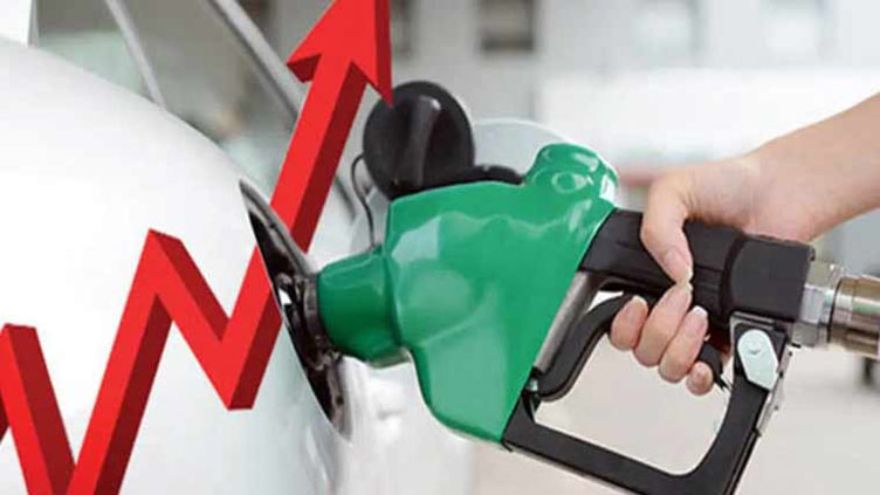
In the current fuel price revision, Pakistan has increased the costs of petrol and high-speed diesel. Petrol prices have been hiked by Rs5.44 per litre while diesel prices have seen a far higher increase of Rs31.50 per litre.
The steep jump comes against the backdrop of surging worldwide energy prices with the administration also planning a substantial revamp of the country’s petroleum pricing regime.
The new fuel prices are effective immediately and are in response to increasing pressure from global oil markets where energy prices have increased in recent weeks as regional tensions have built up.
OGRA to release fuel prices on daily basis under new cabinet decision
The decision comes as the federal cabinet authorised a new system under which the Oil and Gas Regulatory Authority (OGRA) would determine petroleum prices on a daily basis instead of the existing periodic pricing method.
Federal Minister for Petroleum Ali Pervaiz Malik announced the decision during a joint press conference with Federal Minister for Information Atta Tarar. Malik said the Prime Minister Shehbaz Sharif and the federal cabinet have decided that OGRA will now determine the prices of petroleum products on a daily basis as per the developments in foreign markets.
Under the new approach, the regulator would determine revised fuel prices on a daily basis and publish them on its official website, enabling domestic prices to more closely reflect changes in world oil markets.
The minister for petroleum indicated that the government had deliberately reduced its participation in establishing fuel prices and that OGRA had assumed increasing responsibility for pricing in line with existing international market circumstances.
“We are once again witnessing rising tensions in the region that are putting a lot of upward pressure on international energy markets,” he said.
But Malik said international prices of diesel had soared from $110 a barrel to $140 a barrel, demonstrating the extent of the growth and the steep increase in global energy costs.
He also thanked the public for their patience during the current economic troubles stating residents have proved to be resilient during a tough time.
OGRA will keep an eye on international market movements, calculate petroleum product prices on a daily basis and inform the public of the revised rates on its website, in one of the biggest changes to Pakistan’s fuel pricing system in recent years, with the new policy now approved by the cabinet.
The dollar held near a two-week high on Wednesday as renewed hostilities in the Middle East drove oil prices higher, reviving inflation concerns and adding upward pressure on bond yields.
The dollar index , which measures the greenback against a basket of currencies including the yen and the euro, rose 0.11% to 99.79, its highest point since August 17. The euro was down 0.13% at $1.1577.
The currency’s appeal as a safe haven has been reinforced by rising Treasury yields and growing expectations of a Federal Reserve rate hike, even as recent economic data came in below forecasts.
The U.S. launched a barrage of airstrikes on Iran on Tuesday, prompting Iranian retaliation, in the most serious escalation in weeks. Oil prices rose on Wednesday, extending the previous session’s surge, with Brent futures up 1.15% at $95.74 a barrel and U.S. West Texas Intermediate (WTI) crude 0.85% firmer at $91.05.
“Continued vigilance is needed over the situation in the Middle East today,” said Kumiko Ishikawa, a senior FX analyst at Sony Financial Group.
Meanwhile, the New Zealand dollar weakened 0.8% against the greenback to $0.5844, its lowest point since August 13, even after the country’s central bank raised its official cash rate by 25 basis points to 2.75%. Analysts said market participants viewed the decision as less hawkish than expected.
“Relative to where markets were and what they might have expected, it doesn’t meet their expectations,” said Westpac New Zealand strategist Imre Speizer.
July JOLTS job openings and the August ISM manufacturing index, released overnight, were below market expectations, but money markets have reinforced expectations of a Federal Reserve rate hike following Chair Kevin Warsh’s speech in Jackson Hole, Wyoming, last week.
Markets are now pricing in a 68% chance of a September Fed hike, up from around 40% a week earlier, according to CME Group’s FedWatch tool.
“As for the U.S. data, it is worth bearing in mind that, if the figures are weak, their impact could be offset by heightened tensions in the Middle East,” Ishikawa said.
August’s jobs and consumer price inflation data are both due before the Fed’s next meeting on September 15 and 16. This Friday’s employment report is expected to show that employers added 56,000 jobs last month, according to the median estimate of economists polled by Reuters.
Fed Governor Michael Barr said on Tuesday that if inflation does not cool quickly, it will be time for the central bank to raise interest rates.
The yield on the benchmark U.S. 10-year note rose to 4.81%, its highest since November 2023, while Japan’s benchmark 10-year yield extended its rally to 3.01% on Wednesday morning after reaching a three-decade milestone of 3% on Tuesday.
Higher yields drive investors to buy safe-haven currencies, including the U.S. dollar, while undermining the case for riskier assets like equities.
The British pound lost 0.09% to $1.3503, while the Australian dollar eased 0.04% to $0.7141.
In cryptocurrencies, bitcoin fell 0.24% to $77,242.62. Ether declined 0.51% to $2,407.74.
YEN UNDER PRESSURE
The Japanese yen weakened 0.08% against the greenback to 160.28 per dollar, its lowest level since July 31, remaining beyond the psychologically important 160-per-dollar threshold despite overwhelming expectations of a Bank of Japan rate hike this month.
U.S. Treasury Secretary Scott Bessent voiced strong support for “decisive” monetary steps to combat yen weakness in a meeting with BOJ Governor Kazuo Ueda, the Treasury Department said.
Ueda told reporters he hoped to discuss with his board at this month’s meeting whether the economy is moving in line with its forecast, and whether inflation risks were heightening.
The BOJ’s hawkish board member, Hajime Takata, said on Wednesday the bank should conduct interest rate hikes nimbly in response to inflationary pressures.
A rare joint intervention by the U.S. and Japan at the end of July provided short-lived relief for the fragile yen, pulling it away from the 40-year low of 163.99, but the currency has since surrendered around half of the gains from the joint action.
“There appears little chance of another round of actual co-ordinated intervention until there is some de-escalation in the Strait of Hormuz that takes heat out of the oil price,” said Tony Sycamore, a market analyst at IG, in a note.
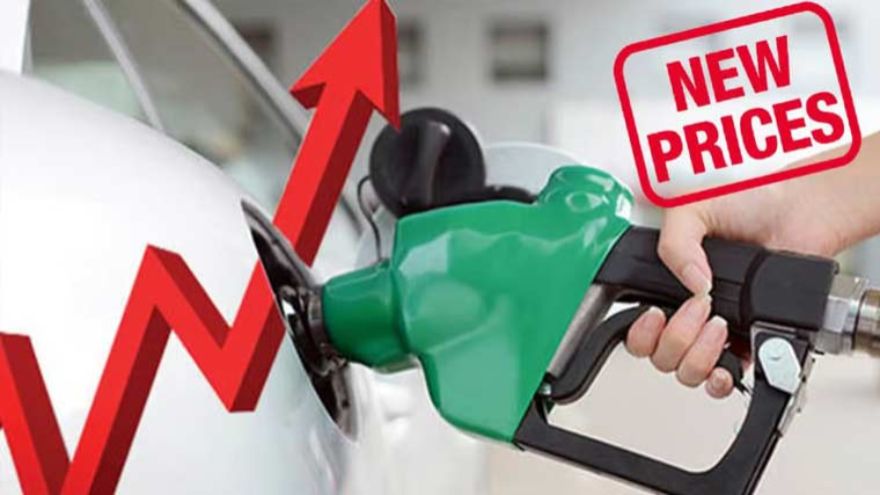
The federal government has raised the prices of petrol and high-speed diesel, effective midnight for a one-day pricing cycle.
The Petroleum Division statement stated that the fuel price has been hiked by Rs1.08 per litre, from Rs342.79 to Rs343.87 per litre.
High-speed diesel (HSD) price increased by 51 paisas per litre to Rs370.92 per litre.
The latest revision follows a day after the government had reviewed the petroleum prices for the new pricing period commencing September 1. The previous rates were Rs342.79 per litre for petrol and Rs370.41 per litre for high-speed diesel.
The increased petrol price will now see consumers paying Rs343.87 for each litre they buy, while diesel consumers will have to shell out Rs370.92 a litre.
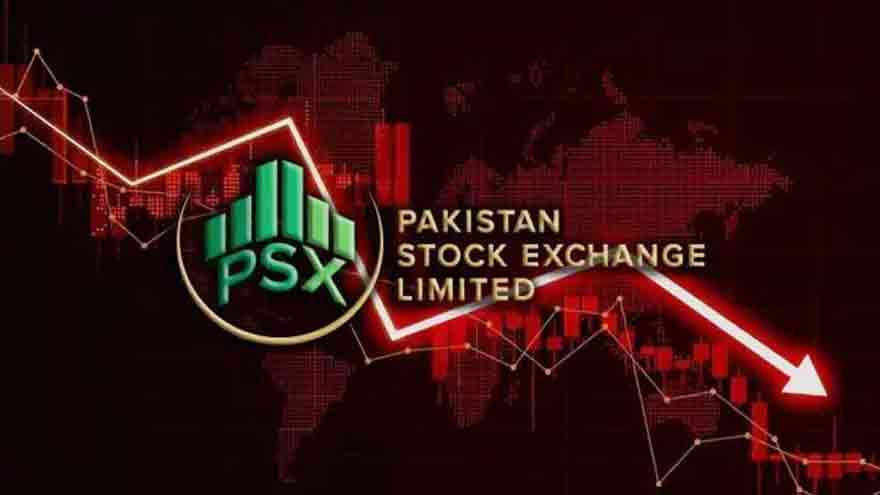
The Pakistan Stock Exchange (PSX) on Wednesday saw a bearish trend amid growing tensions between the US and Iran after the latest exchange of strikes.
The KISE index shed 1,289.43 points or 0.73 percent to 175,177.56 points from previous close of 176,466.99.
The market traded between an intraday high of 175,519.88 and a low of 174,701.13.
The trading volume was 57,010,307 and the overall market value was listed at 3,482,780,690.
Asian equities tumbled on Wednesday as a bond market-led selloff on global markets spilt into the region following intensified attacks by the U.S. on Iran pushed oil prices higher.
MSCI’s broadest index of Asia-Pacific equities outside Japan (.MISX00000PUS) slumped 1.5% with South Korea’s KOSPI (.KS11) skidding more than 3% and the Nikkei 225 (.N225) off 2.6%. S&P 500 e-mini futures dipped 0.1%.
Brent crude futures rose for a second day in Asia trade, gaining 1.3% to $95.91 a barrel after the U.S. launched a round of airstrikes on Iran on Tuesday, which pushed oil prices to a five-week high earlier.

After senior players disappoint, the PCB chief demands more opportunities for younger players.

Low-level flooding continues at Tarbela, Kalabagh on Indus River

Death toll in Nepal floods exceeds 1,000, rescuers reach distant locations

ICC board meeting in India: Mohsin Naqvi gets invitation

23 people have died during the monsoon as rain-related incidents plague Punjab and KP.

Pakistan making rapid progress in robotics, AI: Shaza Fatima
-
 Latest News4 months ago
ICC board meeting in India: Mohsin Naqvi gets invitation
-
 Latest News1 month ago
23 people have died during the monsoon as rain-related incidents plague Punjab and KP.
-
 Latest News1 month ago
Pakistan making rapid progress in robotics, AI: Shaza Fatima
-

 Business2 months ago
Govt dedicated to resolving Balochistan issues: Dar
-

 Latest News1 month ago
After a divorce, LHC decides that women who have been harmed by their spouses get their dower.
-

 Latest News3 months ago
A meta program to monitor mouse clicks made by employees in violation of EU privacy regulations
-

 Entertainment4 months ago
Interim bail given to YouTuber Rajab Butt in gambling app marketing case
-

 Latest News2 months ago
Marriyum Aurangzeb says Punjab to set up wastewater treatment plants in every district