
Latest News
Babar Azam is ready to restart his involvement in first-class domestic cricket.


Pakistan Test captain Babar Azam has been set to play for Oil and Gas Development Company Limited (OGDCL) as a guest player in the ongoing President’s Trophy Grade-I tournament.
There have been reports that OGDCL has employed Babar as a guest player for the ongoing President’s Trophy Grade-I tournament.
It was reported that Babar approached the Pakistan Cricket Board (PCB) asking to be included in the squad of a domestic side for being associated with the long format and to be ready for Test cricket.
After Babar’s request to the PCB, it has arranged for Babar to play as a guest player for the ongoing President’s Trophy Grade-I tournament with OGDCL.
The PCB has given confirmations about the schedule of the President’s Trophy Grade-I first-class tournament along with the teams’ rosters of the eight participating teams in the tournament. This is the opening red-ball tournament of the 2026-27 domestic cricket season and is set to start from 12 September and end with a five-day final match on 28 October.

– From July to December 2025, the total loss of loss-making state-owned enterprises was recorded at Rs342.8 billion, while profitable state-owned enterprises earned a profit of Rs423.3 billion.
A meeting of the Cabinet Committee on State-Owned Enterprises was held under the chairmanship of the Finance Minister, in which the performance of SOEs was reviewed.
According to the Ministry of Finance, the government has provided support of Rs804 billion to SOEs, during this period the government received Rs839 billion from government agencies.
According to the announcement, overall, state-owned enterprises provided a net financial profit of Rs35 billion.
The committee directed for improving financial discipline in government institutions and reducing dependence on public resources.
It also directed for accelerating reforms in institutions that are continuously incurring losses.
The meeting also reviewed the operational weaknesses, circular debt, and financial risks of the power and infrastructure sectors.
According to the Ministry of Finance, the committee appreciated the progress made in the digital monitoring system of the performance of SOEs.
The meeting also approved the appointment of independent directors on the board of the Printing Corporation of Pakistan.
Latest News
While the popularity of Trump improves from an all-time low, the prospects of the Republican party continue to worsen, according to the Reuters/Ipsos poll.

President Donald Trump’s public approval rating rose from a record low, while Americans voiced growing support for Democrats gaining power in the U.S. Congress in a Reuters/Ipsos poll taken in the days after the Republican Party’s first-ever midterm convention last week.
The four-day poll showed 63% of Americans – including four in 10 Republicans and nine in 10 Democrats – disapproved of Trump’s offer made in his convention speech that he would ensure all Americans get a $5,000 dividend if Republicans retain control of the U.S. Congress in November’s midterm elections.
The survey gathered responses from 1,143 Americans nationwide and had a margin of error of 3 percentage points in either direction.
Some 35% of Americans give Trump a thumbs up for his performance in the White House, up from 33% in an August 28 to 31 Reuters/Ipsos poll, the lowest of his political career.
Trump’s popularity has declined since he launched a war on Iran in February that has disrupted oil shipments from the Middle East and pushed fuel prices near record highs, hitting U.S. household finances. Since the war started, Trump’s Republicans have also lost some support, and in recent weeks have lost their longtime edge as the better party for economic policy.
DEMOCRATS’ ELECTORAL EDGE
Asked which party they would vote for if the congressional elections were held today in what is known as a “generic ballot” poll, 44% picked Democrats and 37% picked Republicans. The 7-point gap was the widest since Trump returned to the White House in January 2025. For Republicans, losing control of either chamber could complicate Trump’s agenda in the last two years of his term.
Generic ballot polls are national polls that provide an overall view of which party poll respondents want to see in charge in Congress. While these polls provide a view of national public sentiment, they do not capture all the nuances of the state-by-state and district-by-district contests that determine control of the U.S. Senate and House of Representatives, contests in which Republicans hold some structural advantages.
Voters picked Democrats over Republicans as the better stewards of the economy – 38% to 37% – with Democrats gaining that edge over the summer for the first time in about a decade.
Trump’s construction projects throughout the U.S. capital – including a ballroom for the White House – were largely polarizing and viewed through a partisan lens, with 91% of Democrats in the survey saying they opposed the plans, compared to one in four Republicans who were against them.
Some two-thirds of Americans – including half of Republicans – considered the construction projects to be a low priority.
Latest News
Setback for Trump as U.S. Supreme Court refuses to permit restrictions by the Post Office on mail ballots
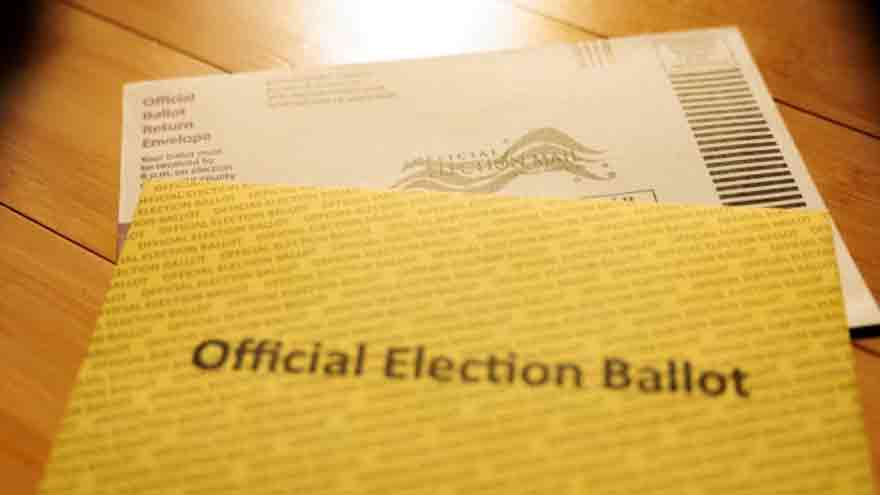
– The US Supreme Court declined on Monday to let the U.S. Postal Service enforce a rule targeting mail-in ballots, dealing a setback to President Donald Trump’s effort to restrict voting by mail ahead of November’s midterm elections that will determine control of Congress.
The justices denied the Justice Department’s request to lift a ruling by Boston-based U.S. District Judge Indira Talwani that blocked the Postal Service from enforcing the measure while legal challenges by states and voting-rights groups proceed. The agency adopted the measure after Trump issued a March executive order aimed at tightening rules governing mail voting.
“The government is unlikely to succeed on the merits of its challenge to the District Court’s preliminary injunction,” the court said in its brief, one-paragraph order.
Justice Samuel Alito, joined by fellow conservative Justice Clarence Thomas, dissented from Monday’s decision. No other justice dissented publicly. The court has a 6-3 conservative majority.
Trump’s fellow Republicans are locked in a tight battle to retain control of Congress in the midterms. Restricting mail-in ballots would stand to benefit Republicans given that Democratic voters disproportionately use mail-in ballots, according to various surveys.
Under the rule, states would have to provide lists of mail ballot recipients to the Postal Service and use agency-approved outbound and return ballot mail envelopes outfitted with unique barcodes. The Postal Service could then refuse to send out ballots that do not comply with the new standards or are associated with voters who do not appear on the lists.
Critics have said the plan could disrupt the delivery of thousands of legitimate ballots as the November 3 vote approaches and cause chaos given imminent plans by many states to send out mail ballots to eligible voters. The administration has said the new rule will prevent voter fraud, though evidence of such fraud is rare.
Talwani imposed an injunction on September 4 blocking the rule, finding that it likely violated the U.S. Constitution, under which states administer elections. Talwani also said it would be impossible for the states to comply given the rapidly approaching midterms.
Another federal judge, Washington, D.C.-based U.S. District Judge Carl Nichols, also ruled against the rule on Sunday.
‘TESTING THE LIMITS’
Sophia Lin Lakin, voting rights project director at the American Civil Liberties Union, which helped to represent some of the challengers to the USPS rule, welcomed Monday’s decision.
“This administration keeps testing the limits of its power, as if the rules governing our elections are merely suggestions to ignore when they don’t suit the president’s agenda. But the Constitution gives states and Congress the power to set the rules for federal elections — not the president, and not the Postal Service,” she said.
“Today is a good day for democracy, the rule of law and the American people looking to exercise their constitutional right to vote,” said California Governor Gavin Newsom, whose state led one of the lawsuits against the rule.
“Trump’s attacks on democracy these last 20 months have been nothing short of un-American,” Newsom added.
Trump signed his executive order targeting mail-in ballots after years of casting doubt on their security, though he often votes by mail himself. Trump has made false claims of widespread fraud in U.S. elections including his 2020 loss to former Democratic President Joe Biden.
The administration in a September 6 emergency request urged the Supreme Court to allow it to implement an “important federal policy to protect the mails from being used to commit voter fraud.”
Conservative Justice Brett Kavanaugh, in a concurring statement on Monday, said there is a “fair prospect” that the rule falls within the Postal Service’s authority, but state and local election officials “do not have sufficient time to reasonably implement the rule” before the 2026 elections.
In his dissent, Alito likened some of the challengers’ claims to a “Hail Mary pass” that is “unlikely to be successfully completed,” using a football analogy.
“The Postal Service has broad authority to regulate the mail,” Alito added.
STATES CHALLENGED THE RULE
A coalition of states, most of them Democratic-governed, and Washington, D.C., as well as a number of voting-rights groups, challenged the new USPS rule.
The Boston-based 1st U.S. Circuit Court of Appeals refused last Thursday to put Talwani’s order on hold. The 1st Circuit said that the rule “will likely result in the disenfranchisement of millions of voters across the country while providing minimal — if any — gains in combating voter fraud.”
The battle over mail ballots is one in a series of efforts by the administration to boost federal involvement in voting ahead of the midterms. On August 24, the Supreme Court lifted an earlier injunction imposed by Talwani in June blocking Trump’s executive order, including the USPS rule before it had been finalized.

State-owned companies reported a loss of Rs 342.8 billion over a six-month period.

Babar Azam is ready to restart his involvement in first-class domestic cricket.

While the popularity of Trump improves from an all-time low, the prospects of the Republican party continue to worsen, according to the Reuters/Ipsos poll.

ICC board meeting in India: Mohsin Naqvi gets invitation

23 people have died during the monsoon as rain-related incidents plague Punjab and KP.

Govt dedicated to resolving Balochistan issues: Dar
-
 Latest News4 months ago
ICC board meeting in India: Mohsin Naqvi gets invitation
-
 Latest News2 months ago
23 people have died during the monsoon as rain-related incidents plague Punjab and KP.
-
 Business2 months ago
Govt dedicated to resolving Balochistan issues: Dar
-

 Latest News2 months ago
Pakistan making rapid progress in robotics, AI: Shaza Fatima
-

 Latest News1 month ago
‘Self-Reliance in Digital ID’: NADRA launches locally produced QR code-based National Identity Card
-

 Latest News2 months ago
After a divorce, LHC decides that women who have been harmed by their spouses get their dower.
-

 Latest News4 months ago
A meta program to monitor mouse clicks made by employees in violation of EU privacy regulations
-

 Entertainment4 months ago
Interim bail given to YouTuber Rajab Butt in gambling app marketing case