
Business
Due to weather and war, global food prices reached a three-year high in July, according to the FAO.

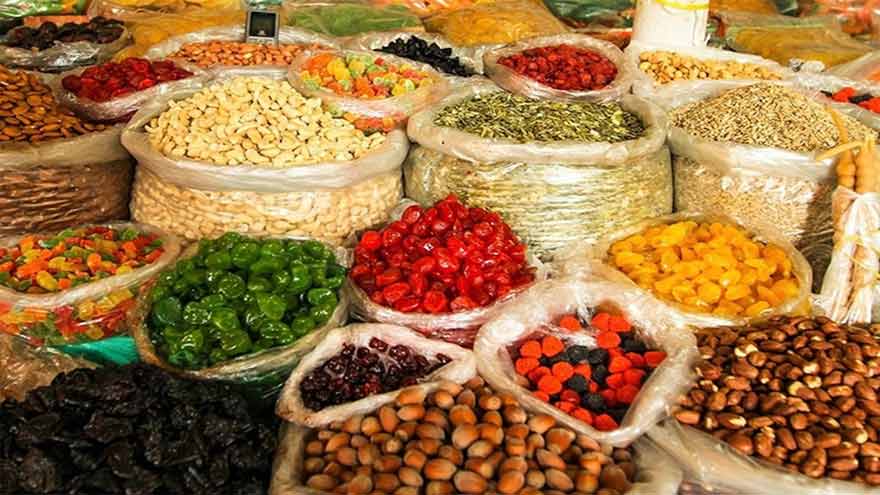
– World food prices rose in July to their highest in more than three years as adverse weather and war escalation in the Gulf and Black Sea supported crop markets, the United Nations’ Food and Agriculture Organization said on Friday.
The FAO Food Price Index, which tracks monthly changes in a basket of internationally traded food commodities, averaged 131.1 points in July, up from 130.3 in June and the highest reading since January 2023.
The FAO’s chief economist told Reuters this week that the world faces another bout of food inflation as wars in Iran and Ukraine along with El Nino create a perfect storm of higher costs and lower crop yields.
A 3.4% month-on-month rise in the FAO’s cereal price index drove the July trend, fuelled in turn by a 5.8% jump in wheat prices, the agency said.
Wheat markets were affected by concerns over Black Sea export disruptions and heat damage to crops in key producing regions, it said.
The FAO’s vegetable oil index rose 2% to its highest level since June 2022.
Higher crude oil prices amid escalation in the Iran war and strong demand for biodiesel supported palm and soy oil prices, though rapeseed and sunflower oil declined.
Sugar prices rose 5.6% on weather concerns in Europe and Asia and expectations of stronger ethanol demand in Brazil.
In contrast, meat prices fell 2.8% from a record high in June, FAO said.
Poultry, pig and bovine meat prices declined, though sheep meat prices reached a record high amid tight export supplies in Oceania. Dairy prices fell 0.7%.
The FAO’s overall food price index reading for July was slightly above a previous three-year high in April.
The latest reading was nonetheless 18.2% below its March 2022 peak that followed Russia’s full-scale invasion of Ukraine.
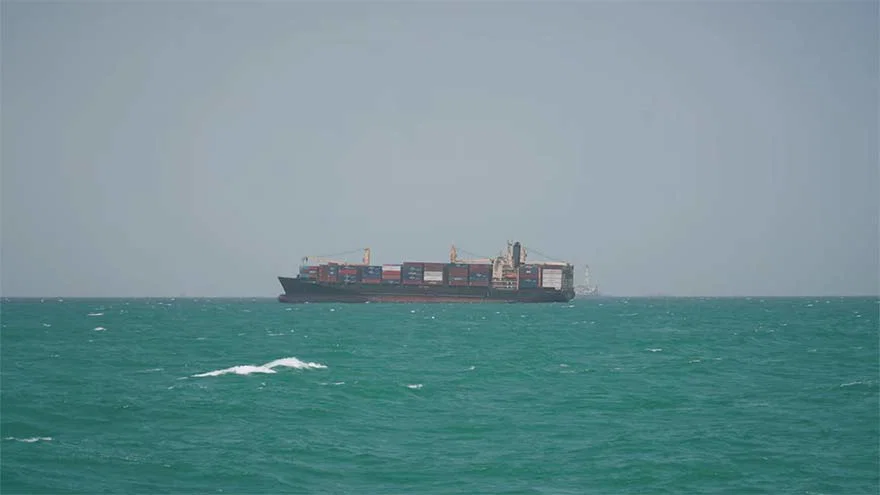
Saudi petroleum exports to Pakistan via the Red Sea reopened after drone attacks stopped a crucial pipeline, alleviating scarcity concerns as regional violence affects the country’s primary Middle Eastern supply sources, officials said on Tuesday.
Saudi Arabia resumed the operation of its East-West Pipeline that transports crude from oilfields in the Kingdom’s east to the Red Sea port of Yanbu, after it was interrupted on Sept 13 due to attacks that also suspended loadings at the export terminal.
The route helps Saudi crude avoid the Strait of Hormuz, where commerce had been severely affected since the war involving the United States, Israel and Iran broke out in February. TANKERS FROM YANBU TO PAKISTAN SAILING SOUTH THROUGH THE RED SEA AND THE BAB AL-MANDAB STRAIT TO THE ARABIAN SEA.
Reuters reported Tuesday that the East-West Pipeline had resumed at a slower rate and work was ongoing to get flows back up to their pre-war level of about 4 million barrels a day, or four percent of the world’s oil supply.
The restart helped send benchmark Brent crude down more than $2 to about $98 a barrel Tuesday, its lowest level in two weeks, while prices remain high on continuing disruption across the Middle East.
A delegation of the International Monetary Fund (IMF) has landed in Pakistan to discuss the country’s economic performance under the $7 billion Extended Fund Facility (EFF) and the Resilience and Sustainability Facility (RSF).
The IMF mission will begin technical talks with officials of the State Bank of Pakistan (SBP), sources in the Finance Ministry said. The first round of talks will be held on current account, policy rate and exchange rate while SBP officials will update the delegation on economic performance of the country.
Pakistan will also advise the IMF team on its foreign currency reserves, which have crossed the $17 billion level and an increase in foreign direct investment. The delegation will be informed about the successful issuance of the Eurobond and funds received from external sources.
The IMF mission will then go to Islamabad to meet with the Finance Ministry, Federal Board of Revenue, Ministry of Energy and other relevant departments after meetings with the State Bank.
The discussions are planned to take place over a period of around two weeks and will include economic developments and program performance up to June 2026. The discussions will also focus on fundamental benchmarks and milestones tied to Pakistan’s economic reform program.
The assessment will look at, among other things, improvements in the energy sector. Targets in circular debt in the electricity and gas sectors, as well as other structural and budgetary measures are likely to be discussed by the two parties.
Recent reporting suggests that a successful evaluation might make Pakistan eligible for roughly $1 billion under the EFF and another $200 million under the RSF, bringing the potential combined payment to some $1.2 billion.
Pakistan entered the $7 billion, 37-month EFF program in September 2024. These talks are the fourth review of the EFF and the third review under the RSF.
The Asian Development Bank has projected Pakistan economic growth at 3.7% for the current fiscal year, below the government’s objective of 4%.
The bank is also expecting average inflation of 8.3%, higher than the official forecast of 7%, due to probable economic disruptions from the ongoing turmoil in the Middle East.
In its Asian Development projection September 2026 projection, it noted Pakistan’s gross domestic product growth was projected to stay at 3.7pc in FY2027.
“As high energy, logistics, and agricultural input costs continue to affect domestic prices, average inflation is projected to rise to 8.3pc in FY27, above the central bank’s medium-term target range of 5pc–7pc,” it continued.
The ADB warned that Pakistan’s economic outlook could come under significant pressure from external developments. A rising Middle East conflict could add to the cost of oil imports, worsen the price hikes and employment conditions in the Gulf countries, which could cut remittance inflows by Pakistani workers.
The ADB said, “The re-imposition of austerity measures by the Pakistan government, especially if expenditure restraint is more pronounced than anticipated, could also weigh on domestic demand and economic activity and pose an additional downside risk to the economic outlook.
Other possible risks to the economy cited by the ADB are a tighter global financial environment, lower-than-expected tax revenue, climate and weather shocks to agriculture, and delays in reforms related to the energy sector and state-owned enterprises.
It is crucial to keep up the momentum on structural changes to improve the country’s fiscal and external position while helping to maintain confidence among investors, the bank added.
Economic activity in Pakistan improved during FY26 which ended June 30, 2026. Growth was 3.7% compared to 3.2% a year ago. A recovery was seen in a number of areas with strong services, rising industrial production, a resurgence in agriculture and strengthening private sector investment. However, economic activity slowed down a little in the last quarter, reflecting the effect of the Middle East crisis.
Continued reforms, better foreign-exchange reserves, renewed access to global capital markets and improvements in Pakistan’s sovereign credit ratings might assist raise investor confidence and stimulate private investment, the ADB said. Meanwhile, persistently high energy costs and uncertainties in the external environment, notably the ongoing impact of the Middle East conflict, could impede the speed of economic expansion.

DPM Dar asks OIC members to maintain united stance on Kashmir at UN

Punjab seeks army, rangers deployment ahead of PTI march

Saudi crude supplies to Pakistan resume across the Red Sea

ICC board meeting in India: Mohsin Naqvi gets invitation

23 people have died during the monsoon as rain-related incidents plague Punjab and KP.

Govt dedicated to resolving Balochistan issues: Dar
-
 Latest News4 months ago
ICC board meeting in India: Mohsin Naqvi gets invitation
-
 Latest News2 months ago
23 people have died during the monsoon as rain-related incidents plague Punjab and KP.
-
 Business2 months ago
Govt dedicated to resolving Balochistan issues: Dar
-

 Latest News1 month ago
‘Self-Reliance in Digital ID’: NADRA launches locally produced QR code-based National Identity Card
-

 Latest News2 months ago
Pakistan making rapid progress in robotics, AI: Shaza Fatima
-
 Latest News2 months ago
After a divorce, LHC decides that women who have been harmed by their spouses get their dower.
-

 Entertainment4 months ago
Interim bail given to YouTuber Rajab Butt in gambling app marketing case
-

 Latest News4 months ago
A meta program to monitor mouse clicks made by employees in violation of EU privacy regulations