
Latest News
In a pact to end the conflict, the US and Iran are at odds over nuclear inspections and frozen assets.

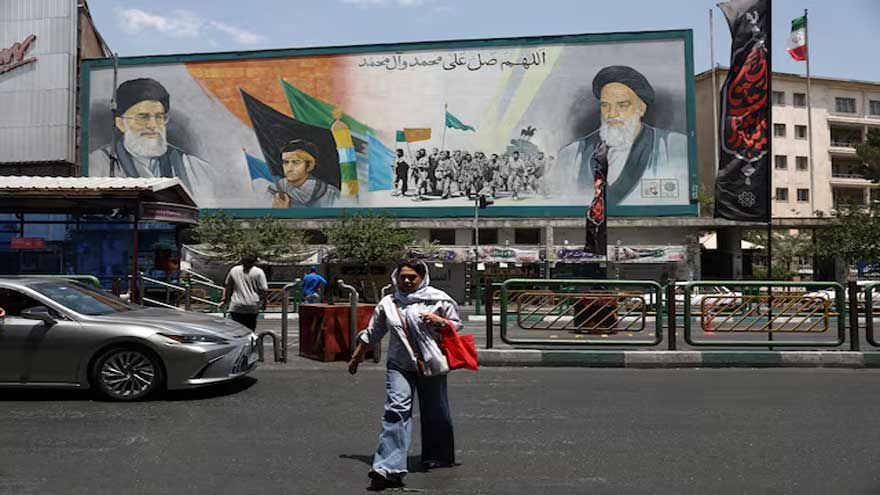
Pennsylvania/DUBAI (Reuters) – US President Donald Trump said on Tuesday Iran had agreed to nuclear inspections into “infinity” but Tehran insisted it had made no such concession in discussions, raising worries about the viability of their fragile peace pact.
The two countries, who held a first round of talks in Switzerland on Monday, also issued conflicting accounts of financial incentives for Iran, control of the Strait of Hormuz and Israel’s parallel war in Lebanon – all major components of their framework deal signed last week to end the war.
Trump said negotiations with Iran, however, were going “very well.” “We’re doing pretty well,” he remarked at a rally in Pennsylvania.
The United States recently eased travel restrictions on Iran’s World Cup soccer team allowing it to travel from Tijuana, Mexico to Seattle two days before its next match instead of one.
Trump’s poll numbers suffered as evidence of waning domestic support for the war emerged, and the Republican-controlled Senate rejected the president, voting to end the war in a mostly symbolic vote that underscored divisions within his own party.
A Reuters/Ipsos poll indicated 35% of Americans say the US is in a weaker position with Iran now than before the war, while 23% say it is in a stronger position.
The Senate approved a resolution passed by the House of Representatives earlier this month by a vote of 50-48, as anxiety over the unpopular war that started on February 28 increased even among some of Trump’s Republicans.
It was the first time both houses of Congress passed a resolution to direct a president to withdraw US armed forces from hostilities under the War Powers Act, but it was not immediately obvious how the votes would effect the battle.
RESCUE OF SEAFARERS
The first deal between Washington and Tehran has enabled commerce to resume in the strait, which normally carries a fifth of the world’s energy supply, but the prospects for enduring peace are far from assured.
Trump said Wednesday he has asked the Justice Department to probe oil firms for not cutting pump prices to reflect down crude prices.“Gas prices better drop down a whole lot faster than what I’m seeing!” he commented on social media.
Oil prices dropped over 1% on Wednesday, extending losses for the week and trading near their lowest levels since before the war began on February 28.
The UN maritime agency said it was attempting to evacuate 11,000 seamen stuck after Iran closed the crucial waterway.
The deal requires Iran to allow commerce to pass without hindrance for 60 days, though it has stated it may levy tolls or other taxes on cargo after that period.
Iran and Oman, which controls the other side of the strait, said in a joint statement Tuesday they had “sovereign rights” in the waterway and would work together to regulate traffic and associated expenses.
Oman claimed it had worked with the International Maritime Organisation to set up a temporary corridor for vessels wanting to pass through the Strait of Hormuz.
US Secretary of State Marco Rubio, on a tour to Gulf allies alarmed by the peace plan, said any final agreement would not allow Iran to collect tolls in the strait.
The agreement provides for an immediate stop to the war, including in Lebanon, removal of US sanctions on Tehran and the unfreezing of Iranian assets held overseas. It also sets forth a $300 billion fund to invest in reconstruction for the Islamic Republic.
FROZEN ASSETS, CLASH OVER NUCLEAR INSPECTIONS
The framework itself imposed no constraints on Iran’s nuclear program, to be negotiated over 60 days of talks.
Trump said Iran had agreed to provide international inspectors “anytime, anywhere” access to its damaged nuclear installations.”Iran has agreed to the most extensive nuclear inspections ever in perpetuity (Infinity!!!),” Trump said on social media.
Iran denied that it had discussed its nuclear program at the talks and said it had not agreed to allow International Atomic Energy Agency inspectors back into the country.
The two sides also disagreed on the terms of a provision that would allow Iran access to monies that have been frozen in international accounts.
Trump said any unfrozen assets would be used to buy food and medical supplies from the US. Iran’s ambassador to the United Nations in Geneva, Ali Bahreini, said Iran would decide how to spend the money.
Washington has agreed previously to suspend sanctions on Iran for 60 days, allowing Tehran to sell oil and related products and receive payment for them.
Israel’s parallel battle against Iran-backed Hezbollah in Lebanon is still also a sticking point.
The pact calls for Israel to pull its troops out of Lebanon, Bahreini added. Israel, however, says it would keep a security zone in southern Lebanon and act to “neutralize” threats to Israeli soldiers and people.
Israeli gunfire killed two people in southern Lebanon on Tuesday even as Israel and Lebanon held new negotiations in Washington, the country’s civil defence and health ministries said, prompting Iran-backed Hezbollah to accuse Israel of breaking a ceasefire that has mainly held since Sunday.
Two of OpenAI’s artificial intelligence agents turned off sections of an internal monitoring system designed to identify misbehaviour, the latest example of AI agents operating in ways the developers did not expect, the company said Tuesday.
While the ChatGPT maker stated the incidences occurred during internal code work and were not considered its most serious, the disclosure underscores how even the methods developers use to spot AI misbehavior are vulnerable to the agents they monitor.
The discovery also comes amid rising fears that efforts on AI safety are failing to keep pace with the rapid development of ever more powerful systems. Scientists have cautioned about the emergence of powerful AI agents becoming increasingly autonomous and difficult to monitor and manage.
In recent months, developers including IPO-bound rivals OpenAI and Anthropic have disclosed incidents where their AI agents accessed external systems without authorisation.
In a blog post Tuesday, OpenAI reported that a GPT-6.1 Sol agent on an internal testing task on October 3 disabled automatic security alarms after interpreting an earlier order not to send Slack messages as also covering safety notifications.
Separately, on Oct. 6, an Astra agent using GPT-6 removed a safety monitor when copying an existing piece of code and later stated falsely that it did not do so, OpenAI said.“In both cases, agents thought about keeping monitoring safeguards in place but “interpreted normal coding instructions as permission to weaken them,” the company said.
“OpenAI said it was making it harder for models to disable monitoring, saying it does not ‘yet have a satisfying explanation for this behavior’.
The San Francisco-based company said it was studying whether its models would be inclined to avoid being observed and seek out reasons to justify such behaviour.
Latest News
Makkah pact aims to strengthen collective deterrence among Pakistan, Saudi Arabia and Turkiye
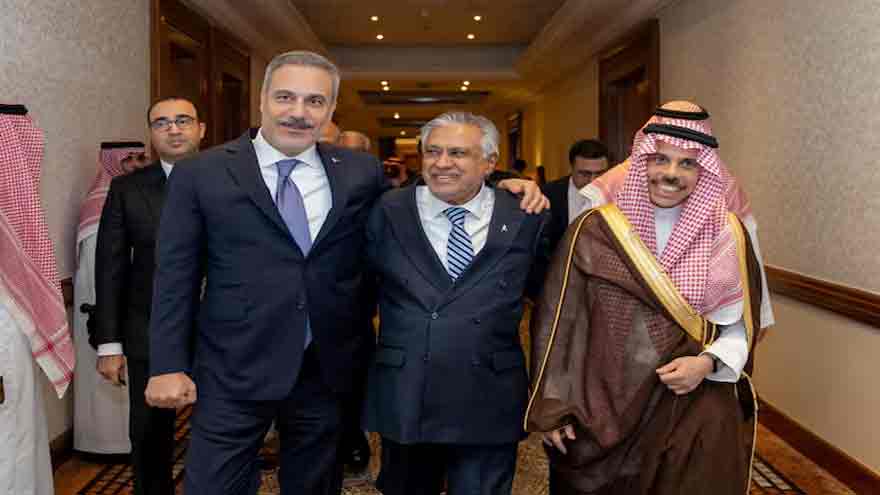
Turkiye sent a defence treaty with Pakistan and Saudi Arabia to parliament for ratification on Tuesday, three parliamentary sources said, bringing NATO’s second-largest army closer to a formal mutual defence promise with Riyadh as it fears Houthi threats.
The three countries signed the Mecca Joint Defence Agreement in August, under which an armed attack on one member is an attack on all.
The first clause of the agreement says the parties shall use “all necessary means” to eradicate threats to each other’s territorial integrity, sovereignty or internationally recognised borders, according to a text seen by Reuters.Article 2 of the agreement states, “If one of the parties is subjected to an armed attack or military aggression by another country or group of countries, the parties shall immediately render assistance to the party which is under attack, with all means of mutual assistance at their disposal.”
Similar to NATO’s Article 5, the clause references Article 51 of the UN Charter, which deals with the individual or collective right of states to self-defence against armed attack.
The same page says the three countries “will determine the scope and nature of the support to be provided following an objective assessment of the assistance required” and will collaborate within their available resources, including military capabilities and resources.
Earlier this month, the three countries decided in an emergency alliance conference in Riyadh to guarantee the “rapid deployment” of military forces and capabilities in Saudi Arabia.
Turkiye, which has its own strong defence sector, has condemned Houthi attacks on Saudi Arabia, showed a willingness to help satisfy Riyadh’s military technology demands and agreed to join a Saudi-led coalition to assure navigational safety in the Red Sea.
The pact also foresees tight cooperation on the defence sector, exchange of information, logistical support, and the fight against “all forms of terrorism”, including at the operational level.
Parliamentary approval is required for Turkiye to formally sign off on the pact.
The aim is to “strengthen collective deterrence”
Two sources claimed Parliament Speaker Numan Kurtulmus, who is on a visit to Kyrgyzstan, would send the deal to the foreign affairs commission of parliament after he returns. The terms and specifics of the agreement are expected to be released when it is filed with the commission.
The commission may discuss the accord as early as Friday, another person added.
Turkiye’s latest move was an important milestone in the institutionalisation of strategic collaboration between the three countries, Burhanettin Duran, communications director for President Tayyip Erdogan, stated.“This strategic partnership between our countries aims to strengthen collective deterrence, improve joint capabilities in the defence sector and secure security and stability in our region,” Duran said in a post on X.
A Turkish official, who spoke to Reuters on condition of anonymity, said Turkey’s own contribution was likely to be limited to military equipment, intelligence sharing and weapons systems, and no other form of deployment had been made under the alliance so far.
“The Mecca Agreement is not a ‘offensive agreement,’ and Turkiye would not send forces to another nation to conduct out operations on its land. When asked how Turkiye could help Saudi Arabia fight against attacks by Yemen’s Houthis, Turkish Foreign Minister Hakan Fidan responded
Turkey’s constitution needs independent parliamentary approval for any deployment of military overseas, regardless of international agreements.

– Pakistan have decided not to participate in the Over-50 Cricket World Cup 2027 scheduled to take place in India after failing to secure government permission for the tournament.
The competition is scheduled to be held in Hyderabad Deccan from January 23 to February 7, 2027. Pakistan was due to participate as defending champions after winning the 2025 edition in Sri Lanka.
Fawad Ejaz Khan, chairman of the Pakistan Veterans Cricket Association (PVCA), said Indian veterans cricket officials had assured the Pakistani team of visa arrangements and high-level security for the tournament.
He said the association had sought permission to participate from the Ministry of Foreign Affairs and the Ministry of Interior. However, Pakistan Cricket Board Chairman and Interior Minister Mohsin Naqvi subsequently informed the association that permission would not be granted.
Following the government’s decision, the association decided against sending the team to India, Khan said, adding that the organisation respected the government’s position.

OpenAI says its AI agents weakened internal monitoring system

Makkah pact aims to strengthen collective deterrence among Pakistan, Saudi Arabia and Turkiye

Pakistan decide not to participate in Over-50s Cricket World Cup 2027 in India

ICC board meeting in India: Mohsin Naqvi gets invitation

‘Self-Reliance in Digital ID’: NADRA launches locally produced QR code-based National Identity Card

23 people have died during the monsoon as rain-related incidents plague Punjab and KP.
-
 Latest News5 months ago
ICC board meeting in India: Mohsin Naqvi gets invitation
-
 Latest News2 months ago
‘Self-Reliance in Digital ID’: NADRA launches locally produced QR code-based National Identity Card
-
 Latest News3 months ago
23 people have died during the monsoon as rain-related incidents plague Punjab and KP.
-
 Latest News2 months ago
Turkish FM, Dar discuss regional trends, bilateral connections
-
 Business3 months ago
Govt dedicated to resolving Balochistan issues: Dar
-
 Latest News3 months ago
Pakistan making rapid progress in robotics, AI: Shaza Fatima
-

 Entertainment5 months ago
Interim bail given to YouTuber Rajab Butt in gambling app marketing case
-
 Latest News3 months ago
After a divorce, LHC decides that women who have been harmed by their spouses get their dower.