
Latest News
To commemorate the anniversary of Marka-e-Haq, top civic and military leaders assemble at Pakistan Monument.

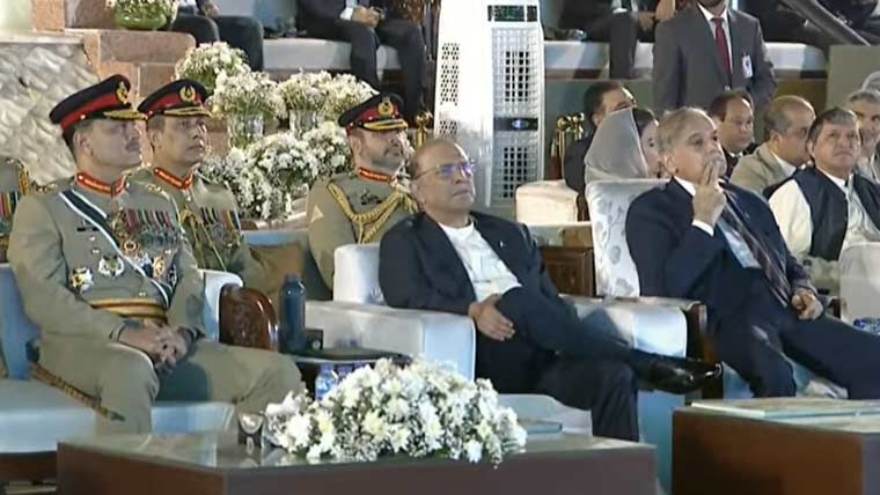
At a special ceremony on Sunday, Pakistan’s senior military and civil leaders convened at the Pakistan Monument in Islamabad to commemorate the first anniversary of the nation’s declared triumph in “Marka-e-Haq,” the state’s euphemism for the recent conflict with India.
Prime Minister Shehbaz Sharif, President Asif Ali Zardari, and Field Marshal Syed Asim Munir, Chief of Defense Forces and Chief of Army Staff, were present at the event. Senior political figures, federal ministers, international ambassadors, and senior civil and military officials were also present, along with Chief of Naval Staff Admiral Naveed Ashraf and Chief of Air Staff Air Chief Marshal Zaheer Ahmad Baber Sidhu.
Yousaf Raza Gilani, the chairman of the Senate, Ayaz Sadiq, the speaker of the National Assembly, and others from all backgrounds attended the memorial service at one of Islamabad’s most notable national landmarks.
The confrontation between Pakistan and India, which started with the Pahalgam attack on April 22 and ended with the truce declared on May 10 following Operation Bunyanum Marsoos, has been referred to by the state as “Marka-e-Haq,” or the “Battle of Truth,” according to official accounts.
The national anthem was played after the Holy Quran was recited to start the ceremony. Attendees applauded as the three armed forces’ well-prepared contingents performed a ceremonial march past the monument.
As attendees remembered what officials characterized as a pivotal period in Pakistan’s recent history, patriotic songs were also played, creating an emotionally charged environment.
A military aircraft fly-past was also planned as part of the commemoration. However, organizers subsequently acknowledged that bad weather in the federal capital was the reason for the cancellation.
The Pakistan Monument was surrounded by large screens and ceremonial lights, and the area was decorated with national flags and symbolic exhibits that reflected the role of the armed services during the fight.
While images from the ceremony emphasized the involvement of all three armed forces, state media coverage featured senior leadership mingling with visitors and military members during the occasion.
Throughout the ceremony, security measures in and around the Pakistan Monument were strict, with law enforcement officers keeping an eye on the roads leading to the location. The events were attended by a sizable number of invited guests, authorities, and media representatives.


Pakistan Tehreek-e-Insaf (PTI) has launched a fundraising campaign for its planned long march, with party workers beginning to contribute to the campaign.
Khyber Pakhtunkhwa Chief Minister Sohail Afridi also participated in the fundraising activity in Peshawar, where workers were seen making contributions for the planned mobilisation.
The PTI has scheduled its long march for Oct. 4. According to reports, the procession is planned to begin from Khyber Pakhtunkhwa, with the party having finalised arrangements for the mobilisation.
Speaking during the fundraising activity, Chief Minister Sohail Afridi said he had not yet received details of the government’s negotiations. He said the party’s demands had already been conveyed to PTI Chairman Barrister Gohar Ali Khan.
Afridi said Barrister Gohar was travelling to Peshawar and would brief the media about the situation later on Friday.
The fundraising campaign comes as government and opposition representatives held talks on Friday over the political situation and the PTI’s planned Oct. 4 protest. The first round of talks concluded with both sides agreeing to continue the dialogue on Saturday.
The PTI has maintained that its Oct. 4 mobilisation will go ahead, although the exact arrangements and route have been subject to discussions within the party. Recent reports said the party had considered launching the march from southern districts of Khyber Pakhtunkhwa before finalising the route.
The march was initially planned for Sept. 27 but was subsequently postponed to Oct. 4. PTI leaders have linked the mobilisation to demands concerning party founder Imran Khan and other political issues. (The Express Tribune)
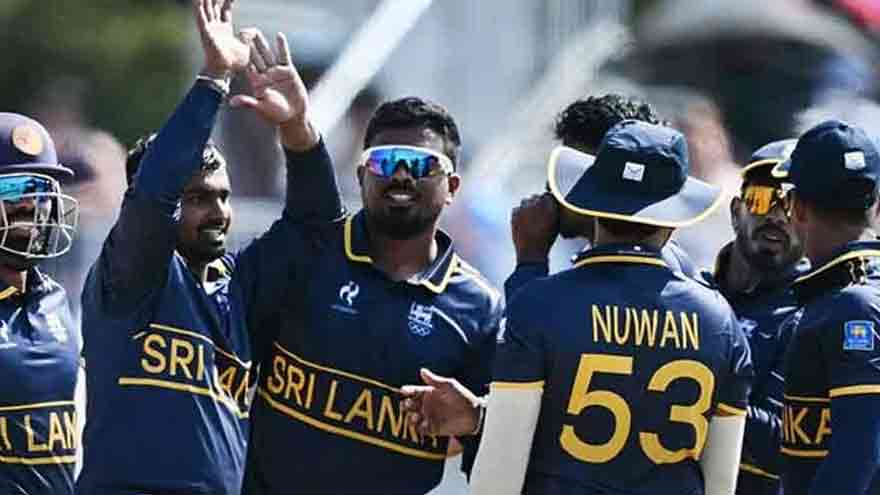
— Sri Lanka defeated Bangladesh by 63 runs to win the bronze medal in the men’s cricket event at the Asian Games in Japan.
Sri Lanka won the toss and decided to bat first at Karuizawa Sports Park and posted 165 for nine in 20 overs.
Tharindu Rathnayake blasted 65 off just 32 deliveries, the best score, while captain Sakanth Viyaskanth bagged two wickets each and Wanuja Sahan Arachchige chipped in with 33 runs.
Bangladesh battled hard against the Sri Lanka bowlers but were bowled out for 102 in 17.3 overs chasing a target of 166.
Nuwan Thushara, Tharindu Rathnayake and Vijayakanth Viyaskanth all grabbed two wickets each while Wanuja Sahan also claimed two wickets.
The win gave Sri Lanka third place in the men’s cricket competition and a bronze medal at the Asian Games.
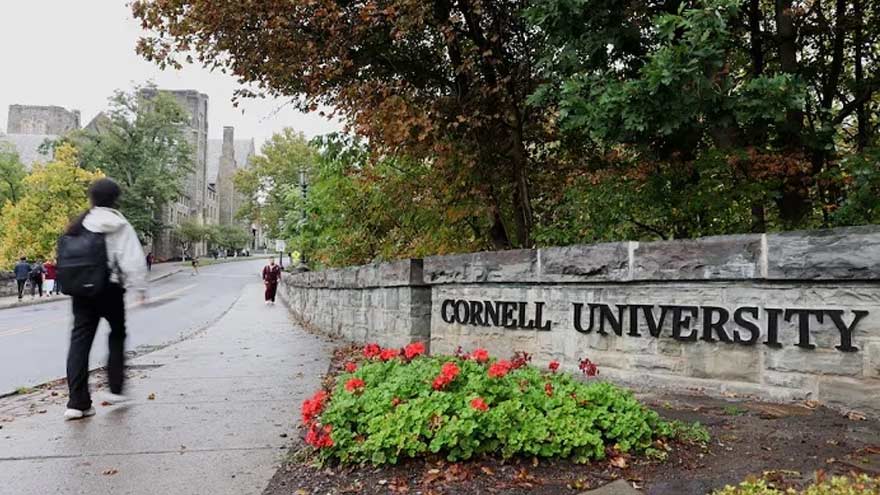
Students are questioning Cornell University’s response and raising worries about safety on the Ivy League campus, after a sexual assault case involving multiple members of a Cornell University fraternity.
Among those affected was Cornell junior Sophia Riley Sim, who skipped school this week as a 2024 incident’s allegations and the university’s handling of the matter faced increased attention.“Cornell has failed our community due to lack of accountability, lack of transparency, and failure to address the state of the Cornell student body at this time,” Sim, a junior, said Thursday at a public hearing on sexual assault organized by Cornell’s Student Assembly.There has been no real contact from university administration, administrators and faculty.
The Ivy League school has defended its handling of the incident, saying it carried out a thorough investigation and banned the Chi Phi fraternity connected to the alleged attack from campus. The school says it took several disciplinary actions, including expulsions.
It did not immediately reply to a request for further comment.
The hearing, held in one of Cornell’s oldest halls, occurred just days after the claims became public following the filing of a civil case and an announcement that a criminal investigation would be reopened.
The case has renewed criticism of how law enforcement and colleges handle reports of sexual assault, and students are questioning if the protocols are sufficient to safeguard them. New York state officials are also paying attention, naming a special prosecutor to probe the matter.
unsafe feeling
At an Assembly session, speakers broke down in tears and described their experiences of sexual assault, criticizing the attitude of the respected university.
The Student Assembly, which represents Cornell’s undergraduate students and can make suggestions to the university’s bodies or offices, unanimously passed a resolution urging Cornell administration to give a thorough explanation of how the university handled the investigation. It also demanded that the university reveal any disciplinary action taken against the accused students and publish annual reports on the outcome of any future sexual misconduct cases.
Organizers had urged that the hearing not name or record many of the dozens of speakers.
One girl stated she had worked her whole life to get into Cornell and now felt it wasn’t worth it. Several others stated they did not feel protected at the 2,300-acre school in New York’s Finger Lakes region.
A university study released on its website in 2025 found that 35 percent of undergraduate women said they had been subjected to nonconsensual sexual intercourse involving force or incapacitation since entering Cornell. Up from 20% in 2021.“We are going to fight
The lawsuit says fraternity members gave the victim with beer, marijuana and ketamine, and then sexually assaulted her when she was incapacitated. It also claims Cornell did not appropriately discipline some of the implicated students and enabled some to seek reduced punishment by submitting essays. Cornell said the essays were not the sole punishment handed down.
The guys all denied misconduct, the New York Times reported, citing internal Cornell documents. Some men maintained the intercourse was consensual, while others denied participating.
Students at Cornell have planned a rally for Monday to urge for more steps to protect victims.
“I reported a sexual assault to the university and the process really added to my anguish,” said Jane Wang, a public policy major.“Accompanying all of my recovery from the assault mentally, physically and emotionally was an abundance of paperwork, very little instruction on how to navigate it and no follow-up from our office about an outcome,” she stated.
Due to constraints imposed by privacy rules, the Ivy League institution said in a statement on its website, it is unable to release complete information about individual students and disciplinary outcomes. ““This should not be taken as any lack of seriousness regarding the conduct in question,” the statement read.
Several additional female students told the committee that they had been sexually attacked in the past on Cornell’s campus, but provided no details.
“The results from the 2025 survey of sexual assaults were unacceptable,” said Saanya Agarwal, the student women’s issues leader at Cornell University.“Our campus, and campuses across the United States…this is not something that we are going to accept,” added Agarwal. We’re going to battle.

PTI launches fundraising drive for Oct 4 long march

Sri Lanka overcame Bangladesh to claim Asian Games bronze in cricket

Cornell students protest university’s handling of sex assault claims

ICC board meeting in India: Mohsin Naqvi gets invitation

23 people have died during the monsoon as rain-related incidents plague Punjab and KP.

‘Self-Reliance in Digital ID’: NADRA launches locally produced QR code-based National Identity Card
-
 Latest News5 months ago
ICC board meeting in India: Mohsin Naqvi gets invitation
-
 Latest News2 months ago
23 people have died during the monsoon as rain-related incidents plague Punjab and KP.
-
 Latest News2 months ago
‘Self-Reliance in Digital ID’: NADRA launches locally produced QR code-based National Identity Card
-
 Business3 months ago
Govt dedicated to resolving Balochistan issues: Dar
-
 Latest News2 months ago
Pakistan making rapid progress in robotics, AI: Shaza Fatima
-

 Latest News1 month ago
Turkish FM, Dar discuss regional trends, bilateral connections
-

 Entertainment5 months ago
Interim bail given to YouTuber Rajab Butt in gambling app marketing case
-
 Latest News2 months ago
After a divorce, LHC decides that women who have been harmed by their spouses get their dower.