
Latest News
Increasing the annual fees for departmental cricket teams is the PCB’s decision.

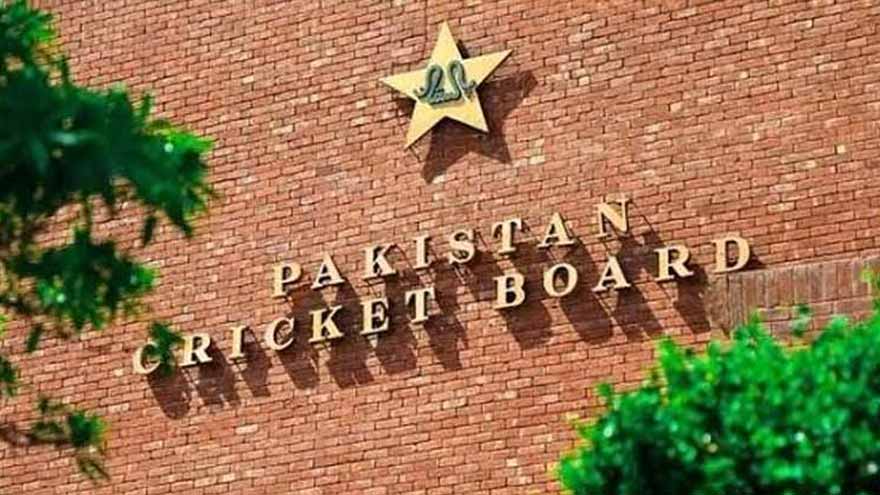
– The Pakistan Cricket Board (PCB) has doubled annual registration costs for departmental cricket teams and come out with a new policy for departmental cricket contests, which has worried various departments over the increasing financial load.
Grade-I departmental team’s annual cost has been enhanced to Rs15 million while Grade-II Gold and Grade-II Silver teams will have to pay Rs4.2 and Rs4 million correspondingly, the notice said.
The PCB has also set minimum salary standards for players. Under the new regulation, Grade-I departments have to pay at least one player a minimum monthly salary of Rs125,000 or Rs1.5 million yearly.
Gold teams for Grade-II events are to pay players a minimum of Rs75,000 per month and Silver teams Rs50,000 per month minimum. Departments have also been told to sign players to one-year deals.
Several departments have expressed concerns over the hike in annual fees, saying that they already shoulder the entire operating and team-related costs, sources said. The registration price was already increased from Rs3 million to Rs5 million and now the new hike to Rs15 million will put an additional financial burden on the participating departments, they said.
The new policy also includes match fees and daily allowances for the domestic events including President’s Trophy Grade-I First-Class, President’s Cup One-Day and President’s Trophy Grade-II Gold and Silver contests.
Under the new set-up Grade-I players would be entitled for Rs10,000 as match fee and reserve players will be given Rs5,000. A daily allowance of Rs 5,000 has also been approved. The match cost has been determined at Rs5,000 for Grade-II competitions with a daily allowance of Rs4,000.
Meanwhile, the PCB has called a critical meeting on June 29 to examine the implementation of the new departmental cricket strategy and to resolve the concerns made by the departments attending.
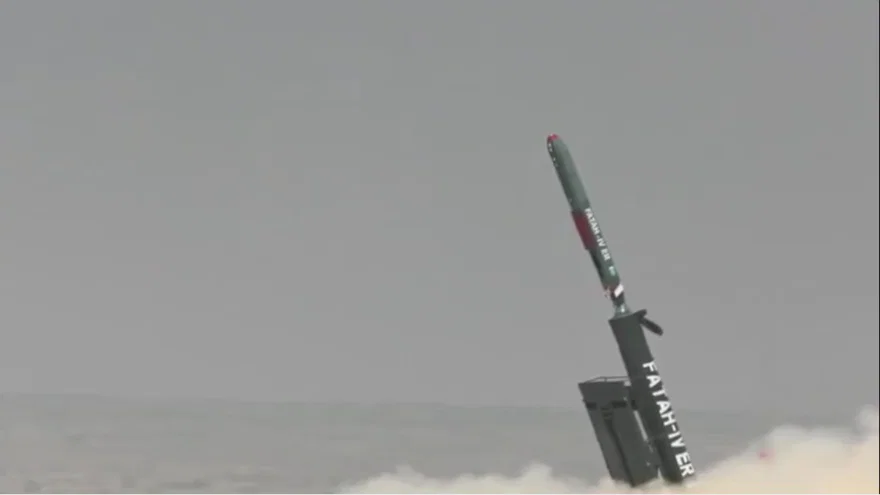
Pakistan has successfully conducted a test launch of the extended version of its indigenously developed Fatah-4 Ground-Launched Cruise Missile, according to the Inter-Services Public Relations (ISPR).
The latest test focused on an extended-range variant of the weapon system and was aimed at validating additional technical parameters incorporated into its various sub-systems. The missile is equipped with advanced avionics and state-of-the-art navigational aids, enabling it to engage targets at extended ranges with high precision and lethality.
The development marks another test of Pakistan’s domestically developed Fatah-4 system, which was previously reported with a range of 750 kilometres.
According to the military’s statement, the extended version successfully demonstrated the performance of its upgraded systems during the launch.
The test validated additional technical parameters of various sub-systems designed to improve accuracy and enhance the weapon system’s survivability. The latest configuration is also intended to provide the capability to engage targets at greater distances while maintaining precision.
The Fatah-4 is a Ground-Launched Cruise Missile equipped with advanced avionics and modern navigation technology. Pakistan previously conducted a successful training fire of the system in May 2026, with ISPR saying the exercise was intended to enhance operational efficiency and validate technical parameters linked to accuracy and survivability.
The missile had earlier been publicly reported with a range of 750 kilometres. The extended version tested on Tuesday has been described by ISPR as capable of engaging targets at extended ranges, although the military statement did not specify a new maximum range.
The launch was witnessed by senior officers from the Pakistan Army, alongside scientists and engineers from the developing agency.
The Fatah-4 was first publicly confirmed by Pakistan in 2025, when the Army conducted a successful training launch of the newly inducted Ground-Launched Cruise Missile. At that time, ISPR said the system featured advanced avionics and state-of-the-art navigational aids and was capable of engaging targets with high precision.
A further training fire was conducted in May 2026 by the Army Rocket Force Command. ISPR said the exercise validated technical parameters of various sub-systems while focusing on improved accuracy and enhanced survivability.
The President and Prime Minister of Pakistan, along with the Chief of Army Staff and Chief of Defence Forces and the Services Chiefs, commended the successful test launch of the Fatah-4 extended version.
They also appreciated the technical expertise, dedication and commitment of the scientists, engineers and other personnel involved in achieving the latest milestone.
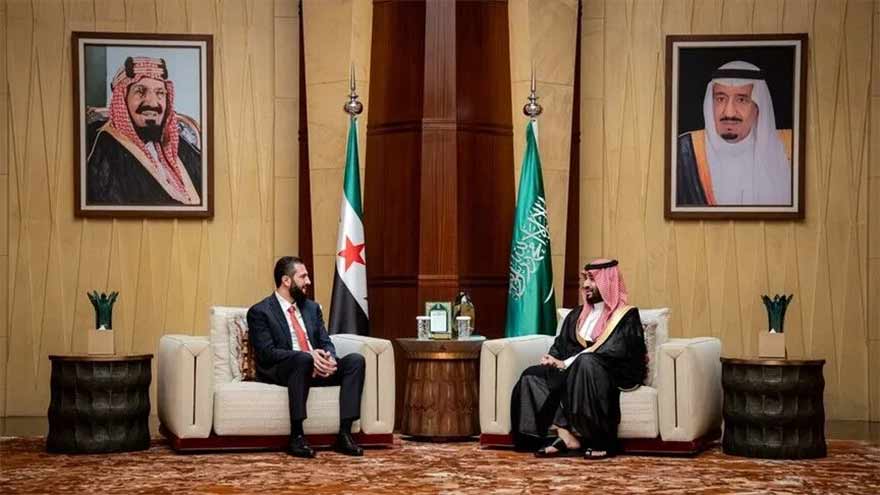
Syrian President Ahmad al-Sharaa met with Saudi Crown Prince Mohammed bin Salman in Riyadh on Tuesday.They talked about Syria’s rebuilding efforts and ways to bring in Saudi investments.
Al-Sharaa officially invited the crown prince to visit Syria.
The Saudi official news agency, SPA, posted pictures of the meeting on X, but didn’t give more details.
The Syrian presidency said that Foreign Minister Asaad al-Shaibani was also at the meeting.
They discussed the relationship between Syria and Saudi Arabia and how to improve it to benefit both countries.
The Syrian presidency’s media office later said the talks were about improving relations in many areas and boosting political, diplomatic, and economic cooperation in a way that works for both nations.
They also reviewed plans for Syria’s reconstruction, including repairing damaged infrastructure and important facilities from the war, as reported by the Syrian Arab News Agency, SANA.
The discussions also covered bringing in high-quality investments to Syria and increasing the role of Syrian and Saudi businesses in energy, construction, industry, agriculture, and trade.
Al-Sharaa invited Mohammed bin Salman to visit Syria, with the presidency saying the visit would help build closer ties and start a new stage of Arab cooperation on regional and international matters.
They also talked about recent events in the region and shared views on issues that affect both countries, aiming to support security and stability in the area.

US Vice President JD Vance told Reuters in an exclusive interview that Iran must make a “meaningful” cut in its nuclear enrichment programs to meet US demands and stop the seven-month war between the two countries.At the same time, Washington is unsure how Tehran makes decisions during negotiations.
Vance, who has long doubted US involvement in foreign conflicts, is leading efforts to reach a peace deal.
In June, he helped broker a temporary agreement, but it collapsed quickly.The war has affected global energy prices and has made President Donald Trump and other Republicans look weak ahead of the November midterm elections.
After a campaign trip in Alaska, Vance said any deal would require Iran to reduce its nuclear enrichment, not just promise to do so later.
“If you don’t want a nuclear weapon, then why do you need 60% enriched fuel?
And if you want to show you’re not going to build a nuclear weapon, don’t build highly enriched fuel.That’s a basic issue,” Vance said.
He added, “If they want to show they’re not going to build a nuclear weapon, they should take meaningful steps on their enrichment programs.”
In recent weeks, Iran and the US have been discussing ways to end the war and reopen the Strait of Hormuz, which is crucial for global energy shipping.
Trump rejected Tehran’s latest offer and warned that military action could get worse after the midterms.
Vance said the US is still open to a deal but wants real nuclear concessions from Iran.
“We won’t trade words for actions,” he said.
UNCERTAIN ABOUT IRAN’S DECISION-MAKING: VANCE
Vance also said Washington isn’t sure who makes decisions in Iran.
He has talked with Iranian President Masoud Pezeshkian and Foreign Minister Abbas Araqchi, but it’s unclear how much power they have in Iran’s leadership structure.This became even more complicated after joint US-Israeli strikes killed Supreme Leader Ayatollah Ali Khamenei at the start of the war.
“One of the things we noticed is it’s not totally clear how decisions are made in Iran,” Vance said.
Trump also said on Tuesday that his biggest problem is not knowing who is in charge of Iran.
Iran’s Foreign Ministry spokesperson said that US officials know who the Iranian representatives are and how the decision-making process works.
“The real problem is the contradictory statements and mixed messages from US officials,” Esmaeil Baghaei said at a press conference.
Vance told Reuters he has spoken with field commanders to understand the battlefield.
He said there are no serious shortages of weapons and that while Iranian forces can hit commercial ships in the Strait of Hormuz, they can’t stop energy shipments through the waterway.
Vance did not say whether he is leading peace talks, even though he is often seen as the White House’s main negotiator.
“We are certainly involved,” he said.”Ultimately, the president of the United States is driving things.”
The war — costing about $3 billion a month — has become a big issue in the campaign.
Rising energy prices have hurt Trump and Republicans in key states that could influence the outcome of Congress.
Vance has tried to downplay criticism of Trump’s handling of the conflict, telling voters not to let this issue stop them from supporting Republicans in the coming election.
In Alaska, Vance supported Senator Dan Sullivan, who is in a close race against Democratic challenger Mary Peltola.
Trump won Alaska by 13 points in 2024, but higher living costs have put the state in question.
Before talking to Reuters, Vance focused much of his speech on affordability, especially energy prices.
In Alaska, remote location makes everyday items more expensive, and energy production is a big part of the economy.
Rallygoers cheered when Sullivan almost introduced Vance as the US president instead of the vice president.
Vance is seen as a top Republican candidate for the presidency in 2028.
Vance told Reuters he hasn’t decided yet whether he will run for president in 2028.
“He said, ‘I’m naturally someone who puts things off.
I haven’t really thought about it much.'”

Pakistan test-fires upgraded Fatah-4 with enhanced precision and survivability

Syria, Saudi Arabia discuss reconstruction, investment

Vance says Iran must cut enrichment to end war

ICC board meeting in India: Mohsin Naqvi gets invitation

23 people have died during the monsoon as rain-related incidents plague Punjab and KP.

‘Self-Reliance in Digital ID’: NADRA launches locally produced QR code-based National Identity Card
-
 Latest News5 months ago
ICC board meeting in India: Mohsin Naqvi gets invitation
-
 Latest News3 months ago
23 people have died during the monsoon as rain-related incidents plague Punjab and KP.
-
 Latest News2 months ago
‘Self-Reliance in Digital ID’: NADRA launches locally produced QR code-based National Identity Card
-
 Business3 months ago
Govt dedicated to resolving Balochistan issues: Dar
-
 Latest News1 month ago
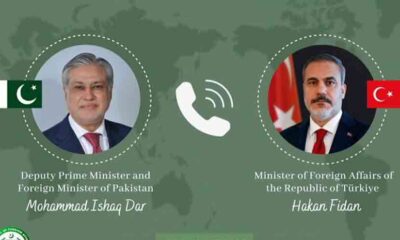
Turkish FM, Dar discuss regional trends, bilateral connections
-
 Latest News2 months ago
Pakistan making rapid progress in robotics, AI: Shaza Fatima
-

 Entertainment5 months ago
Interim bail given to YouTuber Rajab Butt in gambling app marketing case
-
 Latest News2 months ago
After a divorce, LHC decides that women who have been harmed by their spouses get their dower.