
Latest News
Iran begins week of mourning ceremonies as Ali Khamenei sleeps in state in Tehran

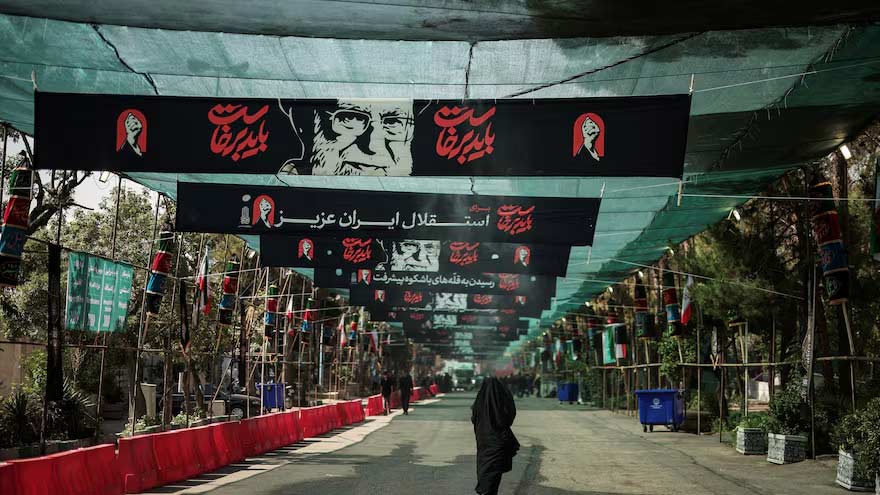
The remains of Iran’s deceased Supreme Leader Ayatollah Ali Khamenei lay in state Friday in a huge auditorium in Tehran as clerics, officials, foreign dignitaries and other mourners paid their condolences.
Iran is marking a week of huge funeral processions for Khamenei, whose 37-year reign was ended in February by the war’s first airstrike, in a demonstration of public loyalty to the Islamic Republic’s theocratic regime and revolutionary zeal.
Khamenei’s body was to be taken to Qom, Najaf and Kerbala, the great Shi’ite centres of Iran and Iraq, before being buried on Thursday in Mashhad, site to the country’s greatest pilgrim shrine.
CRUCIAL TIME FOR ISLAMIC REPUBLIC
Flowers were tossed from the bier into the audience as his casket was opened to a swarm of grieving followers swaying and beating their heads in tune to a sung lament on Thursday night. On Friday the casket and those of family members slain with him, were put in state in the grand prayer hall erected to memorialize his predecessor, Ayatollah Ruhollah Khomeini.
The burial comes at a crucial time in Iran, where the religious rulers backed by the Islamic Revolutionary Guard Corps are riding high from surviving what they viewed as an existential fight against their largest and most powerful rivals.
Authorities are hoping to organize millions of people for the large processions over the coming days and are providing transport, food and lodging to help boost numbers.
Yet almost 50 years after the 1979 revolution, and despite all the official pronouncements of national unity on the eve of Khamenei’s funeral, the Islamic Republic has seldom seemed so divided at home.
Analysts claim religious leadership support is wafer thin, and the new Supreme Leader, Khamenei’s son Mojtaba Khamenei, has not been shown in any new photograph since being injured in the strike that killed his father.
Years of crushing sanctions have paralyzed the economy, while growing outbreaks of major nationwide rallies have been put down by security forces with increasing brutality, culminating in the killing of thousands of demonstrators in January.
The core difficulties were swept aside this week as the authorities put on a show of state authority and broad support.
Tehran streets were under tight control, with military and police vehicles guarding the main roads and police and members of the black-shirted volunteer Basij paramilitary organization patrolling on motorbikes. Iran threatened the U.S. and Israel with attacks during the funeral.
The coffins, arriving on Friday, were carried high above the upraised hands of an expectant throng and then laid in the prayer hall on a white, stepped dais before a high, beautifully tiled, arched recess, flanked by national and black mourning flags.
The coffin bore a black hat, worn by clerics who say they descend from Islam’s Prophet Mohammed, and a folded checkered scarf, a sign in Iran of strong revolutionary beliefs and solidarity with Palestinians.
Among foreign leaders and officials attending were former Russian President Dmitry Medvedev, Chinese National People’s Congress deputy chairman He Wei, Pakistani Prime Minister Shehbaz Sharif and Iraqi President Nizar Amedi.
The ceremony was attended by families of Hezbollah leader Hassan Nasrallah and senior commander Imad Mughniyeh, close Lebanese supporters of Iran, who were murdered in Israeli bombings.
Iran’s own political leaders — the president, parliament speaker, foreign minister and others — poured in to grieve and pray Friday morning. A group of generals saluting stood before the casket. Among them was the new chief of the Revolutionary Guards, Ahmad Vahidi, who had not appeared in public since his appointment for fear of assassination.
SOBBING CROWDS, FUNERAL TOUR OF IRAQ & IRAN
In Iran’s theocracy, Khamenei was not just head of state and leader of a revolutionary movement, but also the representative on earth for Shi’ite Islam’s 12th imam, who vanished in the ninth century.
His murder in an enemy attack feeds into a powerful Shi’ite ritual of martyrdom and sorrow, in which processions of flagellants beat their chests or backs.
That powerful symbolism has been seen in the black funeral banners that have draped over city streets since his death evoking the seventh-century martyrdom of Shi’ism’s third imam, Hossein.
In central Tehran overnight, a mob stood wailing and shouting, led by a Basij member, as others gave out posters of the late Khamenei.”Only with the revenge of his blood and demanding justice for it and not leaving our leader’s blood unavenged, God willing, can this sorrow of the people be somewhat alleviated,” said Mobina Razaaghi, an 18-year-old student from Isfahan, attending the burial activities with classmates.
Khamenei was killed along with his daughter, son-in-law and baby granddaughter, who were laid out in coffins adjacent to his, and the wife of his son Mojtaba.
WAR DELAYS BURIAL
Burials are expected to be performed within a day of death in Islam, but the risks of hosting a huge burial during the war meant it was delayed until after last month’s interim truce accord was negotiated.
Hotels are giving 50% discounts, schools, mosques and sports halls are being readied to house mourners, and bus and train networks are being rerouted to support the main events.
After what authorities are touting as a large procession in central Tehran on Monday, the remains will be carried to the seminary city of Qom, the seat of Iran’s Shi’ite hierarchy, for festivities on Tuesday.
On Wednesday ceremonies will take place in the Iraqi cities of Najaf and Kerbala, the shrines of Iraq’s Shi’ite majority, with significant guests from Iran’s regional network of Shi’ite proxies.
He will be laid to rest on Thursday following a second procession, at Mashhad near the shrine of the Imam Reza, a figure of enormous devotion in Iran.
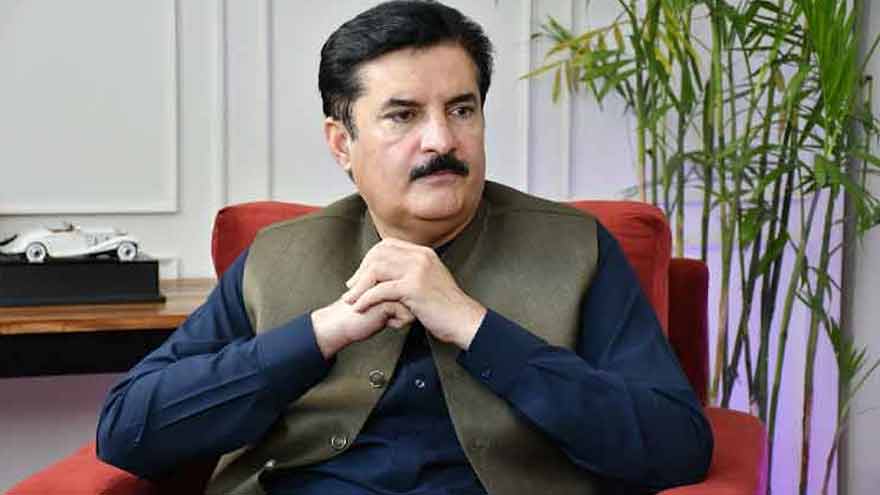
Khyber Pakhtunkhwa Governor Faisal Karim Kundi has said that an emergency will be imposed if necessary to save the province, arguing that the prevailing situation could provide grounds for such a measure.
Speaking to a private television channel, Kundi said that when the situation in the province reaches such a point, the president, prime minister and other relevant institutions may consider imposing an emergency.
The KP governor said that if an emergency or similar measure was imposed, he alone would be enough to deal with the situation. He claimed that those involved were currently hiding and getting themselves arrested.
Kundi said he did not make provocative statements like his opponents and would deal with them when the situation arose. Questioning the ongoing long march, he asked whether anything was actually happening in Peshawar, whether any corner meetings had been held or whether any banners had been seen.
He said the long march had so far only resulted in what he described as self-arrests and people going into hiding. Kundi challenged the participants to cross Swabi and said there appeared to be no proper planning behind the march.
The governor claimed that the protesters wanted the march to continue for a month but did not want to reach Swabi.
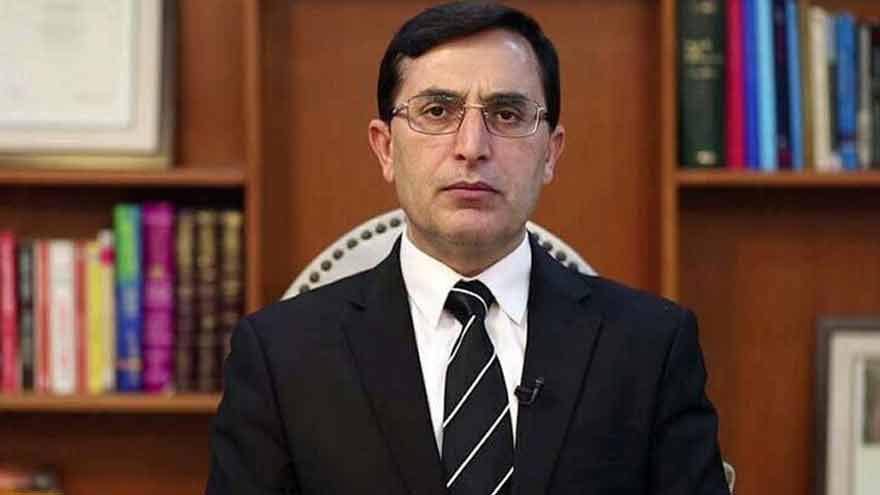
Pakistan Tehreek-e-Insaf (PTI) Chairman Barrister Gohar Ali Khan has said the party wants the negotiations with the government to be successful but the two parties had yet to decide when the next round of talks will take place.
Talking to reporters after a standoff arose between the government and PTI Gohar said that the party’s lengthy march would go forward as per schedule calling it the party’s right.
He said no step should be taken under the garb of the long march that could cause animosity, division or conflict among the people of Khyber Pakhtunkhwa or undermine the mandate, autonomy and powers of the province.
“There is no room for any measure against provincial rights or the public mandate, which will also be against the spirit of the 18th Amendment,” Gohar stated.
PTI chairman said: “The response to the long march should not be imposition of emergency or governor’s rule. He said there was still no decision on when the next government-PTI delegates meeting would be held.
Meanwhile, Federal Minister Talal Chaudhry said that several issues were agreed upon in the negotiations but the form of agreement was amended numerous times on the directions of the Khyber Pakhtunkhwa government.
He said the province government was not prepared to implement the National Action Plan and that was why the talks could not move forward.
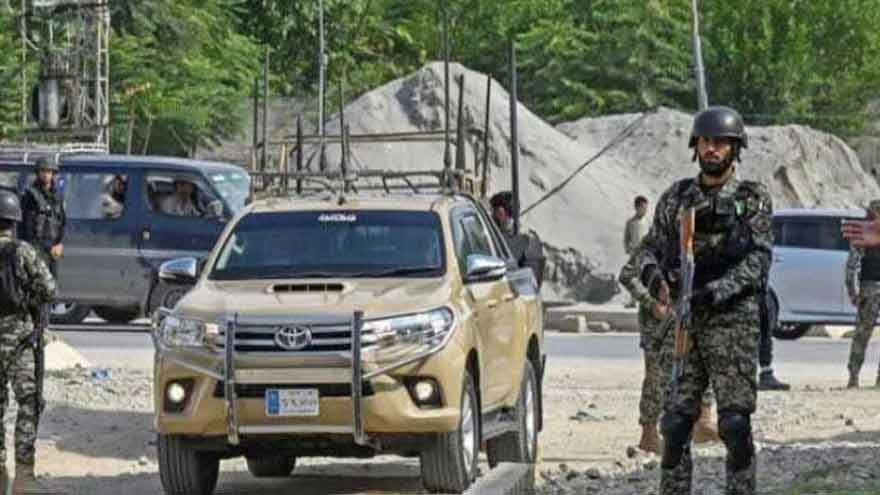
- Eight terrorists sponsored by India were killed in an intelligence-based operation carried out by security forces in Khyber Pakhtunkhwa’s Dera Ismail Khan province, security sources said on Sunday.
The operation was begun after sources said that intelligence assessments had suggested the presence of militants in the region. The operation left eight members of the group, including three of its top commanders, dead.
Security sources stated they had retrieved a considerable number of guns and ammunition and foreign currency from the insurgents.
Sources said that the operation was conducted under the government’s Azm-e-Istehkam vision to fight terrorism and to provide enduring peace and stability in the country.
Prime Minister Shehbaz Sharif congratulated the security forces for an excellent and timely operation against the extremists.
“The entire nation is behind the security forces in their fight against terrorism,” the prime minister added. He underlined the government’s intention to continue its operations against Fitna al-Khawarij until the menace of terrorism is removed.
Elimination of terrorism was vital for peace and stability in the country, the prime minister stated.
Interior Minister Mohsin Naqvi also praised the security forces for the successful operation against militants in Dera Ismail Khan.

KP governor warns of emergency in province if needed to rescue it

PTI long march to go forward as per schedule: Barrister Gohar

Security forces kill eight India-backed militants in KP’s DI Khan operation

ICC board meeting in India: Mohsin Naqvi gets invitation

23 people have died during the monsoon as rain-related incidents plague Punjab and KP.

‘Self-Reliance in Digital ID’: NADRA launches locally produced QR code-based National Identity Card
-
 Latest News5 months ago
ICC board meeting in India: Mohsin Naqvi gets invitation
-
 Latest News2 months ago
23 people have died during the monsoon as rain-related incidents plague Punjab and KP.
-
 Latest News2 months ago
‘Self-Reliance in Digital ID’: NADRA launches locally produced QR code-based National Identity Card
-
 Business3 months ago
Govt dedicated to resolving Balochistan issues: Dar
-
 Latest News2 months ago
Pakistan making rapid progress in robotics, AI: Shaza Fatima
-

 Latest News1 month ago
Turkish FM, Dar discuss regional trends, bilateral connections
-

 Entertainment5 months ago
Interim bail given to YouTuber Rajab Butt in gambling app marketing case
-
 Latest News2 months ago
After a divorce, LHC decides that women who have been harmed by their spouses get their dower.