
Business
Pakistan needs to win economically after Marka-e-Haq: minister

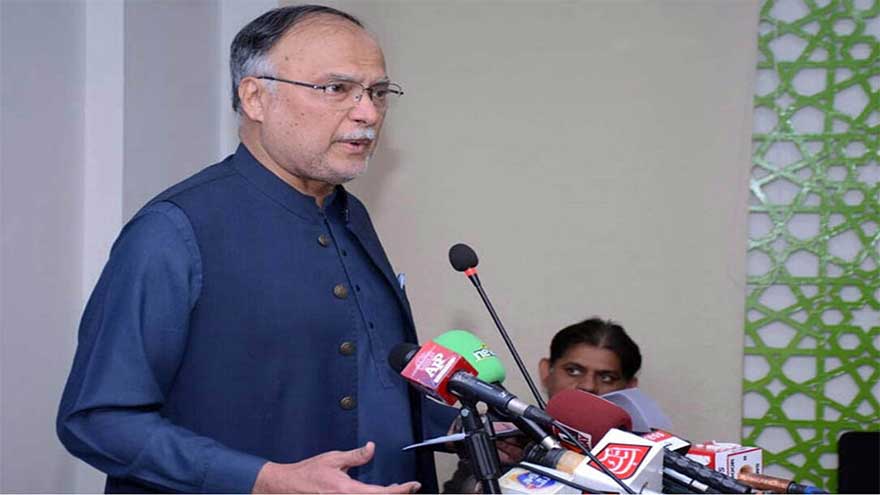
Planning, Development, and Special Initiatives Minister at the Federal Level Following the achievement of the “Marka-e-Haq,” Ahsan Iqbal stated on Saturday that Pakistan must now achieve a “Marka-e-Maeeshat” (economic victory), since a robust defense cannot exist without a robust economy.
During his visit to the Lahore Chamber of Commerce and Industry (LCCI), he engaged with the business community and stated that Pakistan may become one of the world’s top economies if it concentrates on exports, industrial growth, and economic reforms over the next ten years.
Because history has demonstrated that weak economies cannot support powerful defense systems, Ahsan Iqbal stated that the nation as a whole now has an obligation to rebuild the economy in light of the “Battle of Truth.”
According to him, the government is collaborating with the business sector to advance exports, industrial development, and tax net expansion.
The goal of reaching 100 billion dollars in exports by 2035, he continued, is just as crucial for Pakistan as obtaining nuclear capability previously was.
He claimed that by taking a reasonable and balanced approach, Pakistan fostered peace, stability, and communication, further enhancing the nation’s favorable reputation abroad.
According to Ahsan Iqbal, Pakistan’s recent military and diplomatic successes have enhanced the nation’s reputation abroad; now, the same attitude needs to be demonstrated in the economic sphere.
He stated that the government is eliminating needless rules, red tape, and business obstacles to promote exports because they are the only viable route for Pakistan’s economic growth.
In attendance were LCCI President Faheem Ur Rehman Saigol, Senior Vice President Tanveer Ahmed Sheikh, past President Muhammad Ali Mian, former Vice President Shahid Nazir Chaudhry, Pakistan’s Ambassador to China Khalil Hashmi, and members of the Executive Committee.
Business
The government has increased the price of gasoline by Rs13.18 per litre and diesel by Rs13.80 per litre.

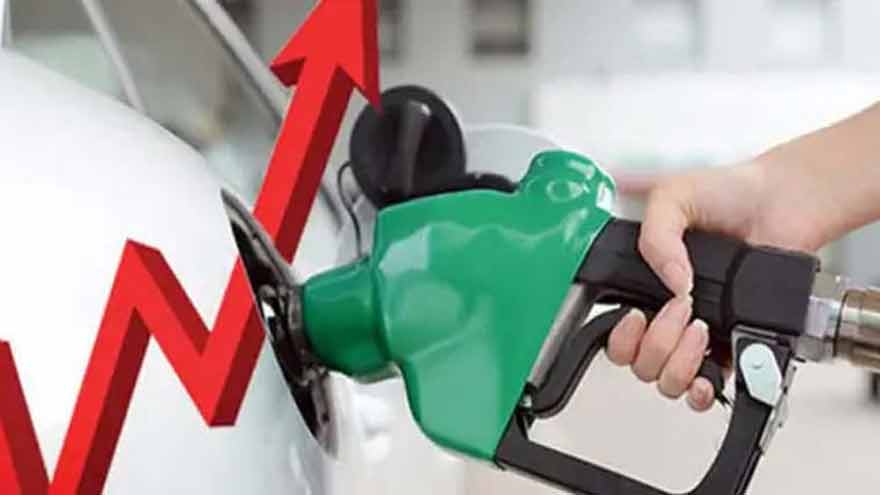
Petroleum Division issued a notification saying that prices of petroleum products had been hiked by the federal government.
Under the revised rates the petrol price has been increased by Rs13.18 per litre increasing the new price to Rs310.71 per litre.
The price of high-speed diesel (HSD) has also been increased by Rs13.80 per litre to Rs323.30 per litre.
Sources said that the petroleum charge on petrol has been increased by Rs9.36 per litre to Rs80 per litre from Rs70.36 per litre.
The amended prices will be effective from midnight and will be applied for one week, the announcement said.
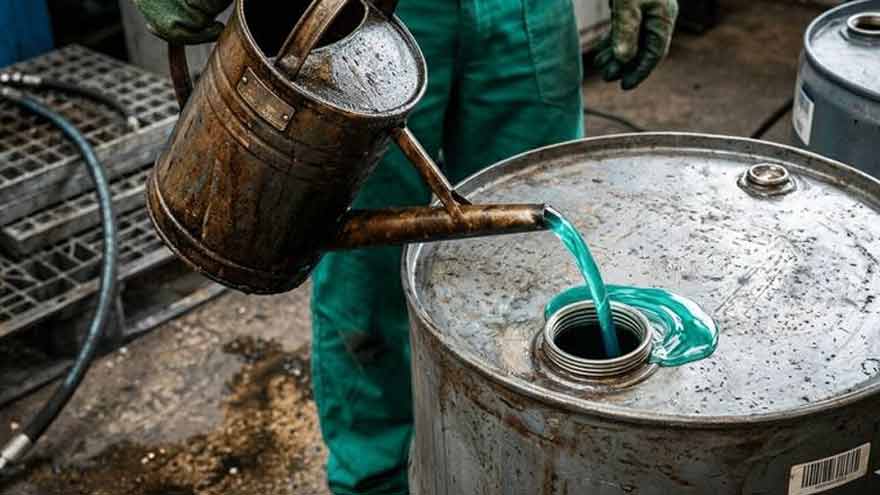
Just a few days after increasing the cost of gasoline and high-speed diesel, the government has now hiked the price of kerosene by Rs11.19 per liter.
According to a notification, the price of kerosene has increased to Rs242.33 per litre, which is an increase from the previous cost of Rs231.14 per litre.
It is anticipated that the most recent rise will add to the financial pressure that currently exists for consumers who rely on kerosene for their household and other day-to-day necessities. After the official notification was issued, the revised price went into effect. This occurred after the price was published.
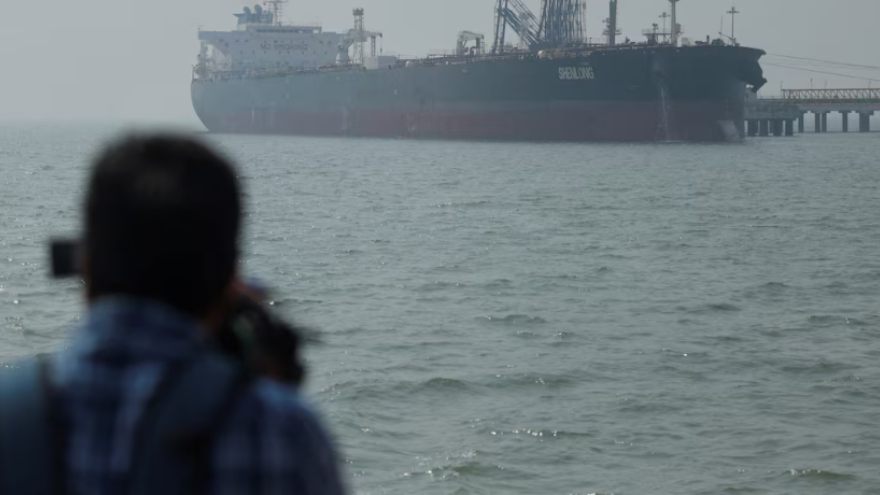
Two tankers were hit in the Strait of Hormuz on Tuesday, including an LNG carrier at risk of explosion, as huge crowds mourning Iran’s slain Supreme Leader Ayatollah Ali Khamenei thronged the holy city of Qom.
Qatar blamed Iran for the attack on a huge Qatari liquefied natural gas tanker, the Al Rekayyat, which reported being struck overnight by a drone that caused a fire in its engine room.
The crew were safe and being evacuated, but maritime security sources briefed on the incident told Reuters the fire on board could put the ship at risk of blowing up.
A Saudi-flagged crude oil tanker, believed to be the supertanker Wedyan, was also damaged off Oman’s coast, maritime security sources said. The cause was not immediately clear.
“Mayday mayday mayday. This is vessel Al Rekayyat, LNG vessel Al Rekayyat. We are being hit by drone on port side, top of engine room,” the Qatari tanker’s captain said in a recorded radio call reviewed by Reuters. “Status: engine room fire and full of smoke. Unable to assess further damage.”
Qatari foreign ministry spokesperson Majed Al Ansari called the incident an unacceptable attack on the security of international navigation and global energy supplies, and a clear violation of international law.
He called on Iran to immediately halt actions threatening regional security and maritime navigation, and said Tehran bore full legal responsibility for the attack and any resulting damage or consequences.
There was no immediate comment from Tehran, or any claim of responsibility. A U.S. official, speaking on condition of anonymity, said initial indications were that Iran had fired at two commercial vessels.
The incidents were the first reported attacks in the strait since mourning for Khamenei began last week, proof of the ongoing insecurity for Gulf shipping more than four months after the United States and Israel launched a war they said would stop Iran threatening its neighbours.
HUNDREDS OF THOUSANDS TAKE TO STREETS IN QOM
Iran’s clerical rulers have exerted newfound control over the world’s most important energy shipping route, where they aim to install a permanent system to collect fees in what would amount to a huge shift of the balance of power in a region where Washington has long acted as guarantor of security.
At home, the leadership has used the mourning period to demonstrate its control after Khamenei was killed alongside his daughter, granddaughter, son-in-law and daughter-in-law on the first day of the war.
The caskets of the slain leader and family were driven through the streets of the seminary city of Qom on Tuesday, where many hundreds of thousands of people carried flags and banners comparing Khamenei to martyrs whose deaths are foundational to the Shi’ite sect.
In chants they vowed to avenge Khamenei. Some bore placards and banners reading “KILL TRUMP”.
A similar huge funeral procession was held in the streets of Tehran on Monday, following more solemn prayer events that began last Friday, attracting top figures in Iran’s leadership and dignitaries from abroad. Authorities say the leader’s body will be taken to Shi’ite holy cities in neighbouring Iraq, then brought back to Iran and laid to rest in a mediaeval shrine.
TRUMP: ‘MAKE A DEAL OR WE’RE GOING TO FINISH THE JOB’
The war has been paused under an interim peace deal reached last month, intended to provide a 60-day period for negotiations on a permanent deal. A round of indirect talks in Qatar concluded last week with no sign of headway towards a lasting peace.
Trump has repeatedly threatened to resume bombing, most recently on Monday when he told reporters in the Oval Office: “We’re either going to make a deal or we’re going to finish the job…. We can knock down their bridges in one hour, we can knock out their energy supply.”
Iran’s Foreign Minister Abbas Araqchi said that under the terms of the interim ceasefire memorandum, negotiations on the final deal would “not commence if threats continue”.
“Honor your signature,” he wrote on X.
Oil prices , which have returned to around the pre-war level since last month’s interim deal let ships resume sailing through the strait, ticked up around 1% on Tuesday following the incidents in the waterway.
In launching the war four months ago, Trump said his aims were to destroy Iran’s nuclear and missile programmes, end its ability to threaten its neighbours and create conditions for Iranians to topple their leaders.
None of those objectives has been met, although Washington says a permanent deal will halt what it says is an Iranian programme that could make a nuclear weapon, which Iran says it never sought.
Despite five days of mourning, there has still been no sign in public of Khamenei’s son and successor Mojtaba, believed to have been disfigured by wounds in the same attack and yet to be shown in any image since the war began. Three other sons of the slain leader prayed at the casket on Sunday.
Iran’s leaders have portrayed the mass funeral gatherings as proof of national unity following the U.S.-Israeli attacks, although it is difficult to assess how deep that loyalty runs in a country where media and communications are tightly controlled.
Just weeks before the war started, Iran’s authorities killed thousands of demonstrators to put down some of the biggest anti-government protests in the country’s history, but there has been no sign of organised opposition in Iran since the war began.

According to Sarah Khan, she never made a specific wish for a son.

US Senator Lindsey Graham passes away at age 71 following a brief illness

At Adiala jail, Imran Khan has his eyes examined.

ICC board meeting in India: Mohsin Naqvi gets invitation

The IMF mission has arrived in Pakistan for discussions regarding the budget.

Is the US-Iran standoff exposing deep fault lines in US intelligence coordination?
-
 Latest News2 months ago
ICC board meeting in India: Mohsin Naqvi gets invitation
-
 Business2 months ago
The IMF mission has arrived in Pakistan for discussions regarding the budget.
-
 Latest News1 month ago
Is the US-Iran standoff exposing deep fault lines in US intelligence coordination?
-
 Business2 months ago
Oil hits 2-week high following drone strike on UAE nuclear power facility
-
 Latest News1 month ago
Shehbaz, Zardari discuss key issues as PPP hints at budget support
-
 Latest News2 months ago
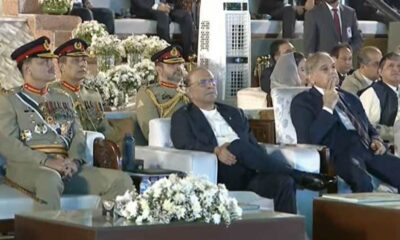
To commemorate the anniversary of Marka-e-Haq, top civic and military leaders assemble at Pakistan Monument.
-
 Latest News1 month ago
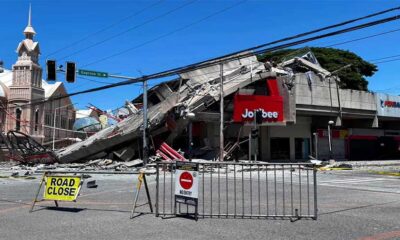
7.8 magnitude quake hits southern Philippines\
-
 Business2 months ago
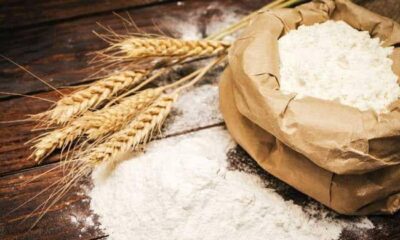
In the open market, flour prices increase by Rs 700 per mound.