
Latest News
Senate Standing Committee calls for review of MDCAT

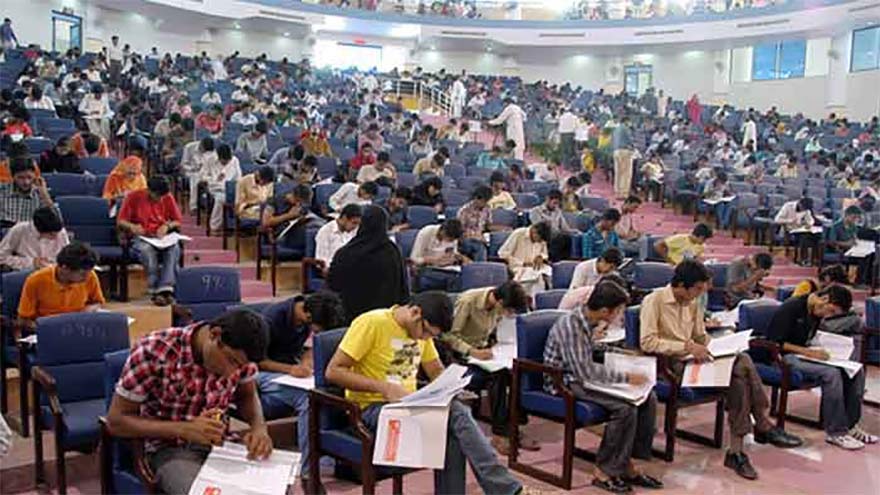
A Senate Standing Committee on Tuesday called for a review of the Medical and Dental College Admissions Test (MDCAT) and expansion of admission slots for medical students amid concerns that tens of thousands of students are unable to get admission despite qualifying for the MDCAT every year.
MDCAT is a mandatory entrance exam for students seeking admission to public and private medical and dental schools in Pakistan, and its medical education and professional standards are regulated by the Pakistan Medical and Dental Council (PMDC). The country offers around 22,300 annual seats for students seeking admission to Bachelor of Medicine, Bachelor of Surgery (MBBS) and Bachelor of Dental Surgery (BDS) programs in public and private medical universities.
The Senate Standing Committee on Health, chaired by Senator Amir Chishti, reviewed a report on proposed reforms to the country’s medical education system, which showed that around 93,000 MDCAT-eligible students fail to gain admission to medical colleges every year. Senator Anusha Rahman, who presented the report, said: “A long-term strategy is needed, which aims not only to meet the health needs of the population but also to position Pakistan as a major exporter of qualified medical professionals.” “PMDC should review its current medical quota limit of 22,300 seats per year. This expansion will create economies of scale and help reduce rising medical training costs.”
The report was written by members of the Senate committee on behalf of Chairman Chishti in response to concerns about medical education in Pakistan. The committee recommended a number of structural reforms, including the removal of the current cap of 22,300 annual physician seats and a review of the current 50 percent weightage given to MDCAT in admissions.
He called for increased oversight of foreign medical institutions in Pakistan, including compiling and publishing a list of non-compliant medical and dental schools. During the meeting, PMDC Chairman Dr Rizwan Taj assured the committee that the council would consider the challenges faced by aspiring medical students in light of the committee’s recommendations.
However, Major General Muhammad Suhail Amin, chairman of the MDCAT reform monitoring committee established by the PMDC in 2024, warned that it would be difficult to increase the capacity of medical colleges to maintain existing standards. “How can we create new capacity while maintaining the level of doctor training in the country? It is not easy to open new private medical schools given the costs involved,” he said. Amin said private medical schools are difficult to regulate because “some universities enjoy strong support from powerful circles.”
Former federal health minister Dr. Nadeem Jan said Pakistan urgently needs to increase the number of doctors, but that expansion should not come at the expense of educational standards.
“The MDCAT system needs to be improved, but there should be no compromise on quality. There is a need for a balance between quality and quantity,” Jan said.
At the conclusion of the session, Senator Chishti directed PMDC to ensure “meaningful collaboration” with private medical colleges, stressing that any expansion in medical education must go hand in hand with strict regulatory enforcement.

The Pakistan Stock Exchange (PSX) opened Tuesday’s trading session on a positive note, with the benchmark KSE-100 Index climbing more than 1,300 points.
The index surged to 164,368 points during early trading, reflecting a strong upward movement in the market.
In the previous session, the benchmark index had settled at 163,038 points.
The latest rally marks a positive start to the trading day, with the market gaining momentum after the previous session’s close.
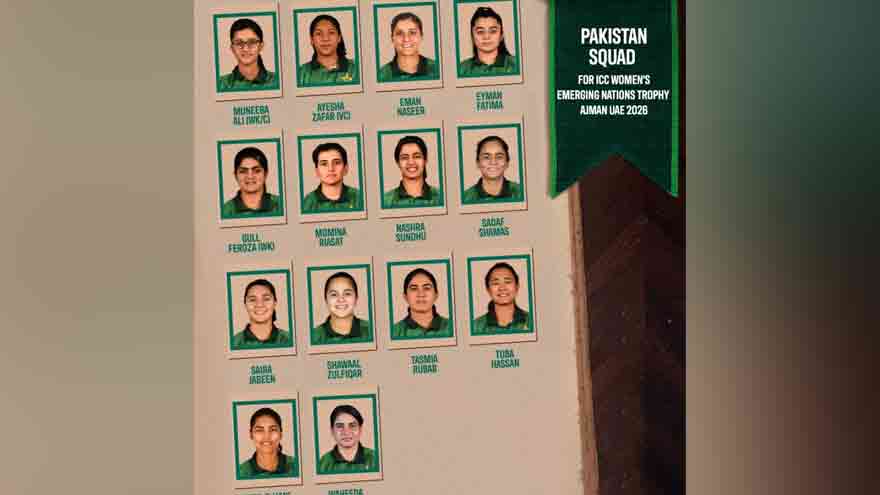
Muneeba Ali will lead Pakistan in ICC Women’s Emerging Nations Trophy 2026 Pakistan Cricket Board on Tuesday named a 14-member squad for the forthcoming ICC Women’s Emerging Nations Trophy 2026 to be held in Ajman, United Arab Emirates (UAE) from November 12 to 25.
The squad also includes hitters Eman Naseer, Eyman Fatima, Sadaf Shamas, Saira Jabeen and Shawaal Zulfiqar. Ayesha Zafar has been appointed the vice-captain. The squad also includes Gull Feroza who was declared the best wicketkeeper-batter in the recently ended National Women’s T20 Tournament.
Left-arm spinner Nashra Sundhu will head the bowling assault alongside Momina Riasat, Tuba Hassan and Umm-e-Hani in the spin quartet. The frontline pace options in the squad are Tasmia Rubab and Waheeda Akhtar.
The Pakistan women’s team has earned the Bronze Medal in the Asian Games in Japan. Sadaf and Waheeda have been recalled, while twelve players have retained their spot in the team from Pakistan’s last assignment. Regular skipper Fatima Sana will also be missing from Pakistan’s contingent as she will be in Australia playing her inaugural Women’s Big Bash League season.
The event involves 10 teams in two groups and 30 matches. Pakistan participate in Group B with Bangladesh, Thailand, Netherlands and Zimbabwe. Group A: Sri Lanka, Ireland, Scotland Papua New Guinea and hosts United Arab Emirates (UAE)
After the single-league round-robin round, three clubs from each group will qualify for the Super Six stage, where they will play three matches each. The final will be played on Wednesday November 25 between the top two teams from the Super Six stage.
Pakistan squad will gather in Lahore on November 6 and it will have a pre-tournament training camp on November 7, 8 and 9 before flying to UAE.
14-man squad
Muneeba Ali Siddiqui (c & wk), Ayesha Zafar (vc), Eman Naseer, Eyman Fatima, Gull Feroza (wk), Momina Riasat, Nashra Sundhu, Sadaf Shamas, Saira Jabeen, Shawaal Zulfiqar, Tasmia Rubab, Tuba Hassan, Umm-e-Hani, Waheeda Akhtar

The Saudi-led coalition fighting Yemen’s Houthi rebels claimed Tuesday it intercepted and destroyed ballistic missiles and drones launched at two areas of the kingdom by the Iran-aligned group, as the battle between Saudi Arabia and the Houthis escalates.
The coalition reported the Houthis launched three ballistic missiles toward the Eastern Region of Saudi Arabia and four drones toward the Southern Region of the kingdom.
Saudi Civil Defence warned of a possible hostile threat in the Eastern Region and in the governorate of Kharj, and later said the risk has passed in both places.
Last month, the Houthis captured key strategic areas along Yemen’s Red Sea coast, moving closer to the Bab el-Mandeb Strait, a critical global shipping lane for Gulf oil producers across the Arabian Peninsula from the Strait of Hormuz. Since then, Saudi Arabia has stepped up its strikes against the Houthis.
The two sides have resumed fire, shattering a 2022 UN-brokered truce that had largely kept strikes at bay between the Saudi-led coalition, which backs Yemen’s internationally recognised government, and the Houthis who control the capital Sanaa.
The escalation also opens up a new front in the US-Israeli attack on Iran.

PSX opens on a positive note, gains over 1,300 points in early trading

Pakistan squad announced for ICC Women’s Emerging Nations Trophy

Saudi-led coalition says it intercepted Houthi missiles, drones attacking kingdom

ICC board meeting in India: Mohsin Naqvi gets invitation

‘Self-Reliance in Digital ID’: NADRA launches locally produced QR code-based National Identity Card

23 people have died during the monsoon as rain-related incidents plague Punjab and KP.
-
 Latest News5 months ago
ICC board meeting in India: Mohsin Naqvi gets invitation
-
 Latest News2 months ago
‘Self-Reliance in Digital ID’: NADRA launches locally produced QR code-based National Identity Card
-
 Latest News3 months ago
23 people have died during the monsoon as rain-related incidents plague Punjab and KP.
-

 Latest News2 months ago
Turkish FM, Dar discuss regional trends, bilateral connections
-

 Business3 months ago
Govt dedicated to resolving Balochistan issues: Dar
-

 Latest News3 months ago
Pakistan making rapid progress in robotics, AI: Shaza Fatima
-

 Entertainment5 months ago
Interim bail given to YouTuber Rajab Butt in gambling app marketing case
-

 Latest News3 months ago
After a divorce, LHC decides that women who have been harmed by their spouses get their dower.