
Business
S&P Global expects State Bank to remain cautious on monetary policy despite economic benefits

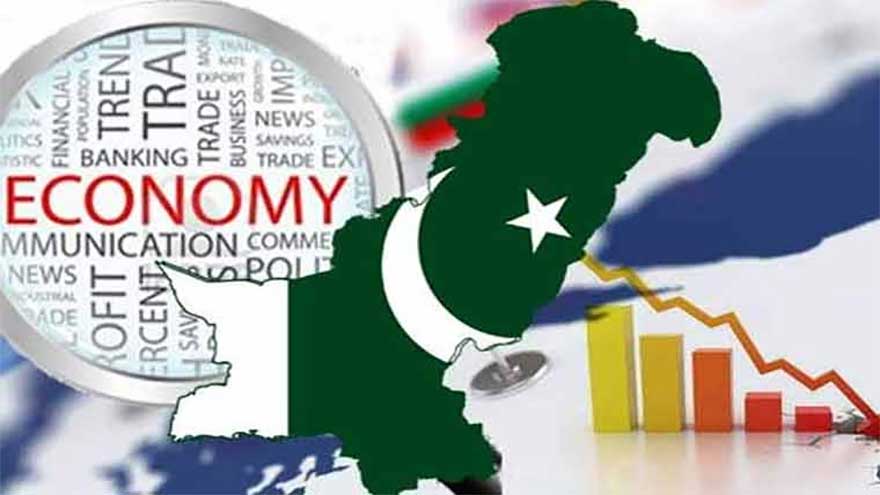
Pakistan’s improving economic indicators are unlikely to trigger an immediate shift in monetary policy as inflation and external risks continue to weigh on the outlook and the State Bank of Pakistan (SBP) is expected to maintain a cautious approach, according to a new report by S&P Global Market Intelligence.
S&P Global Market Intelligence’s recent assessment indicates that the central bank’s decision to hold the policy rate at 11.5% was a wise move to safeguard macroeconomic stability.
The report stated Pakistan’s economy has shown indications of recovery but inflation remains over the central bank’s intended range, restricting the possibility for significant monetary easing.
S&P Global has warned that rising tensions in the Middle East, global commodity price volatility and the increasing impact of climate change continue to pose major risks to Pakistan’s economic prospects.
According to the analysis, Pakistan’s economy is expected to increase by 3.5 percent for the fiscal year 2027, aided by strengthening macroeconomic conditions and a stronger external sector performance.
It also estimates that the country’s foreign exchange reserves might touch $19.5 billion by December 2026, mostly backed by resilient workers’ remittances and reasonably limited current account deficit.
Higher remittance inflows are likely to enhance Pakistan’s external financing position and help reduce balance of payments concerns, S&P Global said.
S&P Global Principal Economist Ahmed Mobeen commented on the prognosis, stressing the importance of fiscal discipline, especially considering the country’s debt service obligations.
Economic conditions have improved, but “the State Bank will likely continue to give priority to price stability and watch closely for global and domestic risks before making any further policy changes”, he said.

— The Pakistan Stock Exchange (PSX) kicked off on a bullish note on Tuesday with the benchmark KSE-100 Index rising more than 400 points in early trade.
The index rose to 166,425 points at the start of the second trading session of the business week, indicating better market performance.
The KSE-100 Index closed down 453 points at 165,966 points in the last trading session.
The benchmark index turned positive during early trading after falling in the previous session. The latest gains were made as the benchmark index went into positive territory during early trading.
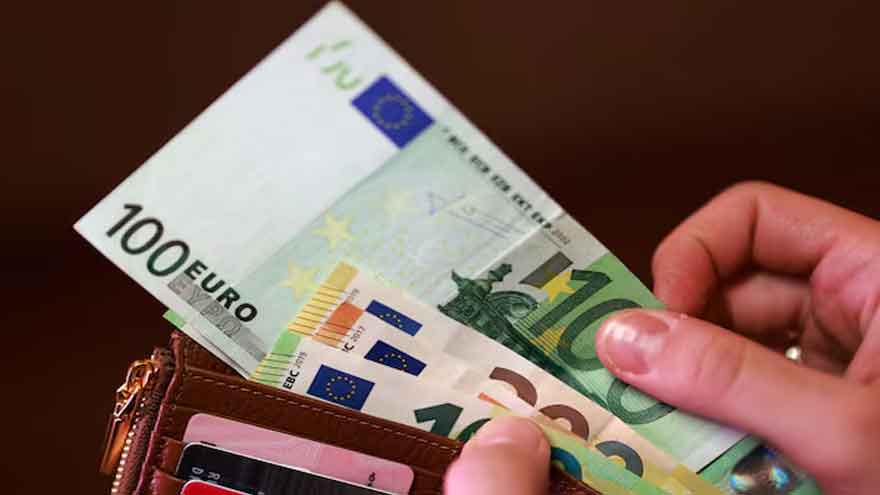
The dollar rose from near its lowest levels of the month at the start of trading in Asia on Monday, as violent protests in France put pressure on the euro.
The euro was 0.1% down at $1.1225 at the start of Asian trading. The dollar index was most heavily weighted toward the common currency and its decline helped calm the greenback, which was trading flat at 101.83.
French President Emmanuel Macron criticised “shocking” displays of violence on the fringes of protests over the cost of living in a televised speech to the country on Sunday, a day after France had one of its worst days of unrest in years.‘The weekend disturbance does matter for the euro mostly through French bonds rather than directly,’ Kieran Williams, head of Asia FX at InTouch Capital Markets in London, said.
Bank of Japan Governor Kazuo Ueda said on Monday underlying inflation is “quite close” to the central bank’s 2% objective, with the US dollar unchanged at 158.00 yen on the yen.
The U.S. dollar was unchanged at 6.6842 yuan in offshore trade ahead of the announcement of Chinese third-quarter GDP statistics. China’s economy likely improved marginally in the time from a more-than three-year low.
A lot of attention in emerging market Asia will be on the Indonesian rupiah, after a threat from MSCI to downgrade the nation’s stock market to “standalone” status last week sent shares into an 11.6% plunge. The rupiah closed at 18,000 versus the dollar on Friday, its lowest in nearly three months.
The Australian dollar was 0.3% higher at $0.6965 and the kiwi was steady at $0.5656. The British pound stayed steady at $1.3329.
Oil prices fell when Asian trade began on Monday, with Brent oil futures down 1.7% at $108.02, after US President Donald Trump waived sanctions and tariffs on Russia that may lead to additional Russian fuel shipments.

Pakistani freelancers created a new record in the country’s digital economy by earning the most amount of foreign currencies in September 2026.
Figures indicate exports by freelancers hit a record $197 million last month, up 49 percent year-on-year and 11 percent month-on-month in September 2026.
Pakistani freelancers have exported services worth $550 million from July to September 2026, representing a substantial 46% growth in export profits in the first quarter of the current fiscal year.
Note that before, Pakistani freelancers earned foreign currencies of $1.76 billion in the fiscal year 2025-26.

Govt Hajj scheme 2027: Second instalment payment deadline falls today

PSX gains over 400 points at opening

NAB summons special assistant to dysfunctional CM Afridi in corruption inquiry

ICC board meeting in India: Mohsin Naqvi gets invitation

‘Self-Reliance in Digital ID’: NADRA launches locally produced QR code-based National Identity Card

23 people have died during the monsoon as rain-related incidents plague Punjab and KP.
-
 Latest News5 months ago
ICC board meeting in India: Mohsin Naqvi gets invitation
-
 Latest News2 months ago
‘Self-Reliance in Digital ID’: NADRA launches locally produced QR code-based National Identity Card
-
 Latest News3 months ago
23 people have died during the monsoon as rain-related incidents plague Punjab and KP.
-

 Latest News2 months ago
Turkish FM, Dar discuss regional trends, bilateral connections
-
 Business3 months ago
Govt dedicated to resolving Balochistan issues: Dar
-

 Latest News3 months ago
Pakistan making rapid progress in robotics, AI: Shaza Fatima
-

 Entertainment5 months ago
Interim bail given to YouTuber Rajab Butt in gambling app marketing case
-

 Latest News3 months ago
After a divorce, LHC decides that women who have been harmed by their spouses get their dower.