
Business
Mideast tensions ease, crude oil prices decline, stocks sag on Wall Street

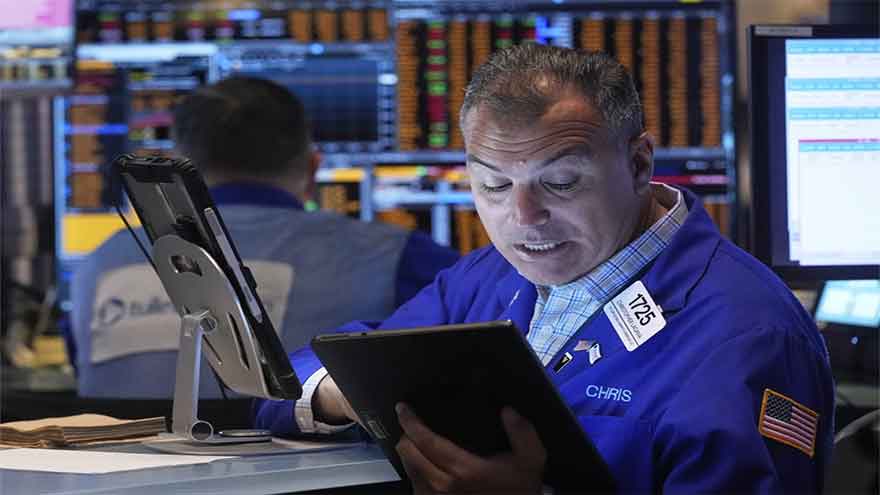
Stocks on Wall Street wobbled to a mixed finish Monday as oil prices dipped after the U.S. and Iran suspended their strikes as work resumed to restart discussions to end the war.
The S&P 500 was up less than 0.1% after spending most of the day bouncing between minor gains and losses. The benchmark index was coming off two straight weekly losses. The Dow Jones Industrial Average increased 0.5 percent and the Nasdaq composite lost 0.2 percent for its fourth straight loss.
The three main stock indexes are on track to post monthly declines. That would be a second straight monthly decline for the S&P 500 and Nasdaq.
Oil prices turned lower after a week of gains driven by a significant rise in conflict between the U.S. and Iran that raised fears about global oil supplies. Brent crude, the worldwide benchmark, lost 6.3% to end at $85.87 a barrel for October delivery. Last week prices shot up over $100 a barrel before dropping again.
U.S. crude oil for September delivery dropped 7.5% to settle at $82.61 a barrel.
The confrontation between the U.S. and Iran has severely limited, and at times stopped, transportation through the critical Strait of Hormuz. That has sent ripples through the global economy. Gasoline prices have soared and transportation costs are going up for most commodities, and firms usually pass those expenses along to households.
Trading was shaky, with a mix of large firms leading to gains and losses, with technology companies responsible for much of the market swings.
Nvidia sank 5% while Micron Technology lost 2.3%. Microsoft shares jumped 1.9%, while Apple added 1.2%. They are all among the most valuable corporations in the world, and those lofty values give them considerable sway over the broader market’s path.
Most businesses in the S&P 500 rose, but the mix of gains and losses among a range of those companies had more influence in pushing and pulling the market. Communications stocks were among Monday’s winners. Shares of Alphabet, the parent company of Google, increased 2.1%. Charter Communications shares jumped 6.7% while Comcast shares climbed 2.3%.
Credit card issuers and payment processors also profited. American Express was up 2.8%, Capital One Financial added 2.1%, Visa jumped 1.9% and rival Mastercard was up 2.2%. Shares of Chinese memory chip company CXMT jumped on their Shanghai debut. The corporation catapulted to become the most expensive listed company in China, with a projected market value of 3.3 trillion yuan (almost $490 billion).
The S&P 500 was up 1.20 points at 7,413.18. The Dow added 262.83 points, to 52,210.08, while the Nasdaq fell 43.74 points, to 24,932.08.
It’s a busy week ahead on Wall Street with a number of potentially mark-moving developments on the economy and company profits. Consumer confidence reports are coming Tuesday and inflation Thursday.
“This is a week with more than its share of potential surprises, good and bad,” said Chris Larkin, managing director, trading and investing, with E-Trade from Morgan Stanley.
The primary focus will be the Federal Reserve with an announcement on its interest rate policy Wednesday. The central bank has had to deal with the effects of growing inflation, as the U.S. war with Iran continues. It also faces a fresh round of U.S.-imposed tariffs worldwide that might add to its inflation troubles.
Wall Street gives a roughly one-in-three probability the Fed will raise rates at its meeting this week. Raising rates makes borrowing more expensive, which can help cool inflation and hinder economic growth.
The central bank has held rates stable throughout 2023 as it analyzes the course of inflation and its impact on the economy, but Wall Street is wagering on at least one rate hike before the year ends. Inflation is still too high, which is hurting people, and fuel prices have been a particular strain on budgets and expenditure. Higher gasoline prices are pinching household budgets and that may mean cutting back on other things such as clothes and travel.
Investors are looking to the next round of corporate earnings for signs of consumer strain and if the yearlong rally in stock prices across Wall Street is supported by profits and profit-growth predictions.
Investors will also be digesting a strong wave of corporate earnings this week. Many of those studies could shed further light on the health of different parts of the economy. Paint and coatings producer Sherwin-Williams, airplane builder Boeing and payments processor Visa are scheduled to disclose their latest results on Tuesday.
Starbucks and Chipotle are reporting earnings Wednesday. Technology companies have come under particular scrutiny since their huge profits during the year have fueled Wall Street’s record run. Microsoft is due to report earnings on Wednesday. Apple and Amazon (which has a booming cloud services sector and is AI-focused) release earnings Thursday.

— The Pakistan Stock Exchange (PSX) kicked off on a bullish note on Tuesday with the benchmark KSE-100 Index rising more than 400 points in early trade.
The index rose to 166,425 points at the start of the second trading session of the business week, indicating better market performance.
The KSE-100 Index closed down 453 points at 165,966 points in the last trading session.
The benchmark index turned positive during early trading after falling in the previous session. The latest gains were made as the benchmark index went into positive territory during early trading.
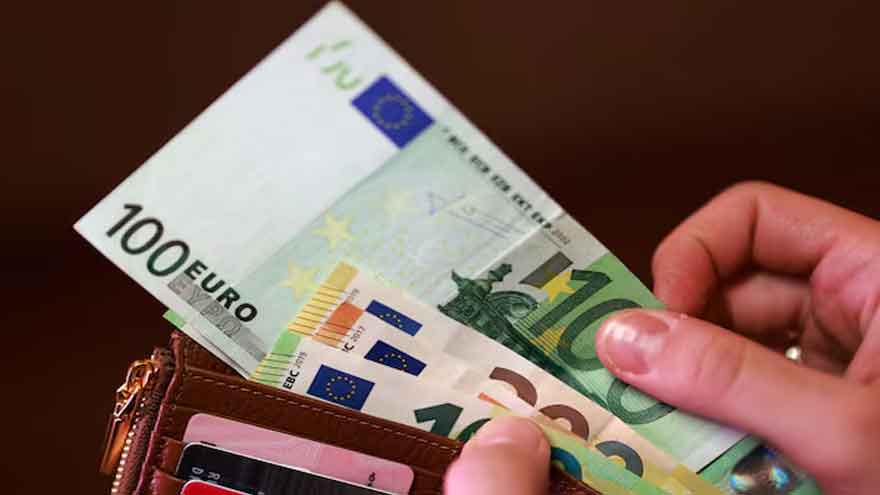
The dollar rose from near its lowest levels of the month at the start of trading in Asia on Monday, as violent protests in France put pressure on the euro.
The euro was 0.1% down at $1.1225 at the start of Asian trading. The dollar index was most heavily weighted toward the common currency and its decline helped calm the greenback, which was trading flat at 101.83.
French President Emmanuel Macron criticised “shocking” displays of violence on the fringes of protests over the cost of living in a televised speech to the country on Sunday, a day after France had one of its worst days of unrest in years.‘The weekend disturbance does matter for the euro mostly through French bonds rather than directly,’ Kieran Williams, head of Asia FX at InTouch Capital Markets in London, said.
Bank of Japan Governor Kazuo Ueda said on Monday underlying inflation is “quite close” to the central bank’s 2% objective, with the US dollar unchanged at 158.00 yen on the yen.
The U.S. dollar was unchanged at 6.6842 yuan in offshore trade ahead of the announcement of Chinese third-quarter GDP statistics. China’s economy likely improved marginally in the time from a more-than three-year low.
A lot of attention in emerging market Asia will be on the Indonesian rupiah, after a threat from MSCI to downgrade the nation’s stock market to “standalone” status last week sent shares into an 11.6% plunge. The rupiah closed at 18,000 versus the dollar on Friday, its lowest in nearly three months.
The Australian dollar was 0.3% higher at $0.6965 and the kiwi was steady at $0.5656. The British pound stayed steady at $1.3329.
Oil prices fell when Asian trade began on Monday, with Brent oil futures down 1.7% at $108.02, after US President Donald Trump waived sanctions and tariffs on Russia that may lead to additional Russian fuel shipments.

Pakistani freelancers created a new record in the country’s digital economy by earning the most amount of foreign currencies in September 2026.
Figures indicate exports by freelancers hit a record $197 million last month, up 49 percent year-on-year and 11 percent month-on-month in September 2026.
Pakistani freelancers have exported services worth $550 million from July to September 2026, representing a substantial 46% growth in export profits in the first quarter of the current fiscal year.
Note that before, Pakistani freelancers earned foreign currencies of $1.76 billion in the fiscal year 2025-26.

Govt Hajj scheme 2027: Second instalment payment deadline falls today

PSX gains over 400 points at opening

NAB summons special assistant to dysfunctional CM Afridi in corruption inquiry

ICC board meeting in India: Mohsin Naqvi gets invitation

‘Self-Reliance in Digital ID’: NADRA launches locally produced QR code-based National Identity Card

23 people have died during the monsoon as rain-related incidents plague Punjab and KP.
-
 Latest News5 months ago
ICC board meeting in India: Mohsin Naqvi gets invitation
-
 Latest News2 months ago
‘Self-Reliance in Digital ID’: NADRA launches locally produced QR code-based National Identity Card
-
 Latest News3 months ago
23 people have died during the monsoon as rain-related incidents plague Punjab and KP.
-

 Latest News2 months ago
Turkish FM, Dar discuss regional trends, bilateral connections
-

 Business3 months ago
Govt dedicated to resolving Balochistan issues: Dar
-

 Latest News3 months ago
Pakistan making rapid progress in robotics, AI: Shaza Fatima
-

 Entertainment5 months ago
Interim bail given to YouTuber Rajab Butt in gambling app marketing case
-

 Latest News3 months ago
After a divorce, LHC decides that women who have been harmed by their spouses get their dower.