
Latest News
The $47 billion power expansion plan through 2035 is approved by NEPRA.

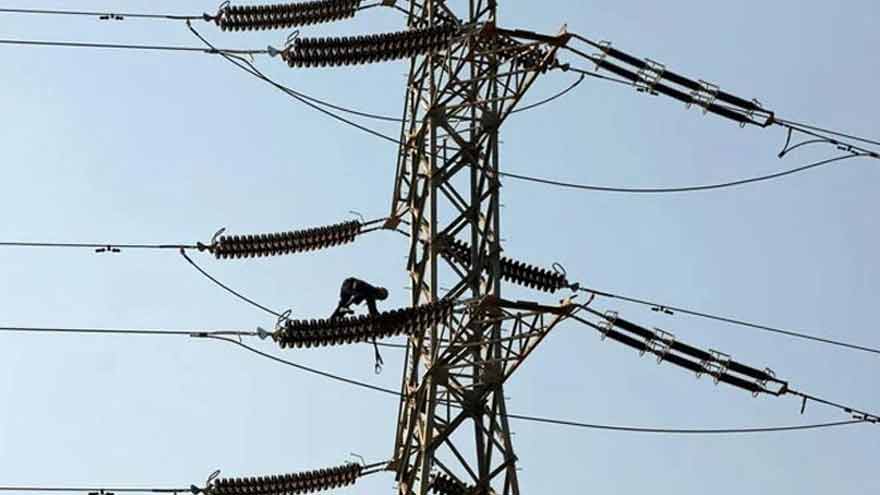
The National Electric Power Regulatory Authority (NEPRA) has approved a $47 billion power expansion plan aimed at meeting Pakistan’s electricity generation and transmission requirements through 2035, while rejecting a $900 million investment in a battery energy storage system as unnecessary.
NEPRA approved the Integrated System Plan 2025-35 submitted by the Independent System and Market Operator (ISMO). However, it rejected the proposed Battery Energy Storage System (BESS) investment, saying it had not been properly evaluated through the ISMO optimization model.
NEPRA also revealed that Pakistan’s cheapest renewable electricity had not been incorporated into national planning for more than a year despite repeated warnings by the regulator.
According to the plan, the country’s maximum electricity demand is expected to rise from 26,950 megawatts in 2025 to 35,521 megawatts in 2035. To meet this demand, a total of 26,045 megawatts of new generation capacity will be required, including 17,485 megawatts from already allocated projects and 8,560 megawatts of newly optimized proposed capacity.
During the period, 2,577 megawatts of generation capacity is estimated to be retired. The expected cost of the power generation projects is $47.13 billion, while another $10.65 billion will be required for upgrades to the transmission system.
NEPRA refused to approve the proposed battery energy storage system, stating that its cost had not been realistically incorporated and tested in ISMO’s optimization model. The regulator directed that a comprehensive technical study be conducted on the project, after which it could be reconsidered.
NEPRA also did not endorse the proposed completion of the NGC-K-Electric interconnection transmission line by 2028. According to the regulator, the proposed timeline was not realistic as construction of the line would take around five years.
The plan has been prepared by ISMO, the institution responsible for operating and managing Pakistan’s electricity system. The Integrated System Plan primarily consists of two components: construction of new power plants in the country and development of new transmission lines for electricity transmission.
NEPRA directed ISMO to address several shortcomings before preparing its next plan, including providing greater clarity in the data and resolving discrepancies in electricity tariff projections.
An important aspect of the decision was that NEPRA members were not completely unanimous, with each member recording separate notes outlining their concerns.
NEPRA member Maqsood Anwar Khan objected to the removal of several hydropower projects from the plan, including Gabrial Kalam, Madian, Kalam Asrit and Asrit Kadam projects. These projects had previously been approved and considered protected.
Maqsood Anwar Khan maintained that the projects had been quietly excluded from the plan without clear or legal justification, which could discourage investors who had invested on the basis of earlier assurances.
Various stakeholders, including planners, business organizations and provincial governments, also expressed concerns, saying Pakistan already has an additional power generation capacity of 15 to 20 gigawatts, while existing power plants are operating at only around 45% of their capacity.
The stakeholders warned that further investment could increase circular debt and capacity payments, ultimately placing the burden on electricity consumers through higher power bills.
The strongest criticism from within NEPRA came from member Amina Ahmed. In her dissenting note, she said K-Electric had secured tariffs as low as 3.09 US cents per kilowatt-hour during a renewable energy auction in late 2024, the lowest tariff achieved so far in Pakistan.
According to her, ISMO had failed to include projects with a combined capacity of around 640 megawatts in its plans for more than a year, despite NEPRA raising questions over the matter several times, including through an application in March 2026.
Amina Ahmed revealed that ISMO had used incorrect data in its model. After the data was corrected in July 2026, it was found that incorporating the cheaper electricity would reduce rather than increase the system’s cost.
She said the situation had significantly affected NEPRA’s confidence in ISMO’s optimization process.
NEPRA Chairman Waseem Mukhtar supported the final decision but highlighted a major issue, saying Pakistan was paying for more power generation capacity than required, which was causing electricity bills to remain expensive.
He said electricity demand from the national grid had already declined to around 12,000 megawatts during daytime hours as more people were using solar panels and other alternative sources instead of relying on the
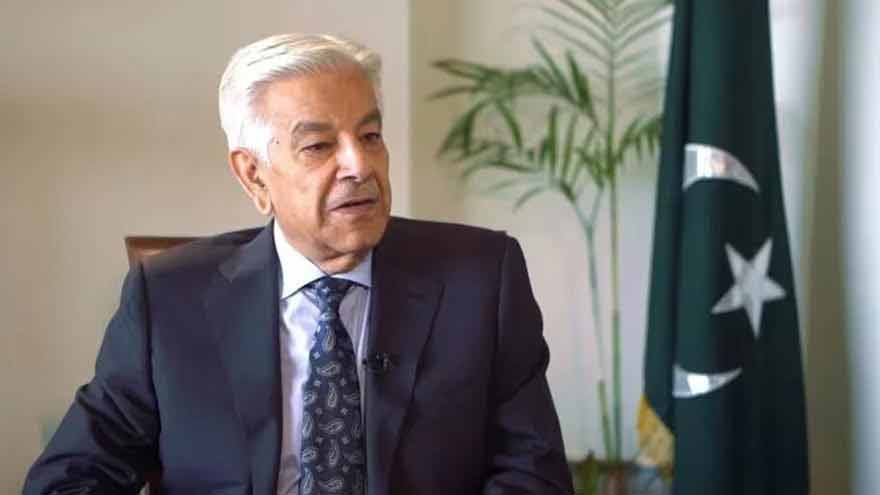
n of new provinces, adding that the political landscape could change rapidly once an agreement is reached.
Asif said the establishment of new administrative units or provinces would not threaten the political interests of any individual or party but would instead be a welcome development for Pakistan. He clarified that the military establishment never asked political leaders to discuss the creation of new provinces, adding that he was also not aware of the proposed mechanism to create new administrative units or provinces.
The defense minister said the Pakistan Tehreek-e-Insaf (PTI) founder should not oppose the creation of new provinces, arguing that accepting the proposal could also open up new political opportunities for him. Mr. Asif said there had been positive progress in the ongoing talks and stressed that politics is the art of creating possibilities.
He added that confidence had been expressed in all political parties and expressed hope that a mutually acceptable solution would be found.
He further said that differences and reservations could be transformed into consensus over the next few weeks, adding that a new administrative or political system could also emerge in the new year.
Browse Topics
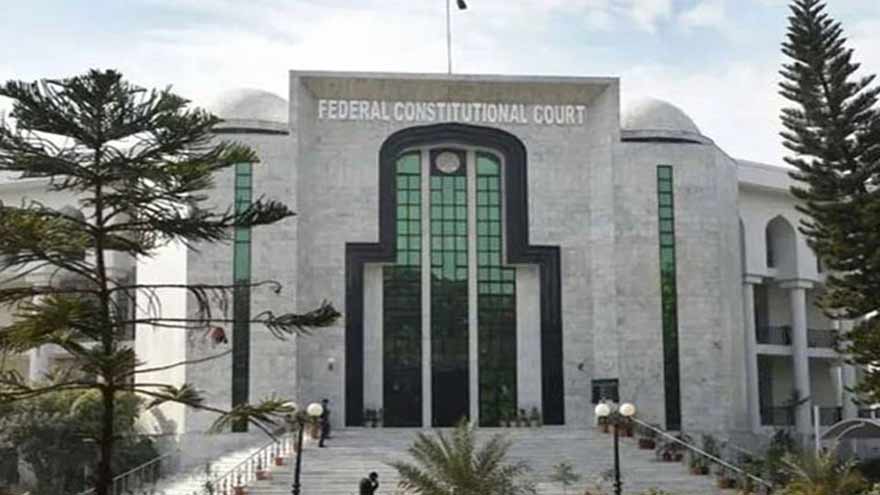
The Federal Constitutional Court has amended the suspension order regarding arrests under Article 3 of the Maintenance of Public Order Ordinance (MPO) in Khyber Pakhtankhwa Province.
A two-judge bench of the Federal Constitutional Court, comprising Chief Justice Aminuddin Khan and Justice Aamir Farooq, heard the matter and approved the Pakistan Tehreek-e-Insaf (PTI) petition and modified the November 5 stay order. During the hearing, PTI’s lawyer, Barrister Gohar, argued that the Constitution Court’s November 5 order had affected the proceedings in the Peshawar High Court and stopped the practice of lawyers.
The Constitutional Court noted that its stay order relates to matters relating to the rule of the Governor and the MPO, adding that the Peshawar High Court can continue to hear other cases under Article 199 of the Constitution.
Justice Aamir Farooq remarked that a straightforward reading of Article 245 suggested that cases under Article 199 could not be heard. However, he said that adopting a plain reading of Article 245 would bring the entire judicial system to a standstill. The court also allowed the Peshawar Bar Council to become a party to the case.
Lawyer Gohar argued that no review committee had been established in Khyber Pakhtunkhwa province yet and sought assistance in cases involving arrests under Article 3 of the MPO. The Advocate General of Khyber Pakhtunkhwa informed the court that a monitoring committee would be formed within three months.
Chief Justice Aminuddin Khan told Gohar’s advocate that various applications have been filed in the Peshawar registry and will be heard on arrival in the court. The Federal Constitutional Court postponed hearing the case.
Browse topics
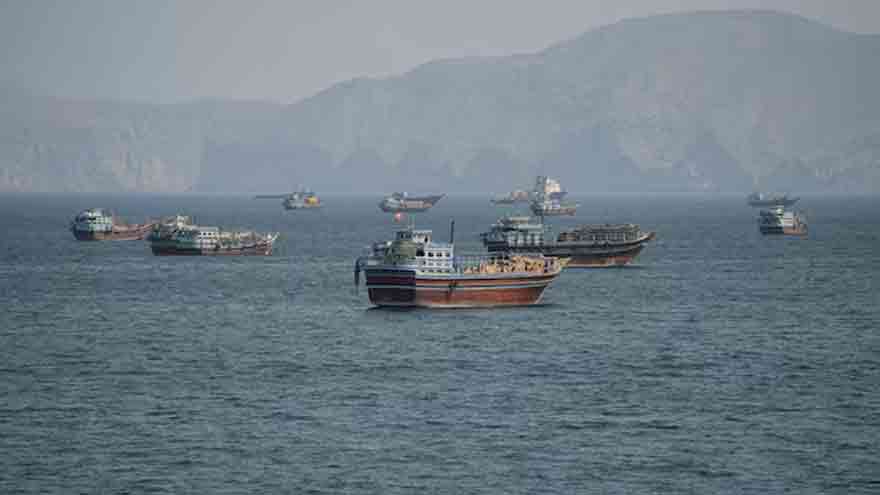
Oil prices fell on Monday on hopes of a glut as supplies to the Middle East through the Strait of Hormuz returned to near pre-war levels and the United States took steps to help move fuel goods between inland ports.
At around 1:45 a.m. Japan time, Brent crude oil futures fell 47 cents, or 0.49%, to $95.37 per barrel. US West Texas Intermediate (WTI) crude oil fell 23 cents, or 0.26%, to $88.33.
Oil prices closed lower on Friday as markets weighed signs of easing geopolitical risks from the US-Israel-Iran war, which has entered its ninth month. Last week, the indexes fell 16% and 13%, respectively.
The International Energy Agency said on Friday that the global oil market will return to surplus in the fourth quarter of this year as Middle East exports recover faster than global oil demand, despite continued attacks on ships. “For the first time since the start of the US-Iran conflict, traders are actively considering the possibility of oversupply rather than continuing shortages. This change in rhetoric clearly lowers the tone,” said Tim Waterer, chief analyst at KCM Trade. Oil supplies averaged 105 million barrels per day in the fourth quarter, exceeding forecast demand by 1.7 million barrels per day, the IEA said. The IEA had previously predicted a supply shortage in the fourth quarter. The agency also provided further details about the remaining volume from member countries’ record release of emergency stockpile crude oil pledged in March, saying 71 million barrels, including 15 million barrels of diesel, would be made available by the end of February to ease market tensions.
A U.S. decision to expand shipping laws to make it easier for foreign-flagged vessels to transport fuels such as oil, gasoline and diesel between U.S. ports also put pressure on prices. President Donald Trump has extended for 90 days the repeal of the Jones Act, which requires U.S.-flagged vessels to transport cargo between U.S. ports, a White House spokesperson announced Friday.
Repealing this rule would increase the number of tankers that can transport goods between U.S. ports. However, Waterer noted that despite tight supply, transportation charges remain high, keeping oil prices in check.
Rates remain high due to the risks tankers face when transporting crude through the Strait of Hormuz and the dwindling supply of crude oil as many ships are stuck plying the waterway to transfer cargo to other ships carrying cargo to refineries.
On Sunday night, Iran’s navy said that an oil tanker caught fire after striking a naval mine east of the Strait of Hormuz, state media reported.
Reuters could not independently verify the report.

Political consensus on new provinces in the making: Khawaja Asif

Federal constitutional court amends stay order on 3-MPO arrests in KP

Oil prices fall on expectations of coming supply surplus

ICC board meeting in India: Mohsin Naqvi gets invitation

‘Self-Reliance in Digital ID’: NADRA launches locally produced QR code-based National Identity Card

23 people have died during the monsoon as rain-related incidents plague Punjab and KP.
-
 Latest News6 months ago
ICC board meeting in India: Mohsin Naqvi gets invitation
-
 Latest News3 months ago
‘Self-Reliance in Digital ID’: NADRA launches locally produced QR code-based National Identity Card
-
 Latest News4 months ago
23 people have died during the monsoon as rain-related incidents plague Punjab and KP.
-

 Latest News3 months ago
Turkish FM, Dar discuss regional trends, bilateral connections
-
 Business4 months ago
Govt dedicated to resolving Balochistan issues: Dar
-
 Latest News4 months ago
Pakistan making rapid progress in robotics, AI: Shaza Fatima
-

 Entertainment6 months ago
Interim bail given to YouTuber Rajab Butt in gambling app marketing case
-
 Latest News4 months ago
After a divorce, LHC decides that women who have been harmed by their spouses get their dower.