
Latest News
US, Iran reach preliminary deal to end war, signing for Friday

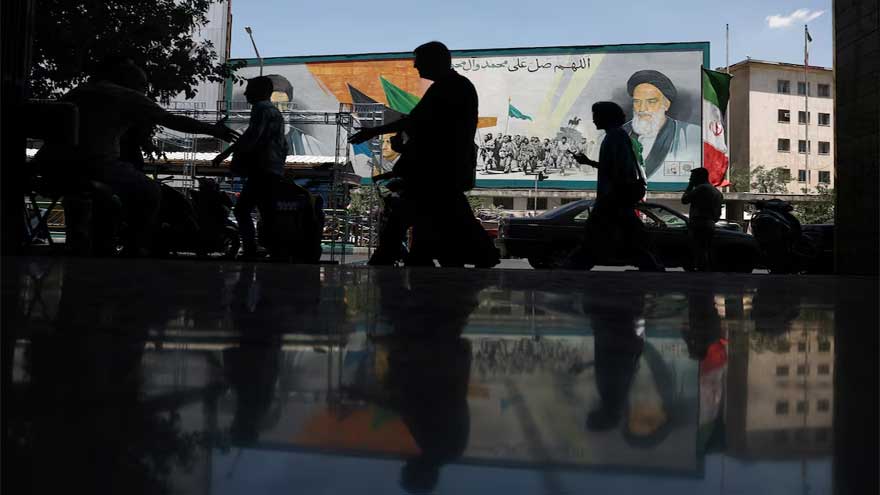
— US and Iranian officials claimed they had agreed on a framework for ending their war, lifting the US blockade of Iran and reopening the Strait of Hormuz. The preliminary accord sent oil prices tumbling but left the fate of Iran’s nuclear program up for further negotiations.“The Deal with the Islamic Republic of Iran is now final,” US President Donald Trump said on his Truth Social platform about 5:30 p.m. ET local time in Washington (2130 GMT) on Sunday. His post came just after Pakistani Prime Minister Shehbaz Sharif, whose country has acted as a mediator, said a settlement had been reached early Monday local time.
The agreement of understanding will be formally signed in Switzerland on Friday.
Exact terms were not disclosed immediately. Sharif wrote on X that the deal included “the immediate and permanent cessation of military operations on all fronts, including Lebanon.”
Lebanon has been a sticking point in negotiations, with Israel and Hezbollah defying appeals from Trump and others to stop their attacks on one another in recent weeks.
Iran’s Supreme National Security Council secretariat announced in a statement that war and military operations would be halted permanently on all fronts including Lebanon as of Monday night.
A 60-day truce period will be used to discuss a broader deal including removal of sanctions on Iran, said Iran’s deputy foreign minister, Kazem Gharibabadi.
The destiny of Iran’s nuclear program is another tough issue that would be discussed in those later discussions, sources previously told Reuters.
Israel, which has stated it was not involved in the US-Iran discussions, did not immediately react to the announcement.
STRAIT TO BE RE-OPENED
The Strait of Hormuz, a crucial shipping route for global oil and gas supplies Iran has essentially locked down for months, would open on Friday, Trump announced, and he had ordered the termination of the US blockade of Iranian ports.Ships of the World, rev up your engines. “Let the oil flow!” Trump wrote.
The announcement weighed on oil prices. Brent oil futures sank 4% in early trading on Monday, with US West Texas Intermediate down more than 4.6%. Asian stock markets surged.
Matt Miller, a former State Department spokesman in the Biden administration, said Trump had made significant concessions to Iran to get the status quo before his war.”We have no guarantees that the nuclear program will ever be addressed, but Iran has shown the world that it can hold the global economy hostage and get something out of the U.S. in return,” Miller said.
Since the US and Israeli forces initially assaulted Iran on February 28, thousands have died, mainly in Iran and Lebanon. Iran has attacked Israel and Gulf states with US bases and essentially blockaded the Strait of Hormuz and pushed up global energy costs. In retaliation, US soldiers have closed Iranian ports.
The Iran war is becoming a political problem at home for Trump and fellow Republicans in Congress, with opinion polls showing Americans increasingly dissatisfied by rising petrol costs ahead of the midterm elections in November. But Trump has also under pressure from members of his own party who say Iran’s nuclear program must be entirely shut down.
Republican Sen. Lindsey Graham, a major Iran hawk, applauded the deal but said he would be “watching closely” upcoming negotiations over Iran’s nuclear program.”Under our law, any nuclear deal with Iran will be subject to review and a vote by Congress,” he said. “Congratulations to everyone for getting us to this point.
In his first term, Trump withdrew the US from a multilateral Iran deal reached in 2015 by Democratic President Barack Obama, which lifted sanctions on Tehran in exchange for curbs on its nuclear program, including international inspections.
Iran retaliated by stepping up its uranium enrichment, producing more than 400 kg (about 900 pounds) of material at near bomb-grade purity. That eventual fate of the uranium is anticipated to be a crucial negotiating point in the next talks.‘A VERY HARD GUY’
The deal was struck even as an Israeli strike on Sunday on Lebanon was condemned by both Iran and Trump.
Prime Minister Benjamin Netanyahu has clashed with Trump over requests from the US that Israel curtail its military action in Lebanon to help the US to negotiate a deal with Iran.
Israel has indicated it will maintain its freedom of operations in Lebanon while Iran has made a full ceasefire there a key part of its objectives.
During a phone chat Sunday, Trump briefed Netanyahu on progress toward a peace deal, Israel’s N12 said, citing a senior official.
In an interview with the New York Times, Trump labelled Netanyahu “a very difficult guy” and said the Israeli leader should thank him for rescuing Israel from a nuclear-armed Iran.
The declaration was welcomed by leaders beyond the Middle East, who have been watching the situation with some wariness.
The United Kingdom, Germany, France and Italy said in a joint statement they were ready to relax sanctions on Iran in return for “clear, verifiable steps” to curb its nuclear program.“We are clear that toll-free freedom of navigation must now be restored in the Strait of Hormuz,” stated British Prime Minister Keir Starmer. “Iran must never acquire a nuclear weapon.
Before the deal was announced, a senior Iranian source told Reuters the draft would require the United States to agree to unfreeze $25 billion in Iranian assets. The Trump administration has previously suggested any release of Iranian money would be contingent on Iran meeting specific requirements in a peace accord.
A US official indicated before of the announcement that the agreement would lead to the eventual elimination of Iran’s nuclear program, with its stockpile of highly enriched uranium destroyed and removed. The senior Iranian source said the proposed accord would allow Iran, which denies wanting a nuclear bomb, to dilute its enriched uranium on its territory.
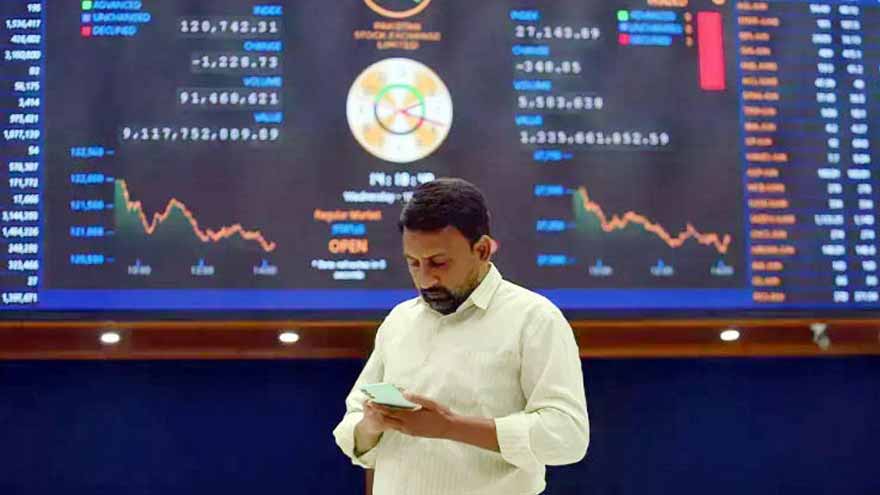
The Pakistan Stock Exchange (PSX) opened Tuesday’s trading session on a positive note, with the benchmark KSE-100 Index climbing more than 1,300 points.
The index surged to 164,368 points during early trading, reflecting a strong upward movement in the market.
In the previous session, the benchmark index had settled at 163,038 points.
The latest rally marks a positive start to the trading day, with the market gaining momentum after the previous session’s close.
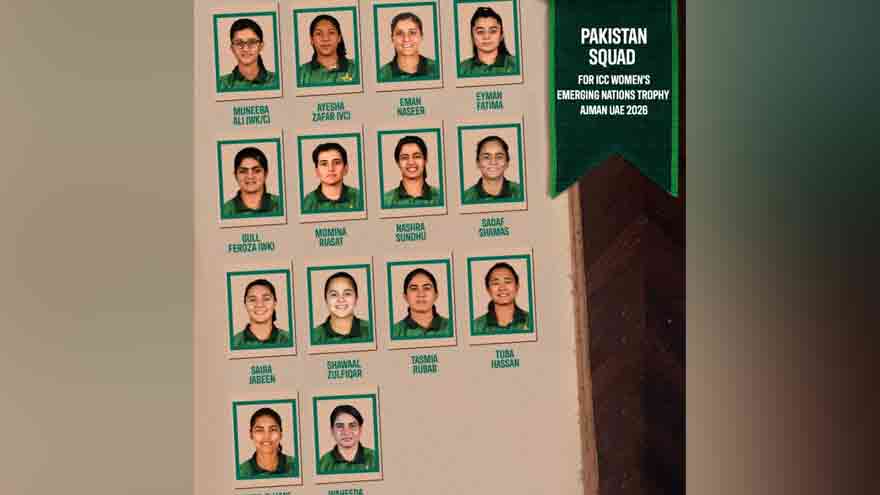
Muneeba Ali will lead Pakistan in ICC Women’s Emerging Nations Trophy 2026 Pakistan Cricket Board on Tuesday named a 14-member squad for the forthcoming ICC Women’s Emerging Nations Trophy 2026 to be held in Ajman, United Arab Emirates (UAE) from November 12 to 25.
The squad also includes hitters Eman Naseer, Eyman Fatima, Sadaf Shamas, Saira Jabeen and Shawaal Zulfiqar. Ayesha Zafar has been appointed the vice-captain. The squad also includes Gull Feroza who was declared the best wicketkeeper-batter in the recently ended National Women’s T20 Tournament.
Left-arm spinner Nashra Sundhu will head the bowling assault alongside Momina Riasat, Tuba Hassan and Umm-e-Hani in the spin quartet. The frontline pace options in the squad are Tasmia Rubab and Waheeda Akhtar.
The Pakistan women’s team has earned the Bronze Medal in the Asian Games in Japan. Sadaf and Waheeda have been recalled, while twelve players have retained their spot in the team from Pakistan’s last assignment. Regular skipper Fatima Sana will also be missing from Pakistan’s contingent as she will be in Australia playing her inaugural Women’s Big Bash League season.
The event involves 10 teams in two groups and 30 matches. Pakistan participate in Group B with Bangladesh, Thailand, Netherlands and Zimbabwe. Group A: Sri Lanka, Ireland, Scotland Papua New Guinea and hosts United Arab Emirates (UAE)
After the single-league round-robin round, three clubs from each group will qualify for the Super Six stage, where they will play three matches each. The final will be played on Wednesday November 25 between the top two teams from the Super Six stage.
Pakistan squad will gather in Lahore on November 6 and it will have a pre-tournament training camp on November 7, 8 and 9 before flying to UAE.
14-man squad
Muneeba Ali Siddiqui (c & wk), Ayesha Zafar (vc), Eman Naseer, Eyman Fatima, Gull Feroza (wk), Momina Riasat, Nashra Sundhu, Sadaf Shamas, Saira Jabeen, Shawaal Zulfiqar, Tasmia Rubab, Tuba Hassan, Umm-e-Hani, Waheeda Akhtar
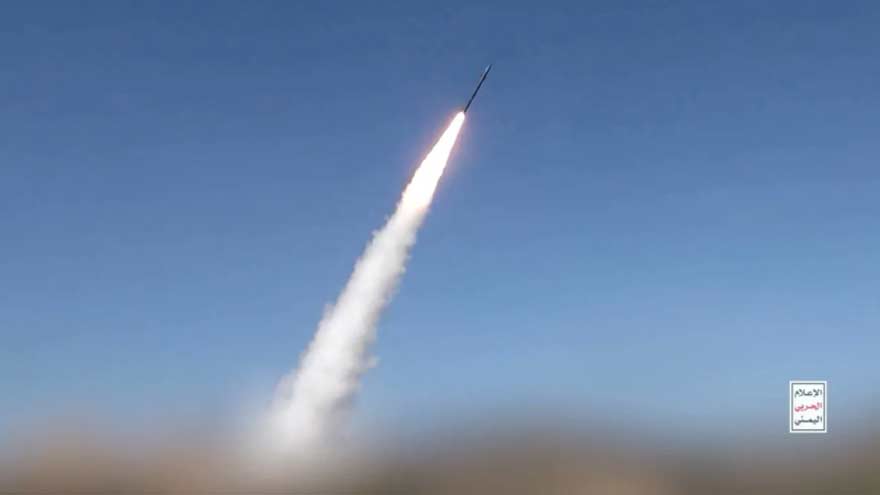
The Saudi-led coalition fighting Yemen’s Houthi rebels claimed Tuesday it intercepted and destroyed ballistic missiles and drones launched at two areas of the kingdom by the Iran-aligned group, as the battle between Saudi Arabia and the Houthis escalates.
The coalition reported the Houthis launched three ballistic missiles toward the Eastern Region of Saudi Arabia and four drones toward the Southern Region of the kingdom.
Saudi Civil Defence warned of a possible hostile threat in the Eastern Region and in the governorate of Kharj, and later said the risk has passed in both places.
Last month, the Houthis captured key strategic areas along Yemen’s Red Sea coast, moving closer to the Bab el-Mandeb Strait, a critical global shipping lane for Gulf oil producers across the Arabian Peninsula from the Strait of Hormuz. Since then, Saudi Arabia has stepped up its strikes against the Houthis.
The two sides have resumed fire, shattering a 2022 UN-brokered truce that had largely kept strikes at bay between the Saudi-led coalition, which backs Yemen’s internationally recognised government, and the Houthis who control the capital Sanaa.
The escalation also opens up a new front in the US-Israeli attack on Iran.

PSX opens on a positive note, gains over 1,300 points in early trading

Pakistan squad announced for ICC Women’s Emerging Nations Trophy

Saudi-led coalition says it intercepted Houthi missiles, drones attacking kingdom

ICC board meeting in India: Mohsin Naqvi gets invitation

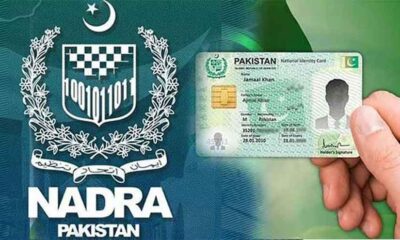
‘Self-Reliance in Digital ID’: NADRA launches locally produced QR code-based National Identity Card

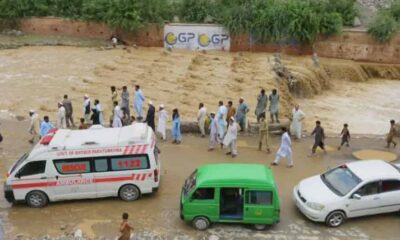
23 people have died during the monsoon as rain-related incidents plague Punjab and KP.
-
 Latest News5 months ago
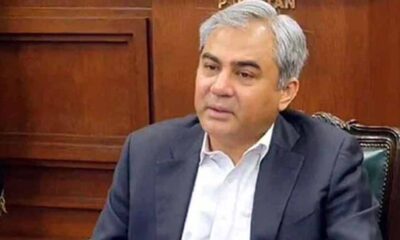
ICC board meeting in India: Mohsin Naqvi gets invitation
-
 Latest News2 months ago
‘Self-Reliance in Digital ID’: NADRA launches locally produced QR code-based National Identity Card
-
 Latest News3 months ago
23 people have died during the monsoon as rain-related incidents plague Punjab and KP.
-
 Latest News2 months ago
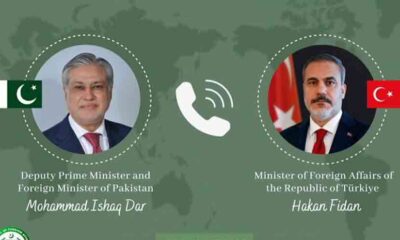
Turkish FM, Dar discuss regional trends, bilateral connections
-
 Business3 months ago
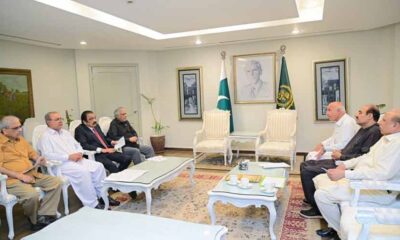
Govt dedicated to resolving Balochistan issues: Dar
-
 Latest News3 months ago
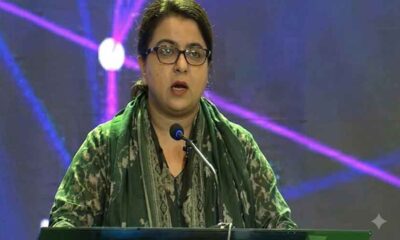
Pakistan making rapid progress in robotics, AI: Shaza Fatima
-

 Entertainment5 months ago
Interim bail given to YouTuber Rajab Butt in gambling app marketing case
-
 Latest News3 months ago
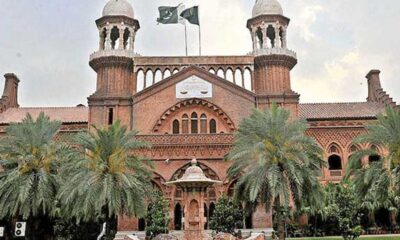
After a divorce, LHC decides that women who have been harmed by their spouses get their dower.