
Latest News
After a divorce, LHC decides that women who have been harmed by their spouses get their dower.

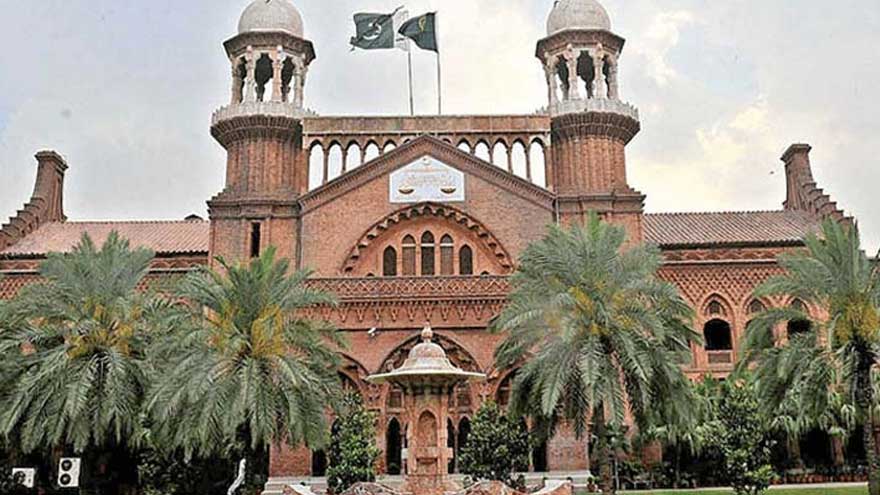
A woman who gets a divorce because of her husband’s abuse, cruelty, or other marital wrongdoing is not automatically denied her right to dower (haq mehr), according to a ruling by the Lahore High Court.
In a landmark ruling on khula, divorce, and dower rights, the court decided that each case’s facts define who is entitled to dower and that not all khula cases need the return of dower.
A appeal submitted by Arsalan contesting the rulings of the Family Court and the District Judge in Toba Tek Singh was dismissed at the preliminary hearing stage by Justice Mohsin Akhtar Kayani, who also gave the written verdict.
The petitioner claimed that the Federal Shariat Court had already ruled that sub-sections (5) and (6) of Section 10 of the Family Courts Act, 1964 were in conflict with Islamic injunctions and that the Supreme Court was still considering the case. He argued that the Family Court lacked the authority to give his ex-wife any share of the dower.
The ruling states that the pair was married on March 18, 2022, with an unpaid dower of Rs. 100,000.
Nisha Shahid, the wife, told the Family Court that after she insisted on receiving the dower, her husband started abusing her physically. She said that he was unemployed, frequently aggressive over trivial matters, addicted to drugs and larceny, demanded money from her parents, verbally abused her, threw her out of the house, neglected to pay maintenance, and never made an effort to make amends.
The District Judge rejected the husband’s appeal as unmaintainable, but the Family Court partially accepted her claim and granted her 50% of the postponed dower.
The High Court made a distinction between khula and judicial dissolution of marriage, noting that the question of returning the dower may come up if a woman seeks khula only because she no longer wants to be married. However, the wife retains her right to dower and the husband cannot demand its return if the marriage terminates due to the husband’s cruelty, violence, maltreatment, failure to give maintenance, or other legally recognized circumstances.
The court further ruled that psychological, emotional, verbal, and financial abuse are all considered forms of abuse in addition to physical violence. It further stated that a wife’s credible testimony and the circumstances surrounding the incident may be sufficient evidence, and that she is not have to provide a medical report or FIR for each incidence.
The ruling emphasized that merely classifying the divorce as khula does not automatically terminate the wife’s dower rights and instructed Family Courts to first ascertain the true cause of the marriage’s dissolution before resolving the dower issue.
In order to ensure that women are not denied dower in cases where the husband’s misconduct is proven, the Lahore High Court also suggested that the Punjab government and the Law and Justice Commission of Pakistan amend the law to require Family Courts to clearly determine responsibility for the breakdown of a marriage before deciding dower claims.
The Punjab Law Secretary and the Pakistani Law and Justice Commission were instructed by the court to receive copies of the ruling.

The Islamabad High Court (IHC) has issued a written decision on a petition challenging Pakistan Tehreek-e-Insaf’s (PTI) scheduled September 27 protest and long march, while creating a three-member bigger bench to consider the matter.
The larger bench will comprise IHC Chief Justice Sarfraz Dogar, Justice Azam Khan and Justice Muhammad Asif. The bench is slated to hear the case on September 10.
Chief Justice Sarfraz Dogar issued a three-page written order from the last session and directed the chief secretaries and inspectors general of police of all four provinces to come before the court in person on Thursday.
PTI finalises backup protest plan if Minar-e-Pakistan demonstration is denied permission
The court also summoned the Islamabad chief commissioner, Islamabad IG and deputy commissioner in their personal capacity. The advocate generals of all four provinces and Islamabad have also been asked to assist the court in the proceedings.
The petition was submitted by a businessman who contended that PTI’s intended demonstration could disrupt citizens and economic activity in Islamabad. His counsel informed the court that legislation governing protests in the capital already exists and highlighted concerns about the likely use of government resources during the planned mobilisation.
During the previous session, the petitioner’s lawyer also referred to PTI’s 2024 protest and brought relevant remarks and newspaper reports before the court. He suggested that protests should not be utilized to exert pressure on governmental institutions and judges.
The court remarked that the subject was of substantial importance and, in view of its sensitivity, issued a notice to the Attorney General for Pakistan for help in the case. The court then determined that the dispute should be heard by a larger bench.
The plea came after PTI organized a September 27 rally and long march towards Islamabad. The party has said the mobilisation is focused at getting access to party founder Imran Khan for his family and personal doctors, as well as raising concerns regarding his legal and prison-related affairs.
The IHC has fixed the subject for further hearing on September 10, when the summoned officials are likely to appear before the three-member bigger bench.
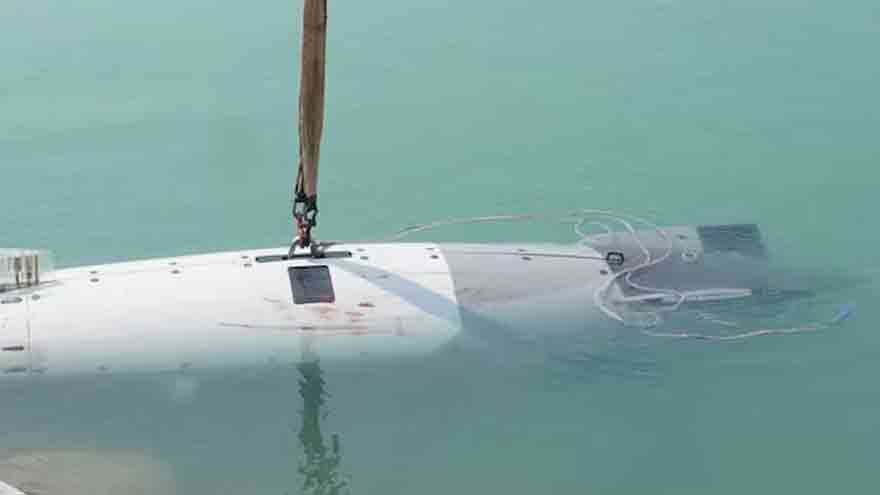
Iran’s Revolutionary Guards said on Tuesday it has captured a U.S. uncrewed submarine at the entrance to the Strait of Hormuz, offering a rare insight at how underwater drones are being used in military operations.
Iranian state media reported the craft was a Dive-LD, a large autonomous underwater vehicle made by California defense firm Anduril. The 19-foot (5.8-metre) submersible can carry out duties like mine countermeasures, seabed mapping, intelligence collection and the inspection of undersea infrastructure such as cables and pipelines, the business has said. “We detained one of the most advanced, clever and unmanned submarines of the terrorist American army near the entrance to the Strait of Hormuz. This submersible is equipped with the latest technologies,” the Revolutionary Guards Navy said in a statement broadcast by Iranian state media.
In response, a Pentagon spokesperson revealed a underwater drone had “malfunctioned more than a day ago.” “It was surveying regional seas in support of ongoing operations. The defective drone was an earlier model that neither collected sensitive data nor carried any classified sonar or radar technology,” the spokesperson stated.
Anduril confirmed the loss of one of its vessels, but minimized the seriousness of the incident. “Dive-LD is an attritable autonomous system, meaning it is built from the outset to operate in perilous conditions where loss of the vehicle is a predicted possibility,” a company representative stated.
The U.S. Navy is spending extensively in unmanned naval systems, including undersea and surface vehicles, as it seeks cheaper ways to monitor broad expanses of ocean, gather intelligence and track hostile ships and submarines without putting troops at danger.
According to Anduril’s website, Dive-LD can operate for up to 10 days without returning to base and is meant to dive to depths of as much as 6,000 metres (19,700 ft). Dive-LD units cost roughly $2.5 million each, U.S. military news site DefenseScoop reported in 2024.

The Japanese yen was pinned near its best level since February on Wednesday, leaving the dollar on the defensive as traders grappled with oil prices heading toward $100 a barrel amid an expanding war in the Middle East.
Iranian-backed Houthis in Yemen attacked several Saudi cities, drawing a U.S. partner further into a battle that has dragged on for more than six months, as U.S. forces struck multiple Iranian oil tankers and Iran threatened a U.S. station in Jordan.
Brent crude futures rose by more than 1.48% to $99.37 a barrel, weighing on global markets ahead of a U.S. inflation data on Friday that will set the stage for central bank meetings next week in the U.S. and Japan.
The currency market nudged the dollar down a touch in response, though some analysts said that was due to the yen’s swift rally over the past week.
The euro held constant at $1.1631 while the pound was last bought at $1.3546. The dollar index, measuring the U.S. currency against a basket of six major rivals, was at 98.15, near its lowest level in nearly two weeks.
OCBC strategists said the current increase keeps Fed policy implications from higher energy prices in focus, especially after last week’s robust U.S. payrolls report reignited expectations of another rate hike. “Higher oil and rates should help limit USD fall for now but we anticipate a more dramatic move will await confirmation from the impending inflation data,” they said in a note.
The yen has been under focus after its 4% surge in September that has altered the math for the popular carry trade in which investors borrow in yen at a low cost and invest in other currencies and assets yielding better interest.
The yen was stronger at 153.65 per dollar, close to the seven-month peak of 152.89 struck on Tuesday. The surge has been broad-based with the Japanese currency strengthening against the euro and sterling as well as favorite carry-trade targets such as the Mexican peso and Turkish lira.
The increase has been fueled by expectations of quicker tightening by the Bank of Japan and the return of offshore cash by Japanese investors and pressure from Washington for a higher yen.
Traders broadly expect the BOJ to hike rates by 25 basis points at its September 17-18 meeting but the rise will rest on if Governor Kazuo Ueda delivers hawkish comments and the wild card will be the Federal Reserve.Aninda Mitra, head of Asia macro and investment strategy at BNY Investments, stated “Much will depend on how the market prices in the Fed’s path of interest rates too.We estimate the Yen’s “fair value” to be in the 140’s and a further move to that area should not be a total surprise following what has clearly been an overshoot to the side of excessive Yen weakness.”
The Australian dollar gained 0.12% to $0.7225, just below a four-month high set in the previous session, in Pacific trade. The New Zealand dollar was up 0.16% at $0.5862.

IHC forms larger bench to hear plea against PTI’s Sept 27 protest

Iran says it caught US underwater drone in Strait of Hormuz

Dollar wobbles, oil’s dash to $100 chills sentiment, Yen stands big

ICC board meeting in India: Mohsin Naqvi gets invitation

23 people have died during the monsoon as rain-related incidents plague Punjab and KP.

Pakistan making rapid progress in robotics, AI: Shaza Fatima
-
 Latest News4 months ago
ICC board meeting in India: Mohsin Naqvi gets invitation
-
 Latest News2 months ago
23 people have died during the monsoon as rain-related incidents plague Punjab and KP.
-
 Latest News2 months ago
Pakistan making rapid progress in robotics, AI: Shaza Fatima
-

 Business2 months ago
Govt dedicated to resolving Balochistan issues: Dar
-

 Latest News3 months ago
A meta program to monitor mouse clicks made by employees in violation of EU privacy regulations
-

 Latest News4 weeks ago
‘Self-Reliance in Digital ID’: NADRA launches locally produced QR code-based National Identity Card
-

 Entertainment4 months ago
Interim bail given to YouTuber Rajab Butt in gambling app marketing case
-

 Latest News2 months ago
Marriyum Aurangzeb says Punjab to set up wastewater treatment plants in every district