
Latest News
As Gilgit-Baltistan prepares for the 2026 elections, Section 144 is implemented in Diamer.

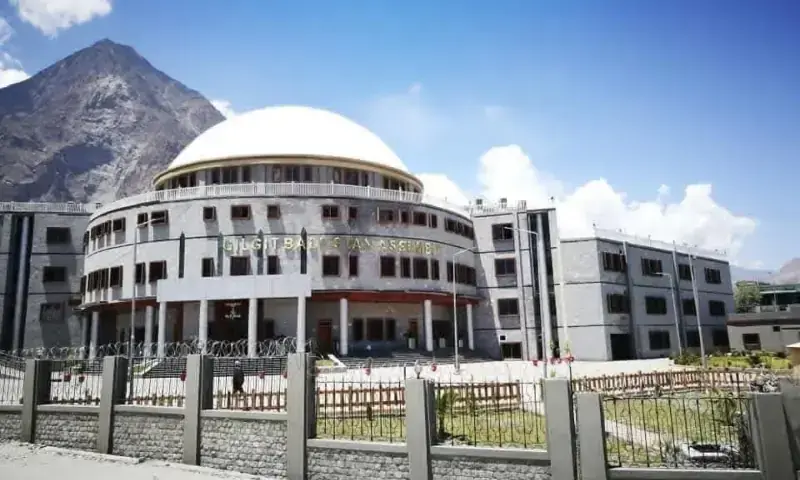
Authorities in the Diamer district have enforced Section 144 to preserve peace and order as preparations have been finished for the Gilgit-Baltistan General Assembly Elections 2026.
Thousands of election officers deputed to 24 constituencies. The election-related duties of more than 7,500 officers and staff people.
The authorities have also offered monetary incentives to election officials with a total of Rs276 million allocated in honorarium. This comprises Rs 1.8 million for 24 returning officers and Rs 1.2 million for assistant returning officers.
For polling arrangements, 1,368 presiding officers are granted Rs16.416 million while 2450 assistant presiding officers will get Rs24.5 million. Similarly Rs24 million has been given for 2,450 polling officers.
LDCs, UDCs and support staff involved in electoral tasks have also been given Rs208 million.
Meanwhile, the district administration of Diamer has implemented Section 144 for a period of 60 days to maintain security. The order, issued by the Deputy Commissioner, restricts display of firearms, aerial firing, usage of pyrotechnics.
The notification also restricts usage of drones and unmanned aerial vehicles without permission and operations with drones can be undertaken only after prior consent of the District Magistrate.
Strict safeguards have been taken to secure critical sites and law enforcement agencies have been exempted from the limitations.
The administration said the measures will come into force on June 5, 2026 and warned that strong legal action will be taken against any breaches. The authorities are calling on the inhabitants to cooperate with the orders to ensure peace and security in the region.

Sri Lanka U17 will travel to Pakistan next month to take part in a bilateral series against Pakistan U17, the PCB announced today. During the tour, both sides will play one three-day and five one-day matches.
All matches will be staged at the Multan Cricket Stadium in Multan from 9 to 24 October.
Sri Lanka U17 will arrive in Multan on Monday, 5 October and both sides will take part in practice sessions from 6 to 8 October at the Multan Cricket Stadium. The three-day match will then take place at the same venue from 9 to 11 October.
Following the three-day match, Pakistan U17 will play five one-day matches against Sri Lanka U17 from 15 to 24 October.
Currently, the U17 players are taking part in a Skills Development Camp, which commenced in Faisalabad on Thursday, 30 July. Earlier this year, the PCB also hosted the National U17 Cup in Faisalabad, which was won by Rawalpindi U17 Region.
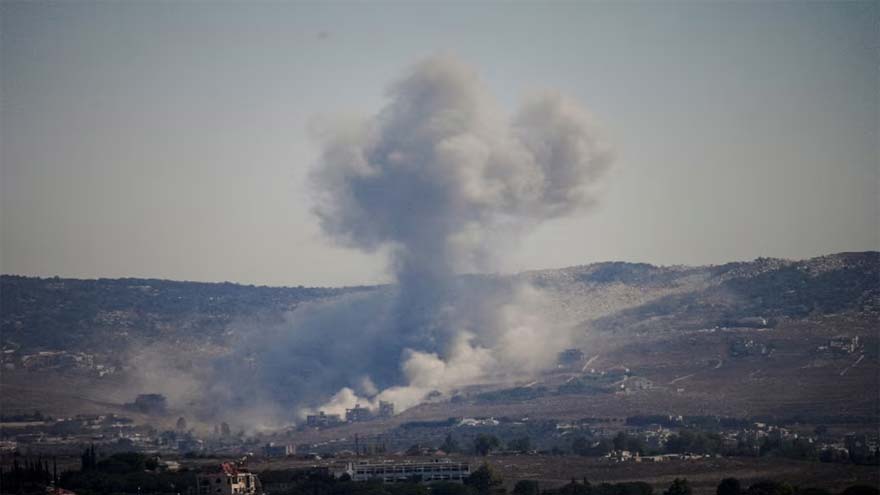
New strikes on Saudi Arabia and on ships in the Gulf tested nerves in the Middle East on Sunday, after an attack on a Saudi oil pipeline and an advance by Yemen’s Houthis threatened to worsen the wartime disruption to global energy supplies.
Oil traders were expecting prices to rise again when markets reopen on Monday, following the weekend developments that jeopardise supplies from the world’s biggest exporter, Saudi Arabia.
The British maritime security agency UKMTO said on Sunday that a vessel had been struck by a projectile as it moved through the Strait of Hormuz, causing a fire and forcing the crew to be evacuated. Iran, for its part, said one person was killed and four crew wounded aboard an Iranian commercial vessel struck off its coast.
In Saudi Arabia, state media released video of damage to homes and a mosque from the purported latest cross-border attack by the Houthis, in Jazan province in the south. The Houthis claimed separately to have struck a Saudi military base in a neighbouring province.
Southern Saudi cities have experienced regular alerts since last week, culminating in drone strikes on Friday that knocked out the 1,200-km (745-mile) east-west pipeline across the Arabian Peninsula that has served as the main route for global supplies of Middle East oil bypassing the Strait of Hormuz.
That same day, the Houthis captured Perim Island, which lies in the middle of the Bab El-Mandeb, the “Gate of Tears” strait that controls the mouth of the Red Sea.
U.S. DIESEL HITS ANOTHER RECORD
Oil prices surged above $100 last week for the first time since July. The politically sensitive retail price of diesel fuel in the United States rose on Sunday to another all-time high above $6.20 a gallon.
Traders and Saudi oil buyers told Reuters on Sunday that Riyadh has enough oil stored at its Red Sea port of Yanbu to maintain exports for just five to seven days if the pipeline struck on Friday remains shut.
After that, as much as 4% of global oil supply could be jeopardised, on top of the millions of barrels a day already lost to the disruption to traffic through the Strait of Hormuz.
Saudi Arabia has not given full details of the extent of damage to the pipeline or said how long it will remain offline. Sources that spoke to Reuters have given conflicting estimates for the time needed to fix it, ranging from days to weeks. Satellite images have shown huge columns of smoke from locations along the pipeline.
TALKS IN OMAN POSTPONED
After a quiet August when flows of Middle East oil trickled back up, the past two weeks have seen a steady escalation in the war that the United States and Israel launched six months ago. No peace talks have been held since an interim agreement in June collapsed after a few weeks.
In a rare diplomatic initiative, Iranian officials had said they would attend a meeting on Monday with Gulf Arab states in Oman to present an agreement they say has been reached with Oman governing future shipping routes through the strait.
But Oman’s foreign minister, Sayyid Badr Albusaidi, posted late Sunday that the regional meeting had been postponed “in the interests of consensus.”
“We remain committed to fostering dialogue that supports stability and lasting cooperation in our region,” he wrote in a post on X.
Iran’s Fars news agency cited an Iranian foreign ministry official on Sunday evening as saying that the Oman meeting was postponed at the request of some regional countries in a decision jointly made by Tehran and Muscat. The official said Iran would coordinate with Oman to determine a suitable date for holding the meeting, the agency said.
Iraq had said it would send a delegation, and a Gulf official had told Reuters that Saudi Arabia and Qatar would be represented by their foreign ministers.
A senior Iranian official had told Reuters on Saturday that officials would discuss Hormuz and other issues at the meeting, but added it would probably not yield a signed agreement to reopen the strait. Bahrain said it would not meet with any Iranians.
In an interview with London-based pan-Arab news outlet Al-Arabi Al-Jadeed, Iran’s Foreign Minister Abbas Araqchi said despite any agreement with Oman, Iran would not reopen the strait until the United States satisfies Tehran’s demands.
HOUTHI ADVANCES POSE NEW DILEMMA FOR WASHINGTON
The U.S. has so far failed to achieve the objectives President Donald Trump set out when he launched “Operation Epic Fury” in February: to end Iran’s nuclear programme, prevent it from being able to attack its neighbours and create conditions for its people to topple their rulers.
Iran, having withstood the superpower onslaught despite military and economic losses, hopes to emerge stronger than before the war, including with the newfound power to collect fees from ships that use the strait.
The attacks on Saudi Arabia and the Houthi advances in Yemen pose a new dilemma for Washington, which wants to support its Saudi allies and protect shipping but is wary of joining war on another front. The Houthi attacks have also left Gulf states with a difficult choice: accept growing economic pain or engage with Iran.
The Houthis, mountain fighters who captured Yemen’s capital in 2014, have been battling a Saudi-led coalition for more than a decade but had mostly kept out of the wider Middle East war until recent weeks. Their advance along the Red Sea coast is part of the biggest eruption of fighting in Yemen for years.
The United States bombed the Houthis for two months in 2025, but Trump halted that campaign after announcing the group had lifted a threat to attack Red Sea shipping.
Three sources told Reuters that Saudi Arabia’s de facto leader, Crown Prince Mohammed bin Salman, phoned Trump on Thursday asking for military aid to fight the Houthis, but was offered only intelligence support for now.
Trump acknowledged on Saturday that he had spoken to the crown prince, and said the Houthis had also phoned the U.S. administration, asking Washington to keep out of the Yemen war.
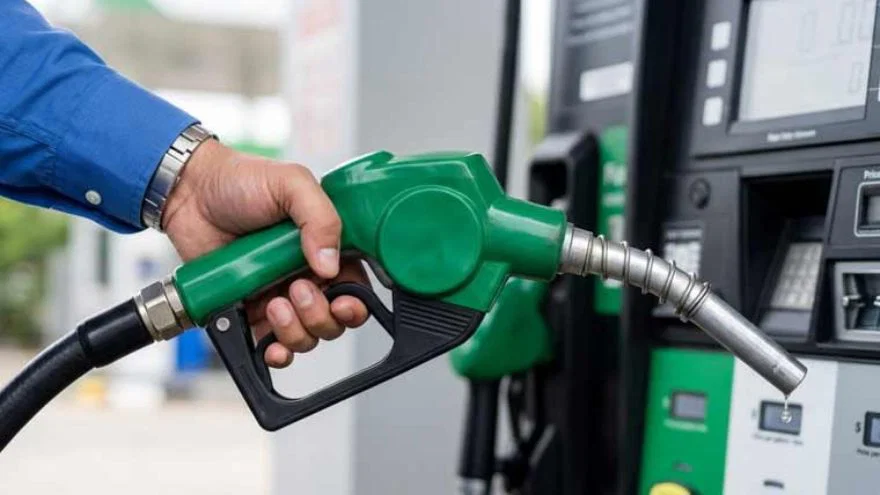
– The PML-N-led federal government has increased the prices of petrol and high speed diesel (HSD) by Rs 4.10 and Rs 6.41 per liter respectively under the daily fuel pricing mechanism introduced in the country recently.
According to a notification issued by the Petroleum Department, the revised rates will come into effect from September 16, with petrol now priced at Rs 384.34 per liter and HSD at Rs 415.83 per liter. This recent increase comes against a backdrop of fluctuations in international oil markets and new tensions in the Middle East, which continue to impact global energy flows.
The Oil and Gas Regulatory Authority (Ogra) has also started publishing daily crude oil prices on its website as part of efforts to increase transparency and ensure that international oil price fluctuations are more quickly reflected in domestic prices. Petroleum Minister Ali Pervaiz Malik said the daily price is calculated based on the seven-day average price in the international market, which is in line with international practice.
The government had previously followed a two-week pricing cycle, but moved to weekly reviews in the wake of the escalating conflict in the Middle East.

The PCB will host the Sri Lanka U-17 Men’s Championship bilateral series in October.

New attacks in Hormuz and Saudi test nerves as war’s spread worsens oil disruption

Petrol hits Rs384.34, diesel reaches Rs415.83 per litre

ICC board meeting in India: Mohsin Naqvi gets invitation

23 people have died during the monsoon as rain-related incidents plague Punjab and KP.

Govt dedicated to resolving Balochistan issues: Dar
-
 Latest News4 months ago
ICC board meeting in India: Mohsin Naqvi gets invitation
-
 Latest News2 months ago
23 people have died during the monsoon as rain-related incidents plague Punjab and KP.
-
 Business2 months ago
Govt dedicated to resolving Balochistan issues: Dar
-
 Latest News2 months ago
Pakistan making rapid progress in robotics, AI: Shaza Fatima
-
 Latest News1 month ago
‘Self-Reliance in Digital ID’: NADRA launches locally produced QR code-based National Identity Card
-
 Latest News2 months ago
After a divorce, LHC decides that women who have been harmed by their spouses get their dower.
-

 Latest News4 months ago
A meta program to monitor mouse clicks made by employees in violation of EU privacy regulations
-

 Entertainment4 months ago
Interim bail given to YouTuber Rajab Butt in gambling app marketing case