
Latest News
SpaceX will set IPO price at $135 a share, eyes $75 billion raise


Elon Musk’s SpaceX is expected to price its IPO at $135 a share, raising a record $75 billion, in a surprise announcement ahead of its investor roadshow, a source familiar with the issue said.
The rocket and satellite communications corporation aims to sell 555.6 million shares, the person added.
It is eyeing a $1.75 trillion valuation, claimed the two other persons.
The listing starts a wave of high-profile private companies looking to test public markets following years of quiet large-cap IPO activity, with SpaceX seen as leading into artificial intelligence giants OpenAI and Anthropic.
With the IPO, SpaceX is trying to break the mould and set records.
It’s rare to set a fixed price before presentations to investors and bookbuilding.
Companies that are looking to go public may often specify a price range to provide valuation guidance and to give room to move pricing up or down depending on demand from investors.
Strong demand can drive the final price to the top of the range — or beyond it — before the market launch.
SpaceX’s display kicks off Thursday. It’d already had some “testing the waters” meetings with investors.
Mission: Data centres for Mars and space
In many other respects, Musk has reinvented the IPO playbook for SpaceX, from proposing to offer retail investors a bigger role in allocations to fighting for early index inclusion and structuring governance to keep strong founder control.
The company’s worth is based on SpaceX owning technology and businesses that do not even exist — from Mars missions to AI data centres in space.
Reuters reported earlier this week that the business is considering giving up to 30% of the sale to individual investors, a substantial retail tranche meant to tap into Musk’s cult-like following and expand ownership of the company.
The IPO is planned to be all primary, meaning that all proceeds will go to the firm, and existing SpaceX shareholders will not be able to sell any of their shares in the IPO, the sources added.
One of the individuals claimed Musk will have to hold his SpaceX shares for 366 days following the IPO, a statement to investors of his commitment to the company.
Proceeds from the IPO will be utilised for reasons including boosting AI computing capacity and SpaceX’s satellite network, the source said.
SpaceX combined with Musk’s AI startup xAI earlier this year in a deal that valued the rocket company at $1 trillion and the maker of the Grok AI chatbot at $250 billion.
The company has no direct counterparts, making the valuation of the company subjective.
In a June 1 research note, Morningstar put SpaceX’s value at $780 billion, 48% below its current private-market estimate.
The vast majority of that comes from its Starlink satellite communications sector, which produced most of its sales, profits and growth last year.
But SpaceX has pegged much of its future development on AI and its plans depend on unbuilt technologies for a large part of its future revenue, including solar-powered data centres in space, as it looks to a possible $28.5 trillion market, Reuters previously reported.
At a $1.75 trillion value and the firm earning revenue of $18.67 billion in 2025, SpaceX would trade at a trailing price to revenue multiple of 93.7x.
Space company Rocket Lab is trading on a multiple of 118, data analytics firm Palantir Technologies at 81 and Tesla at around 17 on the same basis.
SpaceX cannot be valued using price-to-earnings as it showed a net loss in the last year .
A mega-IPO tsunami
The listing is likely to trigger a wave of giant IPOs, with SpaceX, OpenAI and Anthropic set to together bring over $4 trillion in market capitalisation to the public markets and heighten the race for investor money.
For many investors, the stake is as much on Musk as it is on SpaceX.
His track record at electric-vehicle startup Tesla and his ability to galvanise regular traders might also fuel robust demand for shares, as his reputation has done for earlier enterprises.
Still, two of SpaceX’s three operations are losing money, with only its connection division, home to the Starlink satellite constellation, making money, and broadly seen as the company’s cash cow.
SpaceX’s revenue grew to $4.69 billion in the three months ending March 31 from $4.07 billion a year earlier. Losses narrowed to $1.27 a share from 18 cents a share in the same period.
It swung to a net loss of $4.94 billion in 2025 from a profit of $791 million.
Experts have said that a big part of SpaceX’s presentation to investors rests on Musk, which could give investors pause about some corporate governance concerns.
The IPO prospectus details a dual-class share structure, a measure that concentrates voting power with Musk and a few of insiders.
SpaceX is looking to list on the Nasdaq under the name “SPCX.” Two of the individuals indicated the premiere is scheduled on June 12.
Goldman Sachs, Morgan Stanley, BofA Securities, Citigroup and J.P. Morgan are acting as the joint book-running managers for the offering which is being made through a syndicate of companies
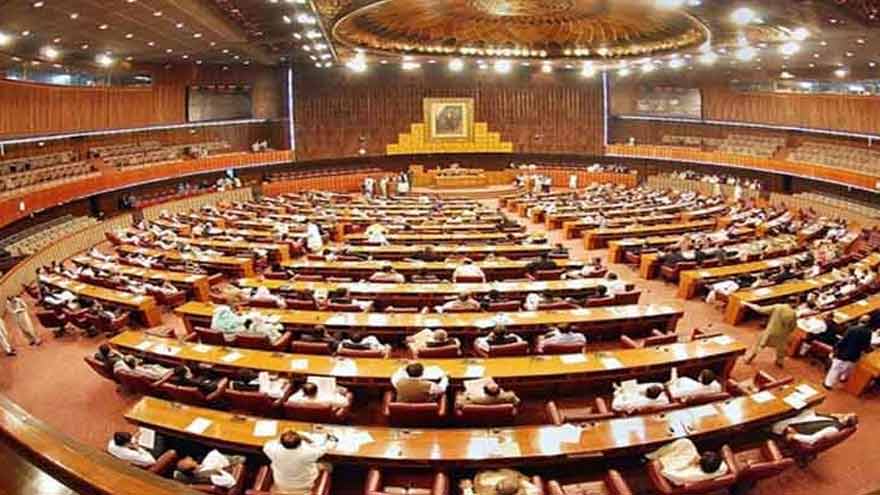
– Prime Minister Shehbaz Sharif has not yet forwarded the summary to the president for convening the National Assembly session, with the sitting now likely to be held next week.
According to parliamentary sources, the Ministry of Parliamentary Affairs had sent a summary to the prime minister seeking to convene the National Assembly session on Monday at 5pm.
Sources said a decision to reschedule the session was taken during a meeting between the president and the prime minister.
Parliamentary sources added that the National Assembly session is now expected to be summoned next week.
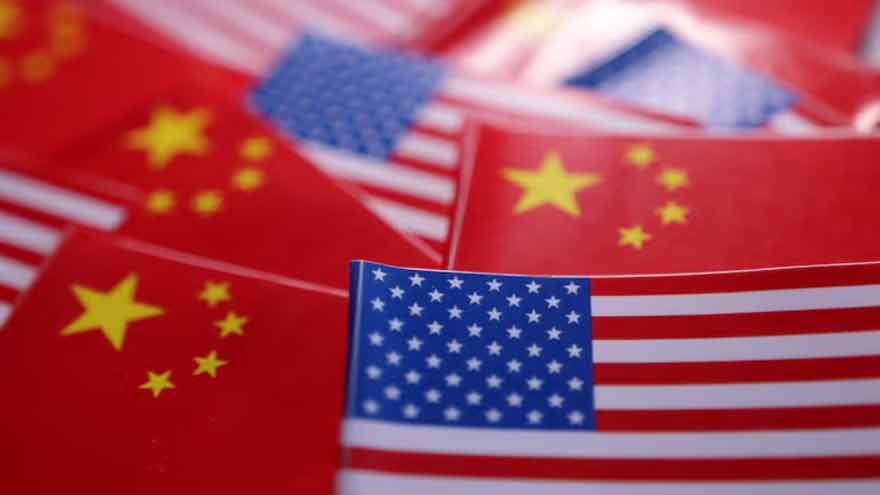
China and the United States discussed tariff cuts, agricultural trade and other issues at their first trade council meeting on Friday, China’s Commerce Ministry said on Saturday, days ahead of a leaders’ meeting in Shenzhen next week.
The Ministry of Commerce said: “The two sides had open, in-depth and constructive exchanges on issues of common concern, such as the implementation of the results of the previous China-US economic and trade consultations, including tariffs, the “US$30 billion for US$30 billion” mutually beneficial tax reduction regime, and agricultural trade.” It did not disclose whether any agreement had been reached. The Ministry of Commerce added that both sides will continue to use the council to resolve trade issues, expand cooperation and reduce outstanding issues. After a summit between President Xi Jinping and President Trump in Washington in September, the two sides proposed a $60 billion plan to cut reciprocal tariffs that would cover $17 billion worth of Chinese imports of U.S. agricultural products by 2024, but the plan has not yet been finalized.
A Reuters analysis of customs data earlier this month showed that China’s purchases of U.S. agricultural products, excluding soybeans, will hit a seven-year low this year, despite an agreement for $17 billion a year through 2028, underscoring lingering uncertainty over the deal. Beijing has repeatedly called on Washington to implement a $60 billion tariff reduction deal, saying it is a prerequisite for increased purchases of US agricultural products.
The White House said Trump will meet with Xi Jinping on Thursday on the sidelines of the Asia-Pacific Economic Cooperation Forum in Shenzhen.
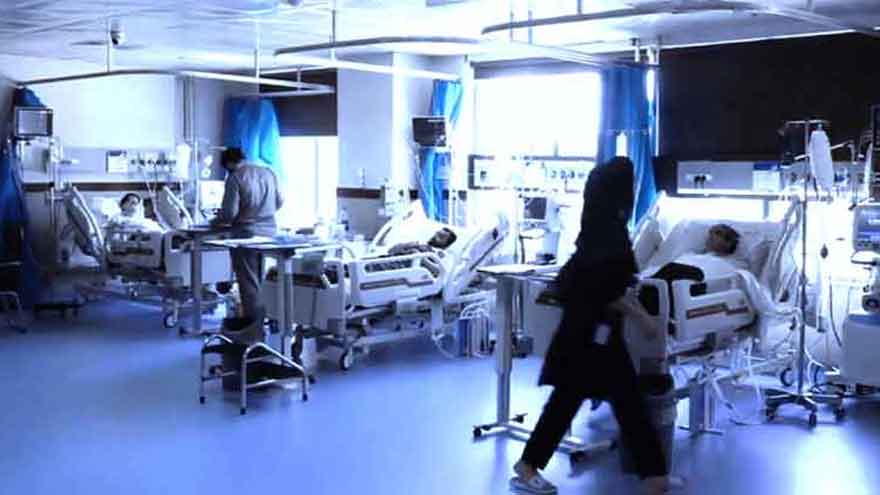
A concerning shortage of healthcare facilities and medical staff has emerged in Khyber Pakhtunkhwa, highlighting significant gaps in the province’s healthcare system.
Only 8,024 doctors are available to serve the province’s population of more than 40 million, meaning there is approximately one doctor for every 5,000 to 6,000 people. The media report that the situation of state medical facilities in the entire province is also unsatisfactory, as more than 200 different types of state medical centers are unable to function. Public hospitals are also facing a serious shortage of clinical places. The report said that the public hospitals of Khyber Pakhtunkhwa have a total of 18,432 beds and require about 64,000 beds to meet the health needs of the people of the province. This makes the bed gap about 45,568.
The report further highlights that the current number of doctors in the province is extremely low relative to its population, potentially making it difficult for patients to access medical consultations and treatment facilities.
Moreover, the closure of a large number of government healthcare centres is also hindering the provision of basic medical services to the public.
Meanwhile, Provincial Health Adviser Lieutenant General (retd) Nigar Johar said during a briefing that the provincial government had decided to introduce amendments to the Medical Teaching Institutions (MTI) Act and conduct audits of government hospitals to improve the healthcare system.
She added that shortcomings in the Sehat Card programme would be addressed and the system further improved to ensure better access to healthcare services for the public. A shortage of doctors, non-functioning health centers and insufficient hospital beds remain major problems in the province, requiring government reforms and expansion of health facilities.

NA sesssion likely to be rescheduled for next week

China, US discuss tariffs, farm trade ahead of Xi-Trump meeting

KP healthcare system faces acute shortage of doctors, hospital beds

ICC board meeting in India: Mohsin Naqvi gets invitation

‘Self-Reliance in Digital ID’: NADRA launches locally produced QR code-based National Identity Card

23 people have died during the monsoon as rain-related incidents plague Punjab and KP.
-
 Latest News6 months ago
ICC board meeting in India: Mohsin Naqvi gets invitation
-
 Latest News3 months ago
‘Self-Reliance in Digital ID’: NADRA launches locally produced QR code-based National Identity Card
-
 Latest News4 months ago
23 people have died during the monsoon as rain-related incidents plague Punjab and KP.
-

 Latest News3 months ago
Turkish FM, Dar discuss regional trends, bilateral connections
-
 Business4 months ago
Govt dedicated to resolving Balochistan issues: Dar
-

 Latest News4 months ago
Pakistan making rapid progress in robotics, AI: Shaza Fatima
-

 Entertainment6 months ago
Interim bail given to YouTuber Rajab Butt in gambling app marketing case
-
 Latest News4 months ago
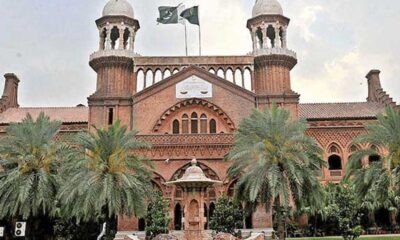
After a divorce, LHC decides that women who have been harmed by their spouses get their dower.