
Latest News
Is the US-Iran standoff exposing deep fault lines in US intelligence coordination?

As tensions over intelligence sharing and priorities flare, the CIA has stopped participating in some intelligence assessments by the office of the nation’s top spy, including those on the Iran war, according to people familiar with the subject.
The CIA and the Office of the Director of National Intelligence (ODNI) have been fighting for more than a year, hindering cooperation on national security assessments that presidents long have used to guide them through complex foreign challenges, said a U.S. official and three people with direct knowledge of the matter.
The sources spoke on the condition of anonymity to discuss sensitive internal concerns.
At the heart of the disagreements is a clash over a task group established in April 2025 by Tulsi Gabbard, the director of national intelligence, the sources said.
Two of the sources said Gabbard’s Director’s Initiatives Group had acted irresponsibly in bypassing standard intelligence-sharing and declassification norms, a charge the CIA under Director John Ratcliffe has made. ODNI officials said CIA has repeatedly denied the organisation access to intelligence.
The intelligence agency cooperation breakdown is happening at a hazardous moment for the Trump administration, with the US in the Iran conflict and facing national security issues from Chinese military growth to Russia’s war on Ukraine.
It also shows that the reform measures implemented after the September 11, 2001, attacks that formed a director of national intelligence to coordinate the 18 US intelligence agencies have not stopped the dysfunction.The ODNI is “supposed to be the oil in the system that keeps the arteries of the intelligence community flowing, that removes blockages,” said Beth Sanner, a former deputy director of national intelligence in President Donald Trump’s first term.When you don’t do that, then you create the chance that agencies are just going to sort of pull back into their stove pipes and you set yourself up for intelligence failures.
Last week, Gabbard announced she would leave her role as Trump’s top spy on June 30 due to her husband’s sickness. Trump on Tuesday named Bill Pulte, chief of the Federal Housing Finance Agency, as interim director of national intelligence.
“The president and policymakers continue to get the best intelligence and analysis,” said Olivia Coleman, an ODNI spokeswoman, who added that ODNI and the agencies it oversees “communicate and collaborate daily with CIA counterparts across the full spectrum of intelligence products and operations.”
“The Director’s Initiatives Group operated within the oversight authorities of ODNI and in support of the president’s executive orders,” Coleman stated.
In February, Reuters reported that Gabbard had disbanded the group and relocated its staff to other parts of her department amid congressional examination of its actions.“Under Director Ratcliffe, the CIA was quick to move out on President Trump’s priorities with a more aggressive agency taking smart risks to outmanoeuvre our adversaries and give the United States a decisive advantage,” CIA Director of Public Affairs Liz Lyons said.
“Trump’s peace through strength foreign policy is a proven strategy that keeps America safe and deters global threats,” White House spokesperson Davis Ingle said, adding that media efforts to sow divisiveness at home would not succeed.“President Trump has the utmost confidence in his entire outstanding national security team,” Ingle added.
Less collaboration on intelligence assignments
One of the most serious effects of the organisations’ mutual distrust is the CIA’s move to cut back drastically on its inputs into assessments prepared by Gabbard’s office.
The CIA has been one of the key contributors to the reports published by the National Intelligence Council (NIC), the leading US intelligence analytical body. The reports matter, especially in a combat situation.
The agency no longer routinely engages in assessments about Iran, where the U.S. military has been fighting since February, two people familiar with the matter told Reuters.
The CIA and ODNI now function largely as two different analytical enterprises, the sources added.
At one point last year, the CIA halted releasing NIC findings on the internal intelligence community distribution programme it controls, the sources said, briefly limiting the accessibility of the analytical products in reaction to friction between the two agencies.
The findings were held back for just “a few hours” due to a “processing issue” a US official said.
The inter-agency conflict began shortly after Gabbard took her role in February 2025, the four people said.
One of her initial moves was to place stricter control over creation of the Presidential Daily Brief, insiders added. The CIA had long been the principal agency in creating the brief, a highly confidential daily compendium of intelligence reports prepared for the president.
“The relationship got even more sour with the formation of the Director’s Initiatives Group to “root out” alleged politicisation of the intelligence community, the sources said.
The group also worked to declassify records about the assassination of former President John F. Kennedy, and investigated the security of election voting machines and the origins of COVID-19.
Some critics, including former intelligence officers, have accused the group of being created as a weapon to get revenge on Trump’s perceived political enemies.
“At many occasions, task force members pressed the CIA for intelligence and resources needed to finish ODNI-assigned probes but felt they did not get enough, two people familiar with the situation said.
CIA officers dismissed
In May 2025 Gabbard fired two senior CIA operatives who ran the NIC.
The ODNI ousted the two “because they created a toxic work environment, as documented in a workforce survey, and because they had a history of politicising intelligence,” said an intelligence official who spoke on condition of anonymity to discuss internal government matters.
The official did not offer any evidence for the accusations.
Then in August, Gabbard withdrew 37 current and former officials of their security clearances, inadvertently exposing the identity of an undercover CIA officer overseas.
Gabbard accused the 37 of leaking and politicising intelligence, but provided no evidence.
“The move was in part retaliation for a 2017 intelligence assessment that Russia had waged an extensive influence operation to swing the 2016 presidential vote to Trump, former officials and others said.
The CIA-ODNI tensions burst into the open last month when a CIA official assigned to the Director’s Initiatives Group told a Senate hearing the agency had barred the group’s access to intelligence on the origins of COVID-19.
That argument has led to an investigation by the intelligence community inspector general’s office, an independent watchdog at ODNI, according to two people familiar with the matter.People familiar with the situation say the CIA has ceased participation in several intelligence assessments, including those on the Iran conflict, generated by the office of the nation’s top spy amid disputes over intelligence-sharing and areas of responsibility.
The CIA and the Office of the Director of National Intelligence (ODNI) have been fighting for more than a year, hindering cooperation on national security assessments that presidents long have used to guide them through complex foreign challenges, said a U.S. official and three people with direct knowledge of the matter.
The sources spoke on the condition of anonymity to discuss sensitive internal concerns.
At the heart of the disagreements is a clash over a task group established in April 2025 by Tulsi Gabbard, the director of national intelligence, the sources said.
Two of the sources said Gabbard’s Director’s Initiatives Group had acted irresponsibly in bypassing standard intelligence-sharing and declassification norms, a charge the CIA under Director John Ratcliffe has made. ODNI officials said CIA has repeatedly denied the organisation access to intelligence.
The intelligence agency cooperation breakdown is happening at a hazardous moment for the Trump administration, with the US in the Iran conflict and facing national security issues from Chinese military growth to Russia’s war on Ukraine.
It also shows that the reform measures implemented after the September 11, 2001, attacks that formed a director of national intelligence to coordinate the 18 US intelligence agencies have not stopped the dysfunction.The ODNI is “supposed to be the oil in the system that keeps the arteries of the intelligence community flowing, that removes blockages,” said Beth Sanner, a former deputy director of national intelligence in President Donald Trump’s first term.When you don’t do that, then you create the chance that agencies are just going to sort of pull back into their stove pipes and you set yourself up for intelligence failures.
Last week, Gabbard announced she would leave her role as Trump’s top spy on June 30 due to her husband’s sickness. Trump on Tuesday named Bill Pulte, chief of the Federal Housing Finance Agency, as interim director of national intelligence.
“The president and policymakers continue to get the best intelligence and analysis,” said Olivia Coleman, an ODNI spokeswoman, who added that ODNI and the agencies it oversees “communicate and collaborate daily with CIA counterparts across the full spectrum of intelligence products and operations.”
“The Director’s Initiatives Group operated within the oversight authorities of ODNI and in support of the president’s executive orders,” Coleman stated.
In February, Reuters reported that Gabbard had disbanded the group and relocated its staff to other parts of her department amid congressional examination of its actions.“Under Director Ratcliffe, the CIA was quick to move out on President Trump’s priorities with a more aggressive agency taking smart risks to outmanoeuvre our adversaries and give the United States a decisive advantage,” CIA Director of Public Affairs Liz Lyons said.
“Trump’s peace through strength foreign policy is a proven strategy that keeps America safe and deters global threats,” White House spokesperson Davis Ingle said, adding that media efforts to sow divisiveness at home would not succeed.“President Trump has the utmost confidence in his entire outstanding national security team,” Ingle added.
Less collaboration on intelligence assignments
One of the most serious effects of the organisations’ mutual distrust is the CIA’s move to cut back drastically on its inputs into assessments prepared by Gabbard’s office.
The CIA has been one of the key contributors to the reports published by the National Intelligence Council (NIC), the leading US intelligence analytical body. The reports matter, especially in a combat situation.
The agency no longer routinely engages in assessments about Iran, where the U.S. military has been fighting since February, two people familiar with the matter told Reuters.
The CIA and ODNI now function largely as two different analytical enterprises, the sources added.
At one point last year, the CIA halted releasing NIC findings on the internal intelligence community distribution programme it controls, the sources said, briefly limiting the accessibility of the analytical products in reaction to friction between the two agencies.
The findings were held back for just “a few hours” due to a “processing issue” a US official said.
The inter-agency conflict began shortly after Gabbard took her role in February 2025, the four people said.
One of her initial moves was to place stricter control over creation of the Presidential Daily Brief, insiders added. The CIA had long been the principal agency in creating the brief, a highly confidential daily compendium of intelligence reports prepared for the president.
“The relationship got even more sour with the formation of the Director’s Initiatives Group to “root out” alleged politicisation of the intelligence community, the sources said.
The group also worked to declassify records about the assassination of former President John F. Kennedy, and investigated the security of election voting machines and the origins of COVID-19.
Some critics, including former intelligence officers, have accused the group of being created as a weapon to get revenge on Trump’s perceived political enemies.
“At many occasions, task force members pressed the CIA for intelligence and resources needed to finish ODNI-assigned probes but felt they did not get enough, two people familiar with the situation said.
CIA officers dismissed
In May 2025 Gabbard fired two senior CIA operatives who ran the NIC.
The ODNI ousted the two “because they created a toxic work environment, as documented in a workforce survey, and because they had a history of politicising intelligence,” said an intelligence official who spoke on condition of anonymity to discuss internal government matters.
The official did not offer any evidence for the accusations.
Then in August, Gabbard withdrew 37 current and former officials of their security clearances, inadvertently exposing the identity of an undercover CIA officer overseas.
Gabbard accused the 37 of leaking and politicising intelligence, but provided no evidence.
“The move was in part retaliation for a 2017 intelligence assessment that Russia had waged an extensive influence operation to swing the 2016 presidential vote to Trump, former officials and others said.
The CIA-ODNI tensions burst into the open last month when a CIA official assigned to the Director’s Initiatives Group told a Senate hearing the agency had barred the group’s access to intelligence on the origins of COVID-19.
That conflict has spurred an investigation by the intelligence community inspector general’s office, an independent watchdog at ODNI, said two people familiar with the probe.

WhatsApp has began rolling out a new “Mentions and Replies” filter that will enable users to easily identify chats where they have been mentioned or their message has been replied to.
WABetaInfo says the feature is now being implemented for select users on WhatsApp beta for Android version 2.26.42.12.
The new filter will be available in the Chats page, allowing users to see conversations where they have been tagged or their messages addressed. It is said to help you keep track of key communications more easily in huge group conversations and groups.
The feature could be particularly useful for people who get a lot of messages and sometimes miss critical queries, answers or comments in crowded chats.
Another important feature is that even after you have cleared the notifications, the relevant chats will still be available through the filter, enabling you get back to conversations that need your attention.
Users will also be able to tweak the feature as per their tastes with choices to disable it through settings or relocate it to the “More” section.
The “Mentions and Replies” filter is now being handed out to a small number of beta users. WhatsApp has not yet announced when it will be sent out to all users.
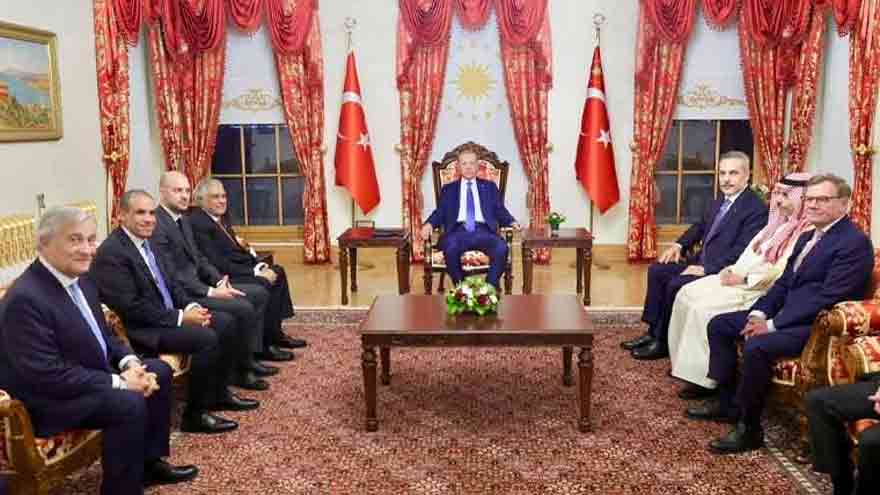
Foreign ministers of eight nations including Pakistan agreed to the urgent need to resolve regional crises through conversation, diplomacy and de-escalation.
The foreign ministers of Turkey, Egypt, Pakistan and Saudi Arabia (R4) and the FMs of France, Germany, Italy and the United Kingdom, met in Istanbul on 23 October 2026, the Foreign Office stated in a statement on Saturday.
Ministers discussed issues of regional and international importance, namely US/Israel-Iran conflict, Israeli-Palestinian conflict and the need for a negotiated two-state solution, appalling Houthi militia attacks against the Kingdom of Saudi Arabia and the Government of Yemen, safety and freedom of navigation, escalated tension in Straits of Hormuz and Bab El Mandeb and the Black Sea.
They pledged their ongoing commitment to contribute to diplomatic efforts to promote peace and stability in the area and beyond and address the security, economic and trade ramifications of these concerns.
They stressed the importance of finding durable negotiated solutions to all ongoing issues in conformity with the applicable UN Resolutions. The Ministers resolved to continue the engagement in this format with a view to averting disputes and promoting peace and stability in the area.
Pakistan reiterated its worries about militant activity emanating from Afghan territory and called on the Afghan Taliban leadership to stop all kinds of support, facilitation and tolerance for the Tehreek-e-Taliban Pakistan (TTP), the Balochistan Liberation Army (BLA) and their affiliated groups.
The Ministry of Information and Broadcasting claimed that the claims against Pakistan’s security institutions could not take away from Islamabad’s long-standing security worries. It underlined that Afghan authorities must ensure that their land is not utilised to plan, prepare or carry out terrorist operations against Pakistan.
The ministry, reacting to the latest statements by the Afghan Taliban regime, said Pakistan’s concerns were not conjectural but were based on international reporting and documented proof. It stated that Afghan authorities were responsible for preventing the use of Afghan land for terrorist actions against Pakistan and that the blame on Pakistani security agencies would not clear them of their obligation.
The ministry said it was referring to a report by the United Nations Security Council’s Analytical Support and Sanctions Monitoring Team, investigating the presence and actions of terrorist groups in Afghanistan, known as document S/2025/796.
It also cited a report presented to the US Congress by the US Lead Inspector General covering Operation Enduring Sentinel from January to March 2026.
The Pakistani ministry’s version of the US report said the Afghan Taliban had continued to allow the TTP to operate from Afghan territory. The report attributed the spike in attacks against Pakistan to growing Taliban backing and greater operational independence for the group.
The statement cited numbers that approximated the size of the TTP at between 4,000 and 6,000 combatants.
The ministry said the foreign evaluations illustrate the seriousness of Pakistan’s worries about terrorist safe havens and support networks in Afghanistan. It said that dismissing the capacity or desire of extremist groups to destabilise Pakistan did not take care of the issues expressed via solid evidence.
The statement also mentioned continuous efforts by armed extremists to get into Pakistan from across the Afghan border. It alluded to the killings of Afghan nationals and members of terrorist groups in Pakistani counter-terrorism operations, and the capture of foreign-made weaponry from militant elements.
“Such issues need to be taken seriously. The concerns raised about Afghan Taliban officials, including in Kandahar, allegedly facilitating terrorist groups need credible explanations and verifiable action, not outright denials,” the ministry said.
Pakistan said its security measures were aimed at terrorist threats, not at the Afghan people. The ministry said peace and stability of the two nations were interlinked and a terrorism-free region would benefit the people of Pakistan and Afghanistan.
It encouraged the Afghan Taliban administration to take concrete measures to remove the support mechanisms accessible to the TTP, BLA and allied organisations. It added these steps must ensure that Afghan land is not utilised for planning, preparing or executing strikes against Pakistan.
The ministry stated that characterising Pakistan’s legitimate security concerns and steps for defence as enmity toward Afghanistan would neither address the root cause of the crisis, nor would it divert attention from it.
The statement stated that Pakistan would continue to take all necessary actions to preserve its citizens, sovereignty and territorial integrity.
At the same time, Islamabad was ready for a responsible engagement based on mutual respect, verifiable assurances and concrete action against terrorist safe havens, support networks and cross-border infiltration.
The ministry said that sustainable peace in the region would depend on the Afghan Taliban government taking real steps to address Pakistan’s core security concerns in a way that could be independently confirmed.
Search Topics

WhatsApp rolls out new ‘Mentions and Replies’ chat filter

Eight countries, including Pakistan, urge diplomacy to resolve regional conflicts

Pakistan warns Taliban regime to stop supporting terror outfits

ICC board meeting in India: Mohsin Naqvi gets invitation

‘Self-Reliance in Digital ID’: NADRA launches locally produced QR code-based National Identity Card

23 people have died during the monsoon as rain-related incidents plague Punjab and KP.
-
 Latest News5 months ago
ICC board meeting in India: Mohsin Naqvi gets invitation
-
 Latest News2 months ago
‘Self-Reliance in Digital ID’: NADRA launches locally produced QR code-based National Identity Card
-
 Latest News3 months ago
23 people have died during the monsoon as rain-related incidents plague Punjab and KP.
-
 Latest News2 months ago
Turkish FM, Dar discuss regional trends, bilateral connections
-
 Business3 months ago
Govt dedicated to resolving Balochistan issues: Dar
-
 Latest News3 months ago
Pakistan making rapid progress in robotics, AI: Shaza Fatima
-

 Entertainment5 months ago
Interim bail given to YouTuber Rajab Butt in gambling app marketing case
-

 Latest News3 months ago
After a divorce, LHC decides that women who have been harmed by their spouses get their dower.