
Latest News
Global plant species at peril from climate change as habitats shrink

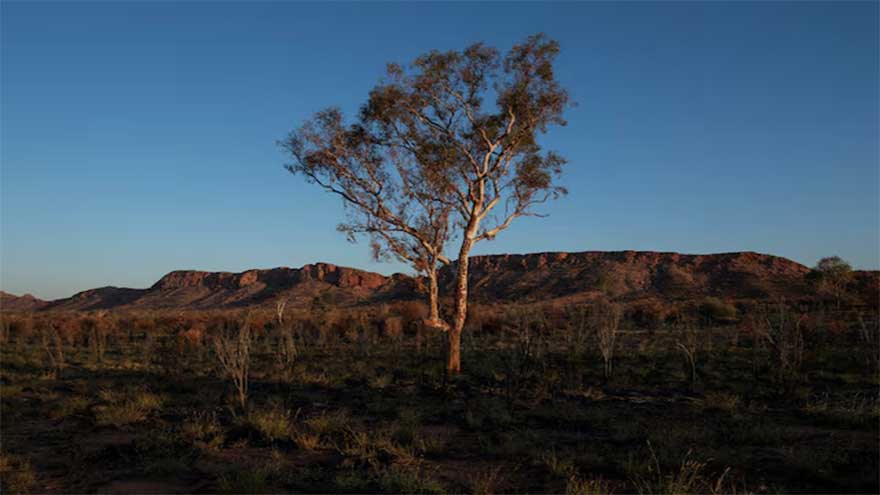
As climate change becomes an ever more major cause of species extinction, changing and frequently diminishing the habitats that the plants require to exist, some of the plants that make familiar landscapes unmistakable may not survive by century’s end, scientists say.
Researchers modelled future ranges for many species of vascular plants, a category that includes practically all the world’s plants – those with water- and nutrient-carrying tissues. They analysed more than 67,000 species, almost 18 percent of the world’s known vascular plants.
They showed that between 7% and 16% might lose more than 90% of their range and face a significant danger of extinction. They include the rare California indigenous tree Catalina ironwood or island ironwood, azure spike-moss from a plant lineage stretching back more than 400 million years and about one-third of Eucalyptus species, one of Australia’s most recognisable plant families.
They arrived at their figures by studying millions of records of where plants are found and scenarios of greenhouse-gas emissions in 2081-2100.
A plant’s habitat is not just a location on a map, but the whole set of variables it needs: temperature, rainfall, soils, land use and landscape elements such as shade.One way to think about this is to imagine plants trying to track a moving “climate envelope.” As the temperatures warm up, many species can move north or uphill to stay cool enough. But temperature is only half of the story,” Junna Wang, a postdoctoral researcher at Yale University, and Xiaoli Dong, a professor of environmental science and policy at the University of California, Davis, said in a joint comment to Reuters.
Wang and Dong contributed to lead the study published in the journal Science .
In many places, the study found, climate change is causing these combinations to diminish, leaving fewer places where all the conditions that a species needs are still found together.
Movement, or dispersal, for plants normally happens over generations, through seeds or spores carried by wind, water, animals or gravity. But when the researchers compared realistic migration to a scenario where plants could reach any new suitable environment, the rates of extinction were fairly similar.If slow mobility were the main concern, then dispersal should be allowed to be infinite, and that should drastically minimise extinction danger. But that is not what we discovered,” Wang and Dong said.
That matters conservation. “If dispersion constraint is the main cause, then measures such as aided migration – physically enabling species to relocate to new places – could eliminate most of the problem. But if climate change is diminishing the quantity of the right habitat on the whole, then simply assisting animals relocate may not be enough,” they added.
The expected impacts differ by region. Extreme cold regions are disappearing and Arctic cold-adapted flora may lose habitat. Drier places like the western United States and Mediterranean-climate areas are likely to see more severe drought, lower soil moisture and more frequent wildfires. Coastline movements towards the pole may be restricted in southern and eastern coastal Australia.
At the same time, local plant diversity could increase across about 28% of Earth’s land surface as species move into newly suitable areas, including parts of the tropics and subtropics where increased rainfall, rather than temperature alone, could make conditions suitable for additional species, the researchers found.
They called it a worldwide reshuffling, with some species vanishing from sections of their historical range while others relocate into new places, but noted local improvements do not suggest plants are doing better overall.
These changes might also result in the creation of “novel communities” – combinations of plants that have not coexisted historically, but would start to meet each other for the first time. What might these exchanges be like? The researchers said they do not know.
Most terrestrial ecosystems are underpinned by plants. They retain carbon, stabilise soils, sustain wildlife and supply food, timber, medicines and other commodities . So changes in plant diversity can cascade through ecosystems and humanity.If vegetation cover decreases because of climate change, ecosystems might absorb less carbon dioxide from the atmosphere, which might make warming worse. That produces a feedback loop, in which climate change hurts plants, and decreasing plant cover/productivity, in turn, worsens climate change,” Wang and Dong added.”Ultimately, conserving plant diversity is not just about saving nature for nature’s sake – it is about conserving the ecological systems that underpin human societies,” they stated.

Pakistani actress Sarah Khan has addressed a question about whether she had hoped for a son during her second pregnancy, saying that she and her husband, singer Falak Shabir, only wished for a healthy child.
During a question-and-answer session on her Instagram account, a fan asked if she wanted a baby boy while expecting her second child.
Responding to the question, Sarah said, “We just wanted a child.”

The actress, who is the mother of two daughters, Alyana and Rania, also reflected on how motherhood has transformed her life.
When asked what she misses most about her life before marriage and children, Sarah replied that uninterrupted sleep is the only thing she misses after becoming a mother of two.
She also shared a light-hearted response when a follower asked whether she was watching the FIFA World Cup 2026.
“The only thing I’m watching these days is my daughters,” she joked.
Speaking about motherhood, Sarah described her daughters as the greatest blessing in her life.
“My life has become more beautiful. I am busier than ever. It’s the best time of my life, and I love my daughters. They are Allah’s greatest blessing upon me,” she said.
The actress added that her biggest goal as a mother is to raise kind and compassionate human beings and wished for all married women to be blessed with healthy children.
Sarah also revealed that she is “obsessed” with her husband, Falak Shabir, while joking that their daughters are even more attached to their father.
The actress recently earned praise for her performance in the drama Sher alongside Danish Taimoor and is set to appear in an upcoming Geo TV drama opposite Feroze Khan.

According to a statement sent by his office early on Sunday, Graham passed away on Saturday night.The statement read, “Senator Graham’s family requests privacy during this extremely trying time and appreciates prayers at this time.”
Among the first public figures to honor Graham was President Donald Trump, who described him as “one of the greatest people and Senators I have ever known.”

Imran Khan, the founder of Pakistan Tehreek-e-Insaf (PTI), had an eye exam at Rawalpindi’s Adiala jail.
Imran’s eye is thoroughly examined by medical professionals.
The inspection was conducted yesterday (Friday), according to information leaked on Saturday. Dr. Arif from PIMS and Dr. Nadeem Qureshi from Al-Shifa Trust were among the specialists who performed the examination.
Imran Khan’s eye was thoroughly examined by the physicians, according to sources.
Medication is prescribed by doctors as part of follow-up care.
Sources claim that as part of the follow-up treatment, the doctors recommended medication.

According to Sarah Khan, she never made a specific wish for a son.

US Senator Lindsey Graham passes away at age 71 following a brief illness

At Adiala jail, Imran Khan has his eyes examined.

ICC board meeting in India: Mohsin Naqvi gets invitation

The IMF mission has arrived in Pakistan for discussions regarding the budget.

Is the US-Iran standoff exposing deep fault lines in US intelligence coordination?
-
 Latest News2 months ago
ICC board meeting in India: Mohsin Naqvi gets invitation
-
 Business2 months ago
The IMF mission has arrived in Pakistan for discussions regarding the budget.
-
 Latest News1 month ago
Is the US-Iran standoff exposing deep fault lines in US intelligence coordination?
-
 Business2 months ago
Oil hits 2-week high following drone strike on UAE nuclear power facility
-

 Latest News1 month ago
Shehbaz, Zardari discuss key issues as PPP hints at budget support
-

 Latest News2 months ago
To commemorate the anniversary of Marka-e-Haq, top civic and military leaders assemble at Pakistan Monument.
-

 Latest News1 month ago
7.8 magnitude quake hits southern Philippines\
-

 Business2 months ago
In the open market, flour prices increase by Rs 700 per mound.