
Latest News
Morocco reveals Brazil’s shortcomings but concludes with a draw in the World Cup heavyweight confrontation.

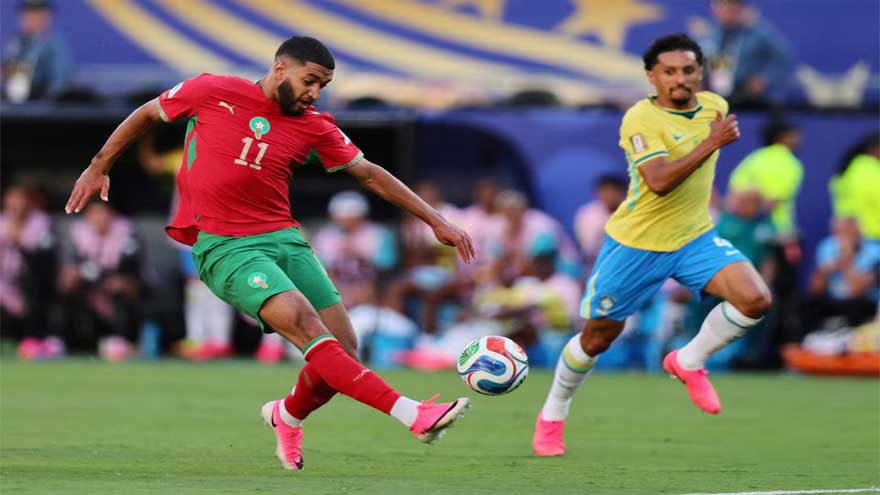
Brazil and Morocco drew 1-1 in the first heavyweight encounter of the World Cup on Saturday, with the Africans showing their promise while exposing familiar faults in their opponents at a sold-out stadium.
Morocco deservedly took the lead in the first-half through Ismael Saibari before Vinicius Jr produced a moment of brilliance to level the scores and ensure the points were shared in the opening Group C match.
The result leaves the group finely poised until Haiti face Scotland later on Saturday.
For Morocco, semi-finalists at the 2022 World Cup, the performance was more proof they can challenge the traditional powers of the game.
But Carlo Ancelotti’s Brazil side left with questions to answer following a disjointed display in which they were regularly stretched by the pace and movement of their opponents.’I don’t think we started well in the game, the team was a little bit jittery, we lost control too much, lost too many duels. “The first half was not good,” Ancelotti stated, adding his side improved after the interval.It was better in the second half; it’s a tough game because Morocco are a solid side. I guess there was a little amount of nerves. In the first half they were hitting out of our press and creating dangerous attacks.
“Do you ask me if I want to have the same trajectory (as in 2022), no, I want to go beyond the semi-finals this time”, said his Morocco colleague Mohamed Ouahbi.That was one point, but we were hoping for more. “One point is fine & we will get better.”
ENJOY MOROCCO BRIGHT BEGINNING
Morocco enjoyed the superior start, methodically working the ball down the flanks and threatening early on through Achraf Hakimi and Bilal El Khannouss while Brazil attempted to hit on the break.
Morocco routinely sliced through Brazil’s midfield with surprising ease, finding gaps between the lines as teenager Ayyoub Bouaddi demonstrated his skill.
Brazil’s first whiff of a goal came in the 14th minute but Igor Thiago couldn’t make the most of it, fluffing his header.
Seven minutes on and the five-time world champion’s defensive frailties were exposed.
Centre backs Marquinhos and Gabriel were out of position and Lucas Paqueta was robbed in midfield to allow Brahim Diaz to play Saibari through.
Alisson compounded his error with a poor charge off his line and Saibari coolly lobbed the ball over the custodian to put Morocco ahead.
Brazil kept battling against the intensity and organisation of Morocco, but the Africans were unable to parlay their supremacy into further goals.
Instead, it took a moment of brilliance from Vinicius to level the scores for Brazil in the 32nd minute.
Receiving a feed from Bruno Guimaraes on the left outside of the box, he cut inside on his right foot and fired an unstoppable shot into the far top corner.
Brazil were on the brink of the turnaround at the stroke of half-time, but keeper Yassine Bounou was quick to deny Paqueta’s acrobatic scissor kick.
BRAZIL TAKE CONTROL
Midfielder Fabinho and defender Danilo came on for Casemiro and Roger Ibanez, who had a poor first half, and Brazil had greater control in the second half.
Brazil raised the intensity, became more composed and made Morocco defend. But it was not until the 78th minute that they really tested the Moroccan defence when Raphinha met a cross from Vinicius.
Both sides largely avoided risks and the game left the edge. In the closing minutes, Brazil shown a bit of new life, coming near through substitute Matheus Cunha, but they lacked their vintage swagger.
However, both clubs will enjoy their prospects of reaching top of the group and possibly bettering their path in the knockout stages.
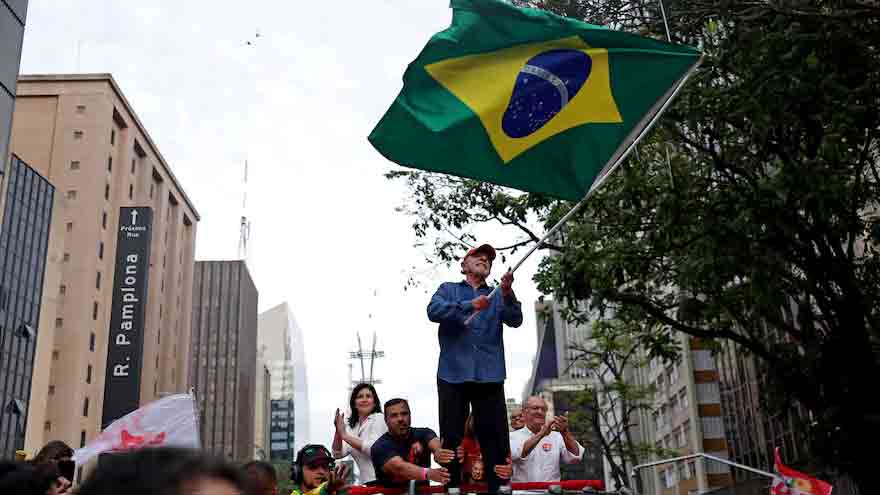
Brazil’s electoral court ruled Sunday that President Luiz Inacio Lula da Silva won a record fourth term in a surprising result that defied polls, precedent and worldwide anti-incumbent sentiment to put the brakes on a wave of right-wing election victories across Latin America.
Lula, an icon of the worldwide left and the most powerful force in Brazilian politics this century, defeated Senator Flavio Bolsonaro, the eldest son of former President Jair Bolsonaro.
The senator, who dominated the first round of the election but lost the runoff by more than 4 million votes, said he would try to overturn the result because of a Supreme Court judgement Sunday to prolong voting by two hours.
Bolsonaro’s refusal to acknowledge defeat parallels his father’s attitude after losing to Lula in 2022. Former President Jair Bolsonaro never conceded the election and was eventually convicted and sentenced to 27 years for organising a coup to stay in office.
But the size of Flavio Bolsonaro’s loss against Lula – more than double the margin of his father’s defeat – and the fact his campaign had asked for an extension because of rains in the south made an annulment implausible, observers said.
“There is a possibility of right-wing protests in the coming days, but it is very improbable that it will lead to the reversal of the result,” said Mario Braga, a Latin America analyst at risk consultancy RANE.
KING OF COME-BACKS
For Lula, his victory is just another comeback in a career full of them. The 80-year-old was incarcerated between 2018 and 2019 on corruption allegations that were later reversed, allowing him to defeat Jair Bolsonaro in the 2022 race.“He is a statesman, a giant,” socialist federal senator Erika Hilton, who was with Lula in Sao Paulo during the vote count, told Reuters.
At times, Lula’s reelection seemed unlikely as voters turned against him and his Workers’ Party amid years of corruption scandals and rising prices, while sweeping social changes left the former metalworker and union leader looking out of touch with an increasingly app-based economy and its growing ranks of informal workers.
An exchange-traded fund on Brazil’s Bovespa index (1325.T), opens new tab listed in Tokyo plummeted about 15% on news of Lula’s victory in Asia trade.
Pollsters reported more voters turned out to support Lula than they had anticipated. Leonardo Barreto, co-founder of consultancy Think Policy, said voters had opted for Lula’s familiar embrace over Bolsonaro’s innovation.“Today people are choosing between change, with some apprehension, and a known path which guarantees certain rights,” he remarked.
Lula referred to a record of lowering poverty and inequality throughout the campaign, while unemployment, illiteracy and deforestation achieved record lows during his third term.
He claimed Bolsonaro will decrease welfare expenditures, backslide on social advances and hand over Brazil’s sovereignty to US President Donald Trump, whose State Department supported a campaign to return the Bolsonaros back to power.
Lula’s victory is a big loss for Trump from a rising band of supportive right-wing Latin American governments that have accepted Washington’s agenda on security and migration.
“He would be very important for creating a point of balance in Latin America,” Reuters quoted Lula’s former foreign minister Celso Amorim as saying. Lula is that equilibrium.
LATE-CAMPAIGN BOOST.
Lula is the first candidate to come second in the first round and win since Brazil’s restoration to democracy in the 1980s.
Lula, president from 2003 to 2011, ran this year on a potent mix of pragmatism and populism that has defined his half-century career in national politics, putting out a number of policies aimed at improving the lives of workers and impoverished Brazilians.
These gained traction with late-campaign promises, from free statewide weekend public transit, which has to be formally filed to Congress, to a 15% boost in his signature welfare program that is being implemented.
Lula also pushed a constitutional amendment that turned into Brazil’s biggest labour reform in decades and approved with broad support in Congress.
THE CHALLENGES THAT LIE AHEAD
But Lula’s fourth term may be his toughest yet, after Brazil elected its most conservative Congress since the restoration to democracy in the 1980s.
Bolsonaro’s Liberal Party (PL) and associated parties would together be able to command more than 280 seats in the lower house and up to 50 seats in the Senate, enough for solid opposition majorities in both chambers.
That could strengthen recent patterns of presidents yielding power to Congress on the budget, major legislation and crucial nominations.
Lula faces an economy that his administration predicts will expand a feeble 2.3% next year, adding to fiscal difficulties linked to elevated interest rates and public debt that has soared above 82% of GDP, the highest level since the epidemic.
The president’s detractors blame expenditure, although most of the debt growth is due to higher borrowing prices.
Goldman Sachs said it expected Lula to make limited progress cutting spending in a fourth term, as he remains dedicated to a state-led economic strategy.
Rising household debt is also a worry for economists. To tackle the problem, Lula announced a temporary ban on internet betting and a new debt relief plan during the campaign.
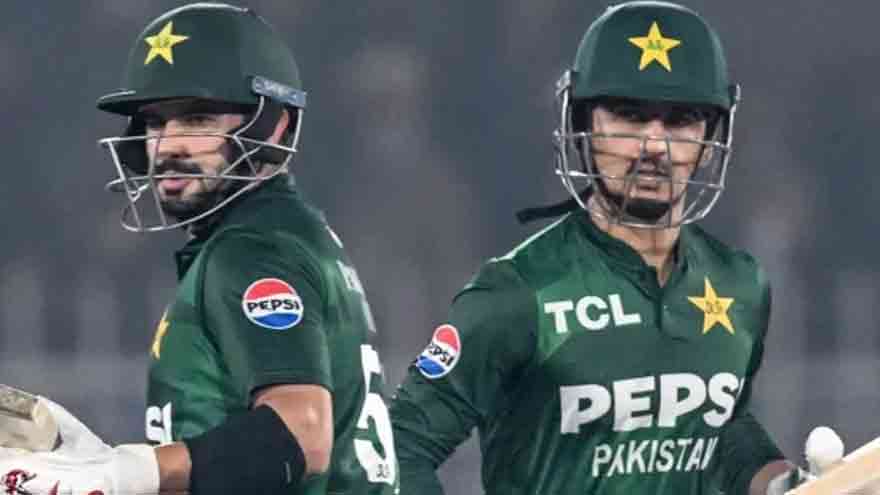
Pakistan opening batter Saim Ayub has been dropped from the national ODI squad for the remaining matches of the ongoing tri-series.
This is in line with Saim’s stated wish to return to domestic cricket to work on his batting and get his confidence back.
Ayub asked to be allowed to leave the squad and play domestic cricket after talks with the head coach, the Pakistan Cricket Board (PCB) said.
His request was approved by the team management and the national selection committee, who made way for Sahibzada Farhan to be included in the ODI squad as his substitute.
Pakistan have already qualified for the tri-series final after winning three in a row in the competition.
The national side will take on Sri Lanka in the fifth round of the tri-series tomorrow at Gaddafi Stadium.
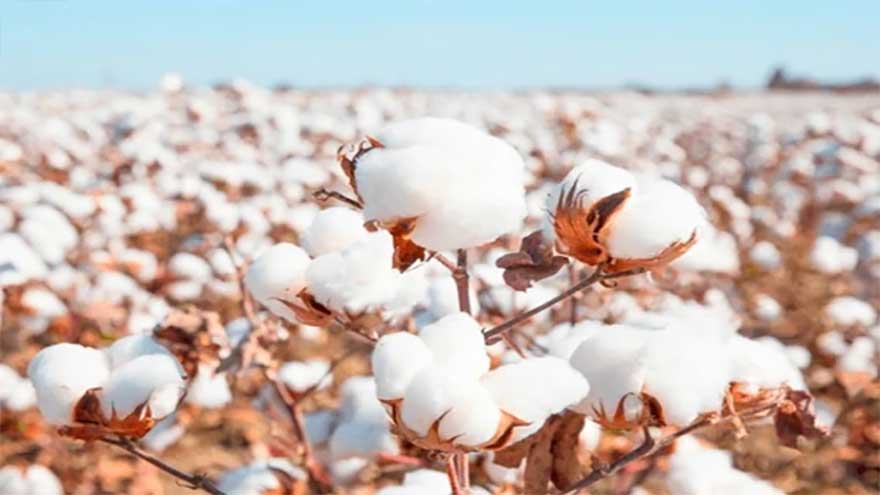
Pakistan is the only major cotton-producing country to have had such a dramatic loss and its production has fallen by more than 60% in the past decade, said Ehsanul Haq, chairman of the Cotton Ginners Forum.
Haq added in a statement that lax enforcement of agricultural zoning laws, too much sugarcane planting in designated cotton-growing areas and setting up of new sugar mills were the main causes for the fall.
He urged on enforcement of crop zoning restrictions and preventing sugarcane cultivation in cotton belts to bring back local cotton production. He added after efficient execution of the zoning laws, enhancements should be made to cotton research stations and other supporting measures.
Haq further demanded to provide a legal structure to the planned Pakistan Cotton Board under the leadership of All Pakistan Textile Mills Association (APTMA. He advocated that the Pakistan Central Cotton Committee (PCCC) and its subordinate institutions should be placed under the proposed board.
The reduction in domestic cotton production and quality has created a crisis in the local cotton sector, making Pakistan more dependent on imported cotton and edible oil, putting more pressure on foreign exchange reserves, Haq said.
He claimed the government has failed to come up with a viable strategy to reverse the drop despite a high-level meeting chaired by the Deputy Prime Minister Ishaq Dar approximately a year ago, which decided to establish a cotton board under the direction of APTMA.
Signs have emerged that the decision has started to be implemented after a year of delay, he said.
The proposed board could include representatives of the Pakistan Cotton Ginners Association (PCGA), the Karachi Cotton Association (KCA), the Federation of Pakistan Chambers of Commerce and Industry (FPCCI), the National Textile Education Council, private seed companies and concerned government institutions.
Haq also called upon the federal and provincial governments to focus the enforcement of crop zoning restrictions and improve the Pakistan Meteorological Department so that it could deliver prompt and accurate weather forecasts to farmers.
“Cotton prices came under pressure last week due to financial difficulties in the sector, limited buying by textile mills, imports of yarn and fabric under the Export Facilitation Scheme and government inspections of cotton ginning factories,” he said.
Cotton prices fell to Rs18,500 from Rs18,500 per maund, a drop of Rs200, Haq said.
He also expressed concern over the reports of financial scandals involving billions of rupees in the yarn market of Faisalabad and millions of rupees in several cotton ginning facilities in Sindh, saying these developments have added to the uncertainty across the sector.

Lula, Brazil’s iconic working class president, wins fourth term in dramatic comeback

Sahibzada Farhan replaces Saim Ayub in Pakistan ODI squad for tri-series matches

Pakistan’s cotton production plunges 60pc in a decade, says ginners’ chief

ICC board meeting in India: Mohsin Naqvi gets invitation

‘Self-Reliance in Digital ID’: NADRA launches locally produced QR code-based National Identity Card

23 people have died during the monsoon as rain-related incidents plague Punjab and KP.
-
 Latest News5 months ago
ICC board meeting in India: Mohsin Naqvi gets invitation
-
 Latest News2 months ago
‘Self-Reliance in Digital ID’: NADRA launches locally produced QR code-based National Identity Card
-
 Latest News3 months ago
23 people have died during the monsoon as rain-related incidents plague Punjab and KP.
-

 Latest News2 months ago
Turkish FM, Dar discuss regional trends, bilateral connections
-
 Business3 months ago
Govt dedicated to resolving Balochistan issues: Dar
-
 Latest News3 months ago
Pakistan making rapid progress in robotics, AI: Shaza Fatima
-

 Entertainment5 months ago
Interim bail given to YouTuber Rajab Butt in gambling app marketing case
-
 Latest News3 months ago
After a divorce, LHC decides that women who have been harmed by their spouses get their dower.