
Business
Trump-backed Boeing China deal finalized, first order of 200 aircraft revealed

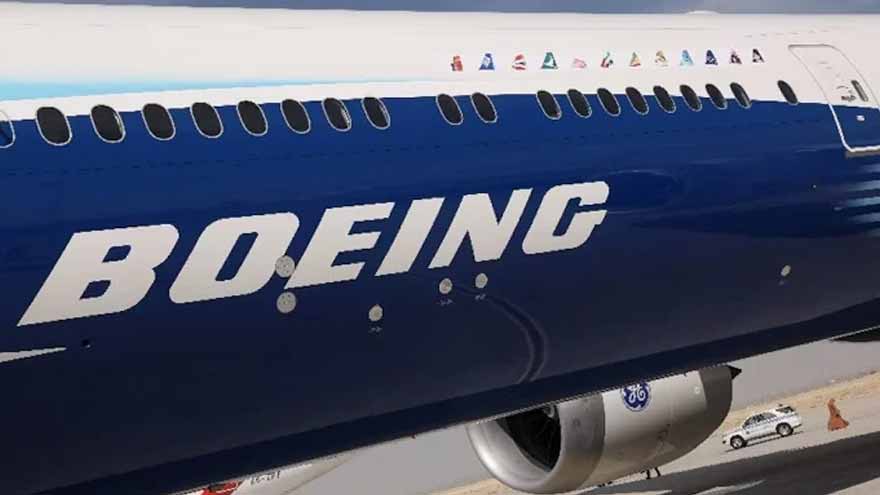
Boeing, the aerospace giant, revealed on Friday that China had agreed to purchase 200 airplanes, as promised previously by US President Donald Trump on his visit to Beijing.“We had a very successful trip to China and achieved our major goal of reopening the China market to orders for Boeing aircraft,” the business, whose CEO Kelly Ortberg was part of the US delegation to China, said in a statement.This includes an initial commitment for 200 aircraft and we expect further commitments to come following this initial tranche,” Boeing said, thanking the Trump administration “for making this milestone happen.”“We now look forward to meeting China’s aircraft demand on a continuing basis,” it added.
China’s most recent Boeing order was placed in 2017, when Trump visited Beijing at the beginning of his first term in the White House. During that period, it ordered 300 single-aisle and wide-body aircrafts — a massive transaction for $37 billion.
On Thursday, Trump had said of the new Boeing commitment, telling Fox News anchor Sean Hannity during an interview: “I think it was a commitment.””That’s a lot of jobs,” the president said.
Speaking to reporters traveling with him on Air Force One was when he returned from China, when Trump said the agreement came with “a promise of 750 planes, which will be by far the largest order ever, if they do a good job with the 200.”
For some months, US media have speculated that Beijing was preparing to place a big Boeing order comprising 500 single-aisle 737 MAXs and roughly 100 bigger 787 Dreamliners and 777s.”He pledged 200 Boeings, big ones, 777s, and 737s and lots of big, big ones, big, beautiful Boeing planes,” Trump claimed in the interview with Fox News aired Friday evening.
For China, such a large order would lock in capacity to continue expanding its aviation sector while output of its home-grown COMAC C919 narrow-body misses ambitious expectations.
It would also help Boeing lessen its deficit with rival Airbus, which has forged forward in China in recent years.
An estimate from aviation intelligence and advisory group IBA valued the 200-aircraft deal at around $17 billion to $19 billion assuming an 80% mix of MAX jets.”This number could rise to $25 billion, however, if a larger proportion (around 40%) of the total order is announced for the widebody aircraft,” said Samuel Kenekueyero of IBA.
The accord would be a much-needed success for Trump, whose tough tariffs and other trade policies so far have failed to make much of a dent in the massive US trade deficit.
If it materialises, an order for more than 500 jets would be the biggest in aviation history, exceeding IndiGo’s contract for 500 Airbus narrowbody aircraft. However, China’s order would likely be shared amongst its three major state-run airlines.
Order size under forecasts
U.S. planemaker shares fell about 4% on Thursday after Trump claimed Fox News Channel China had agreed to buy 200 jets, significantly below analysts’ forecasts. Friday they were down around 2.6%, and GE Aerospace shares sank 2%.
Initially, Boeing was in negotiations for at least 500 narrowbody jets linked to the Beijing summit and dozens of widebody jets, with potentially as many as 200 to follow at a later date, industry sources said.
Trump said Xi will make a reciprocal visit to Washington in September, perhaps making it the centerpiece of the next round of possible jet orders.
However, Li Hanming, an independent specialist on China’s aviation business, said concerns over after-sales service had affected purchase decisions. “The reason China isn’t buying is really simple. Nobody wants to buy something without assured after sales maintenance and assistance. Last May, the U.S. was still threatening to restrict exports of parts. If they apply embargoes on parts like that, who would still dare buy Boeing?”
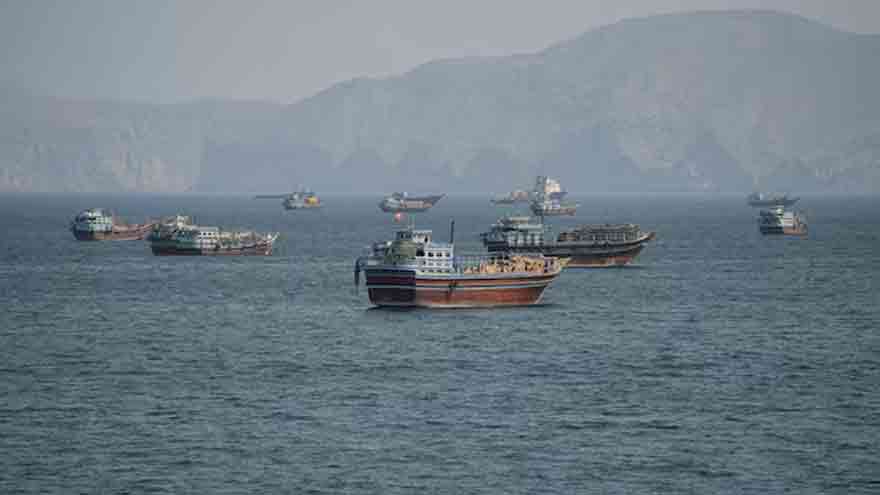
Oil prices fell on Monday on hopes of a glut as supplies to the Middle East through the Strait of Hormuz returned to near pre-war levels and the United States took steps to help move fuel goods between inland ports.
At around 1:45 a.m. Japan time, Brent crude oil futures fell 47 cents, or 0.49%, to $95.37 per barrel. US West Texas Intermediate (WTI) crude oil fell 23 cents, or 0.26%, to $88.33.
Oil prices closed lower on Friday as markets weighed signs of easing geopolitical risks from the US-Israel-Iran war, which has entered its ninth month. Last week, the indexes fell 16% and 13%, respectively.
The International Energy Agency said on Friday that the global oil market will return to surplus in the fourth quarter of this year as Middle East exports recover faster than global oil demand, despite continued attacks on ships. “For the first time since the start of the US-Iran conflict, traders are actively considering the possibility of oversupply rather than continuing shortages. This change in rhetoric clearly lowers the tone,” said Tim Waterer, chief analyst at KCM Trade. Oil supplies averaged 105 million barrels per day in the fourth quarter, exceeding forecast demand by 1.7 million barrels per day, the IEA said. The IEA had previously predicted a supply shortage in the fourth quarter. The agency also provided further details about the remaining volume from member countries’ record release of emergency stockpile crude oil pledged in March, saying 71 million barrels, including 15 million barrels of diesel, would be made available by the end of February to ease market tensions.
A U.S. decision to expand shipping laws to make it easier for foreign-flagged vessels to transport fuels such as oil, gasoline and diesel between U.S. ports also put pressure on prices. President Donald Trump has extended for 90 days the repeal of the Jones Act, which requires U.S.-flagged vessels to transport cargo between U.S. ports, a White House spokesperson announced Friday.
Repealing this rule would increase the number of tankers that can transport goods between U.S. ports. However, Waterer noted that despite tight supply, transportation charges remain high, keeping oil prices in check.
Rates remain high due to the risks tankers face when transporting crude through the Strait of Hormuz and the dwindling supply of crude oil as many ships are stuck plying the waterway to transfer cargo to other ships carrying cargo to refineries.
On Sunday night, Iran’s navy said that an oil tanker caught fire after striking a naval mine east of the Strait of Hormuz, state media reported.
Reuters could not independently verify the report.
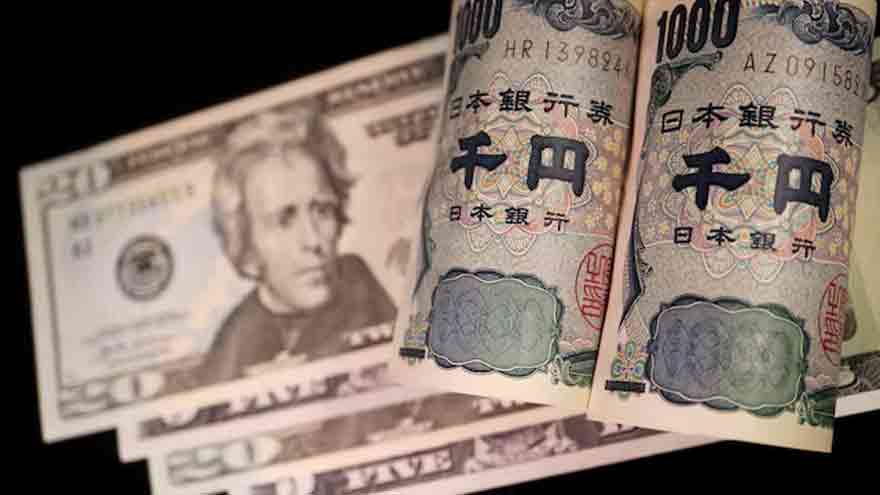
The yen was near a two-month low against the dollar and little changed against the euro in Asian trading on Monday as markets weighed how Japan’s unexpected third-quarter economic downturn could affect the political outlook.
The yen has been rising and falling without much movement, trading at 159.72 yen against the dollar and 176.03 yen against the euro, close to the level at which Japanese and U.S. authorities reportedly intervened earlier this year.
“Unless weakness spreads into wages, services and underlying domestic demand, the BOJ is likely to look through the soft patch,” said Masahiko Loo, chief fixed income strategist at State Street Investment Management in Tokyo.
“The yen may take the initial hit, but expect strong resistance to further weakness in the 160s,” he added. “The risk of intervention increases, but at this level the risks and rewards of adding new short yen positions become increasingly less attractive.”
Data showed Asia’s second-largest economy shrank by 0.1% in the July-September period from a year earlier, lower than expected growth of 0.3%.
Most other currency pairs remained stable in early Asian trading. The euro was at $1.1021, the British pound was at $1.3212, the Australian dollar was down 0.1% at $0.6769, and the Kiwi dollar was stable at $0.5520.
The dollar stabilized at 6.6716 yuan in offshore trading against the Chinese yuan, after figures released on Monday showed China’s industrial production slowed to 4.8% in October from a year earlier, while retail sales growth also slowed.
The dollar has been gaining strength lately, rising against most of its peers for the past five consecutive sessions after hawkish commentary from Federal Reserve officials and a hot October inflation report, which have revived bets that the US central bank will have to take aggressive action to rein in cost-of-living pressures.
The video player is currently playing an ad. You can skip ads in 5 seconds using your mouse or keyboard.
The US dollar index, which measures the greenback’s strength against a basket of six currencies, traded at 103.46, its highest level since April 2025.
“Markets are forecasting higher US rates in the near term, but also a larger slowdown in medium-term US economic growth due to contractionary policies,” MUFG analysts wrote. “This slowdown has not yet materialized.”
Kansas City Fed President Jeff Schmidt said Sunday that the U.S. central bank “has work to do to combat inflation.” He is not a voting member of this year’s Federal Open Market Committee. Federal funds futures have priced in a 92% implied probability of a 25 basis point rate hike in the two-day U.S. central bank meeting ending Dec. 9, and an 8% implied probability of a 50 basis point rate hike, up from 11.5% on Friday, according to CME Group’s FedWatch tool.
According to the tool, traders are predicting four rate hikes by next September, albeit within a narrow range. The 10-year Treasury yield fell 1.2 basis points to 5.137%.
In the crypto market, Bitcoin rose 0.4% to $65,289.20, stabilizing from a three-day slide that saw the largest digital asset fall to a four-month low over the weekend, while Ether rose 0.6% to $1,830.66.
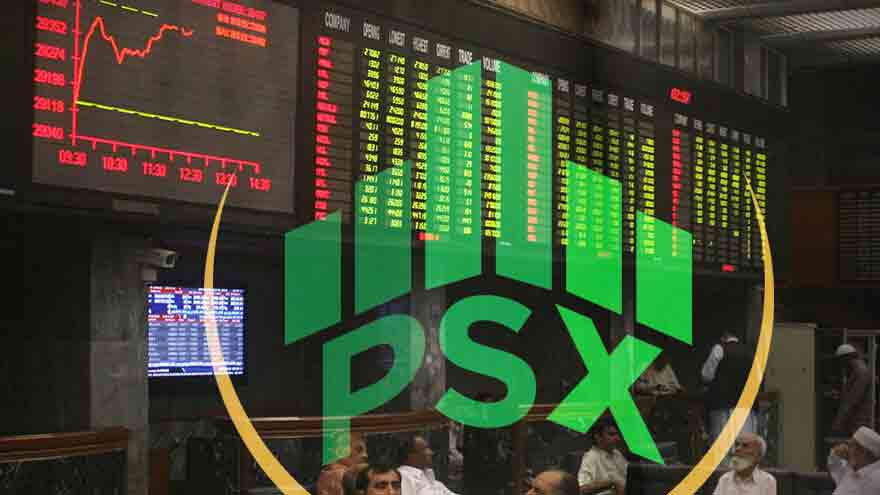
Pakistan Stock Exchange (PSX) started the trading week on a positive note with the KSE-100 index rising over 1,400 points amid strong buying activity.
The index opened at 179,274.07 points, up 1,400.20 points (0.79%) from the previous close of 177,873.87 points. The market hit a high of 179,274.07 points and a low of 178,315.62 points for the day, reflecting gains during the session.
Volume reached 20,720,027 shares, indicating continued market activity.
In previous session, PSX witnessed bullish trend on Friday, with the benchmark KSE-100 Index gaining 500.11 points to close at 177,873.88 points.
The ready market had witnessed a trading volume of 1,42.810 million shares, compared to 1,070.480 million shares traded in the previous session.

Political consensus on new provinces in the making: Khawaja Asif

Federal constitutional court amends stay order on 3-MPO arrests in KP

Oil prices fall on expectations of coming supply surplus

ICC board meeting in India: Mohsin Naqvi gets invitation

‘Self-Reliance in Digital ID’: NADRA launches locally produced QR code-based National Identity Card

23 people have died during the monsoon as rain-related incidents plague Punjab and KP.
-
 Latest News6 months ago
ICC board meeting in India: Mohsin Naqvi gets invitation
-
 Latest News3 months ago
‘Self-Reliance in Digital ID’: NADRA launches locally produced QR code-based National Identity Card
-
 Latest News4 months ago
23 people have died during the monsoon as rain-related incidents plague Punjab and KP.
-

 Latest News3 months ago
Turkish FM, Dar discuss regional trends, bilateral connections
-

 Business4 months ago
Govt dedicated to resolving Balochistan issues: Dar
-

 Latest News4 months ago
Pakistan making rapid progress in robotics, AI: Shaza Fatima
-

 Entertainment6 months ago
Interim bail given to YouTuber Rajab Butt in gambling app marketing case
-

 Latest News4 months ago
After a divorce, LHC decides that women who have been harmed by their spouses get their dower.