
Business
KP CM, Governor agree to ease lockdown restrictions

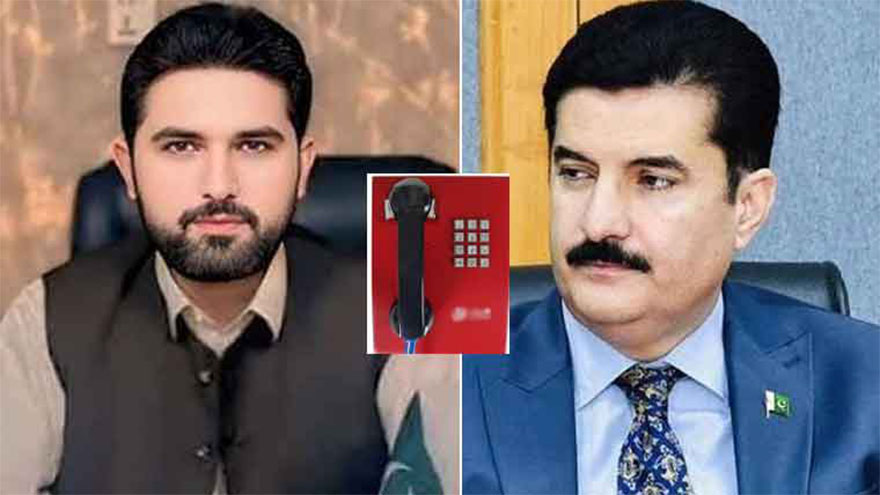
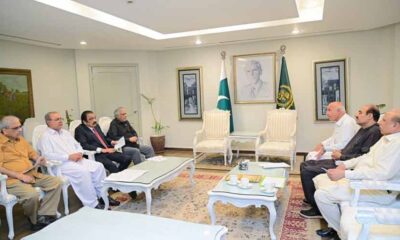
Governor Khyber Pakhtunkhwa Faisal Karim Kundi and Chief Minister Sohail Afridi Friday agreed to lift lockdown restrictions in the province to assist people and to promote economic activity.
Governor Kundi said in a telephonic discussion that the lockdown limits should be lifted on the pattern of Punjab and shops, marketplaces, shopping malls and eateries should be exempted from limitations.
The chief minister agreed to the recommendations and the two leaders discussed how to balance popular convenience with economic stability.
Governor Kundi said the flexibility in business timings for stores, markets and shopping malls would help in reducing the financial losses being sustained by the trader community.
He said the government should continue to prioritize the relief of the people, adding that the resumption of business activity will help in stabilizing the economy in the province.
The Governor noted that the administration was well aware of the problems being encountered by traders and guaranteed that steps would be taken to address their issues.
The two leaders also spoke on the general situation in the province and public welfare issues. They decided to formulate a coordinated plan for the promotion of economic activity and ensuring maximum facilitation to the public.
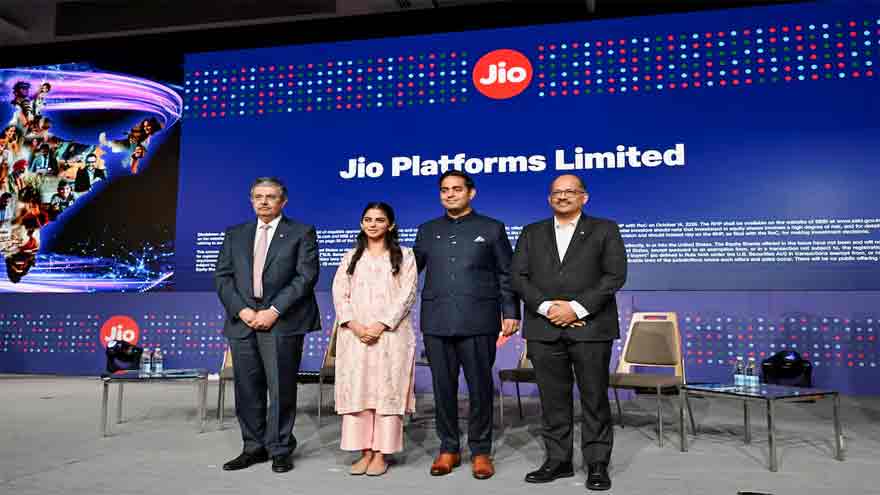
Jio Platforms’ (JIOP.NS) $3.2 billion IPO launches on Wednesday, testing demand for India’s largest share sale to date and the first from billionaire Mukesh Ambani’s Reliance (RELI.NS) conglomerate in two decades.
The Jio Platforms IPO will be a crucial test of global appetite for fresh share offerings at a time when investors have tightened their examination of AI-related companies which some analysts think might see them shifting away from the technology.
Jio Platforms, the parent of India’s biggest telecom firm with over 500 million subscribers, backed by Meta, Google and institutional investors, is the world’s second-largest telecom operator in a single country behind China Mobile.
The IPO values Jio Platforms at up to $108.3 billion, possibly making it one of India’s biggest corporations by market valuation when trading kicks out on October 28. About a third of the shares on offer are allocated for retail investors.
Jio Platforms this week allocated $853 million worth of shares to global and local investors including Abu Dhabi Investment Authority and BlackRock, after the reserved part for such investors attracted bids of more than $25 billion.
LAUNCH DATES FESTIVE
Retail investors and Reliance’s employees and stockholders will get a chance to join in the offering that closes Friday and has a price range of 1,065 to 1,119 rupees a share.
The IPO is Reliance’s first since 2006 and is larger than previous huge offerings such as Hyundai Motor India (HYUN.NS), opens new tab, and National Stock Exchange (NSEI.BO).
The plans were also delayed in 2025, when Ambani first said he planned to list in five years in 2019. A filing in as early as March was stymied by the Iran war sapping IPO enthusiasm.
Ambani’s son Akash runs Jio Platforms’ telecom company, which started in 2016 with the gamble that Indians would use the internet a lot more if it cost virtually nothing. It quickly seized market share from rivals like Bharti Airtel (BRTI.NS), opens new tab and Vodafone Idea (VODA.NS), opens new tab with cheap data and free voice calls.
Jio Platforms is selling its IPO in the middle of a Hindu festive season, seen as a lucky time for buying, although Indian markets have been dull in recent weeks.
Reliance this month also paid pay cheques approximately 15 days early to its more than 400,000 employees and in recent weeks helped expedite share account opening services to people interested in applying for the IPO, said a person in the business with direct knowledge of the situation.
Reliance did not immediately reply to a request for comment.
For the year ending in March, Jio Platforms posted a profit of $3.2 billion on revenue of $15.5 billion. Its telecoms division alone accounted for over 90% of those figures.
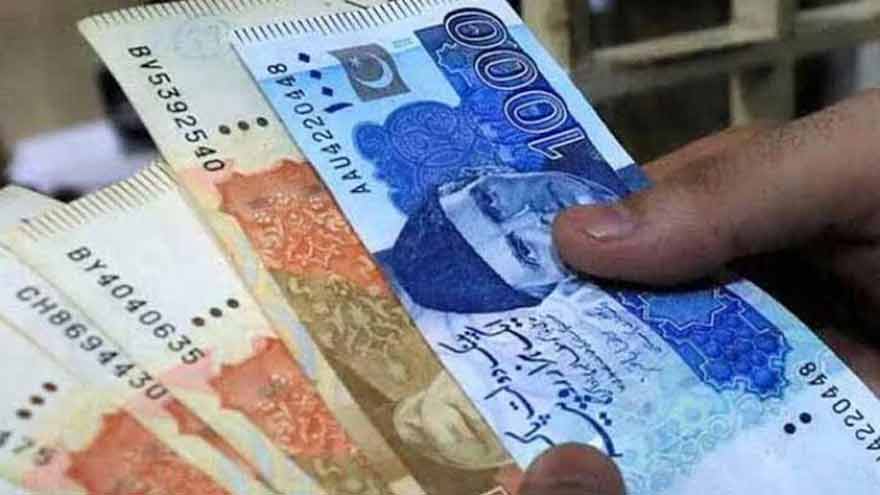
Documents of the Ministry of Economic Affairs showed that the government borrowed Rs1,514 billion during first quarter of the current fiscal year 2026-27, July-September including Rs1,037 billion in September alone.
The data show that the government borrowed around Rs913 billion more in September 2026 than in September 2025.
The documents showed that the government sold $3 billion worth of bonds in September. Of this, $1.75 billion of bonds have an interest rate of 7.5% and the rest $1.25 billion have an interest rate of 7.9%. The bonds will maturity in 2036.
The Ministry of Economic Affairs said the revenues from the issuing of the $3 billion bond could be utilised for budget support, with the Ministry of Finance as the executing agency. The amount is around Rs818 billion in local currency.
Besides the bonds, the government borrowed Rs17 billion through non-project finance, which comprises budget support and short-term loans.
“The documents also revealed that the government obtained $5.44 billion in foreign loans and grants from July to September. This was up $3.63 billion from the $1.81 billion received in the same time of the last fiscal year.
In the first quarter, the government also obtained a $300 million medium-term financing arrangement from an international commercial bank.
The Economic Affairs Division said the funds mobilised through the Naya Pakistan Certificates had witnessed a massive surge during the first quarter of the current fiscal year. During the period, Naya Pakistan Certificates worth $942.7 million were issued.

— The Pakistan Stock Exchange (PSX) kicked off on a bullish note on Tuesday with the benchmark KSE-100 Index rising more than 400 points in early trade.
The index rose to 166,425 points at the start of the second trading session of the business week, indicating better market performance.
The KSE-100 Index closed down 453 points at 165,966 points in the last trading session.
The benchmark index turned positive during early trading after falling in the previous session. The latest gains were made as the benchmark index went into positive territory during early trading.

Pakistan begins issuing e-passports at diplomatic missions worldwide

Interior Minister Naqvi warns against online fraud, cybercrime and blackmail

German defence ministry accords guard of honour to President Zardari

ICC board meeting in India: Mohsin Naqvi gets invitation

‘Self-Reliance in Digital ID’: NADRA launches locally produced QR code-based National Identity Card

23 people have died during the monsoon as rain-related incidents plague Punjab and KP.
-
 Latest News5 months ago
ICC board meeting in India: Mohsin Naqvi gets invitation
-
 Latest News2 months ago
‘Self-Reliance in Digital ID’: NADRA launches locally produced QR code-based National Identity Card
-
 Latest News3 months ago
23 people have died during the monsoon as rain-related incidents plague Punjab and KP.
-

 Latest News2 months ago
Turkish FM, Dar discuss regional trends, bilateral connections
-
 Business3 months ago
Govt dedicated to resolving Balochistan issues: Dar
-

 Latest News3 months ago
Pakistan making rapid progress in robotics, AI: Shaza Fatima
-

 Entertainment5 months ago
Interim bail given to YouTuber Rajab Butt in gambling app marketing case
-

 Latest News3 months ago
After a divorce, LHC decides that women who have been harmed by their spouses get their dower.