
Business
Flour prices were increased by private mills.

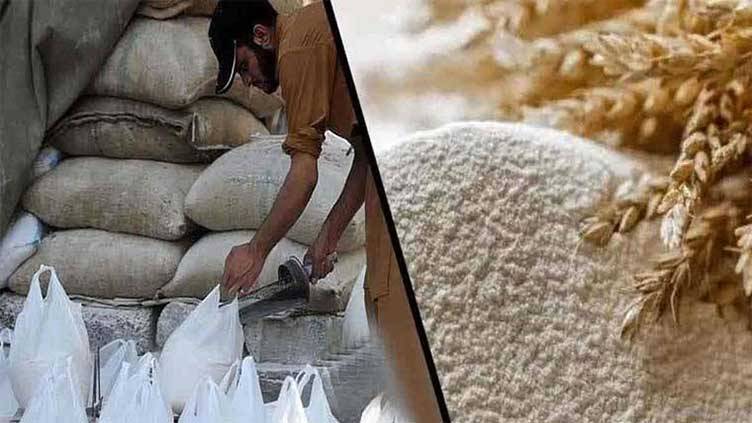
on Sunday, private enterprises’ flour has doubled in price despite the government setting the price of wheat and the crushing season.
A five-kilogram bag of flour is being sold for Rs. 900 to Rs. 1000, while private enterprises have set the price of flour per kilogram at Rs. 180 to Rs. 200.
Flour from various private enterprises is offered for between Rs. 7200 and Rs. 8000 per 40 kg.
In the open market in Lahore, wheat can fetch up to Rs 4000 every 40 kg.
Flour is being sold by private businesses for twice as much as wheat.
Effective measures to stop excessive profiteering in flour sales were required by the public.
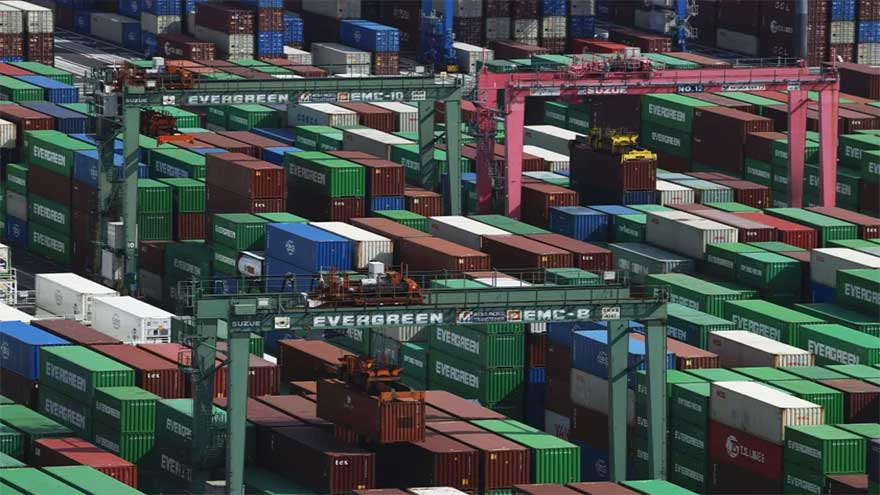
China announced on Friday it was adding 14 European entities to an export control list in retaliation for the European Union penalizing 14 Chinese enterprises as part of its latest round of sanctions against Russia.
Chinese companies will not be allowed to export dual-use items, which can be used for both civilian and military purposes, to the 14 European organizations, China’s Commerce Ministry said in a statement.
Additionally, foreign companies are barred from providing to the 14 entities dual-use items made in China.
The European companies affected include Czech vehicle manufacturer Tatra Trucks, Italian electric motor maker Lafert SpA, German manufacturer Sindlhauser Materials GmbH and French drone manufacturer Cavok UAS.
A Chinese Commerce Ministry spokesperson said the measures were taken in retaliation for the E.U. on Thursday adding 14 mainland Chinese and Hong Kong enterprises to its latest list of sanctions against Russia over its war in Ukraine.
The measures are intended “to safeguard national security and interests, and to fulfill international obligations such as non-proliferation, in response to the E.U.’s egregious actions,” the spokesperson said.
The E.U. on Thursday adopted its 21st package of sanctions against Russia targeting banks, cryptocurrency companies and military equipment manufacturers among other categories. The sanctions included entities from other countries such as China, India and Turkey, believed to provide Russia with dual-use goods and technology.
Petroleum Division said that the pricing of petrol and high-speed diesel will not be adjusted till July 27.
Prices of petrol and diesel will not change over the weekend and the existing rates will continue, the Petroleum Division said in an official notification.
“The notification stated that the existing prices of petrol, high-speed diesel and other petroleum products will remain intact till July 27 (Monday) and the consumers will be able to purchase fuel at the existing rates during this period.
The government has also not announced any hike or cut in the price of petroleum products, officials said.
The present pricing will remain in force until the next price review, when a new decision will be taken.
Browse Subjects
Petrol and diesel prices have seen a dramatic increase of Rs20.81 per litre and Rs55.36 per litre respectively within a week under Pakistan’s newly established daily petroleum pricing scheme.
The petroleum division said that under the new pricing mechanism, petrol price was jacked up by Rs5.44 per litre and diesel Rs31.05 per litre from July 18.
On July 21, petrol prices were slashed by 35 paisas per litre, while diesel prices were raised by Rs5.71 per litre.
The petrol prices were increased by Rs4.93 per litre and Rs7.15 per litre for diesel on July 22. On July 23, a day later, the petrol price was increased by Rs6.39 per litre and diesel by Rs7.83 per litre.
On July 24, petrol prices were increased by Rs4.40 per litre and diesel by Rs3.62 per litre.
On July 17, the federal cabinet had decided to start daily pricing of petroleum products and had authorised the Oil and Gas Regulatory Authority (OGRA) to fix the rates of fuel on a daily basis in line with the international market trends.
After the last modification, petrol prices are now Rs335.18 a litre while diesel is being offered at Rs383.46 a litre.

Sindh CS reviews high level warning on monsoon rains, wheat hoarding

Pakistan making rapid progress in robotics, AI: Shaza Fatima

Rain stops play on opening day of Pakistan-West Indies first Test

ICC board meeting in India: Mohsin Naqvi gets invitation

The IMF mission has arrived in Pakistan for discussions regarding the budget.

To commemorate the anniversary of Marka-e-Haq, top civic and military leaders assemble at Pakistan Monument.
-
 Latest News2 months ago
ICC board meeting in India: Mohsin Naqvi gets invitation
-
 Business2 months ago
The IMF mission has arrived in Pakistan for discussions regarding the budget.
-
 Latest News3 months ago
To commemorate the anniversary of Marka-e-Haq, top civic and military leaders assemble at Pakistan Monument.
-

 Latest News2 months ago
A meta program to monitor mouse clicks made by employees in violation of EU privacy regulations
-
 Latest News2 months ago
China and Pakistan Establish Collaborative Herbal Medicine Laboratory to Enhance Traditional Medicine Partnership
-

 Latest News2 months ago
Is the US-Iran standoff exposing deep fault lines in US intelligence coordination?
-
 Latest News2 months ago
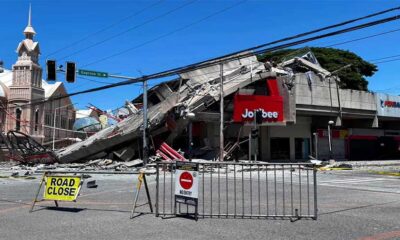
7.8 magnitude quake hits southern Philippines\
-
 Latest News4 weeks ago
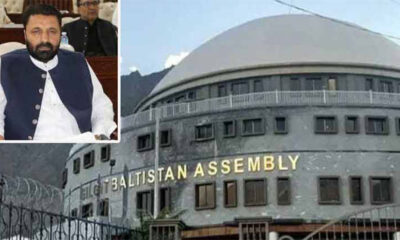
The newly elected chief minister of Gilgit-Baltistan’s oath-taking ceremony was postponed.