
Latest News
BLA’s connections with al-Qaeda, TTP fuelling terrorism in Balochistan

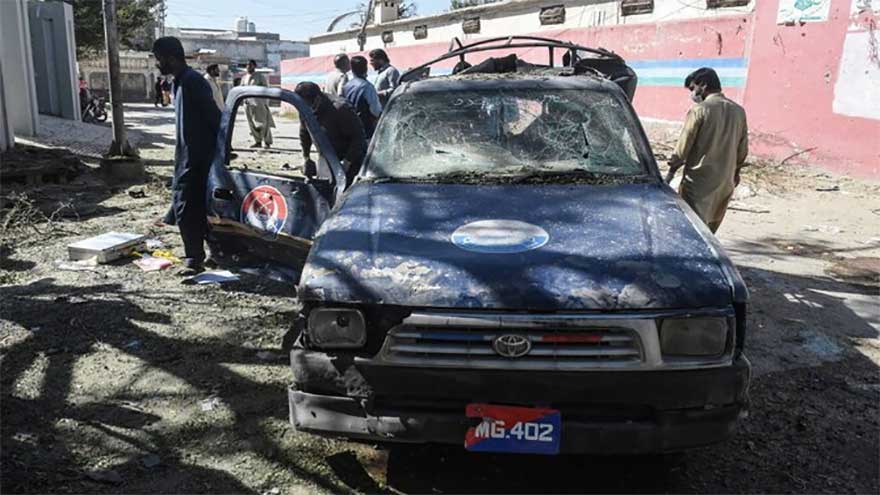
The proscribed Balochistan Liberation Army (BLA) has links to al-Qaeda and Tehrik-i-Taliban Pakistan (TTP) which is still promoting terrorism, sabotage and destabilisation of the society in Balochistan and other parts of Pakistan.
The nexus offers finance, training, weaponry and logistical assistance, enabling the group to use vulnerable local women and youth as instruments for suicide bombings and other anti-state actions.
Senior security officials have repeatedly said that this support from al-Qaeda and TTP has drastically improved the operational capacities of BLA to sabotage the China-Pakistan Economic Corridor (CPEC) and other national development projects, Balochistan Chief Minister Mir Sarfraz Bugti told the Senate.
The government has said repeatedly that the main backers of the BLA-TTP nexus are al-Qaeda and TTP and that they do this through Afghan territory by attacking people, infrastructure and security forces.
Afghanistan continues to be a crucial refuge for BLA operatives where they train and plan before infiltrating into Pakistan across the border. This cross-border infrastructure allows the movement of facilitators, recruits and suicide bombers.
The foreign-orchestrated network depends mainly on the systematic exploitation of Baloch women and girls. Security operations have regularly caught instances when vulnerable girls were being radicalised, trained and deployed for suicide attacks.
In one case, security authorities in Khuzdar held Laiba (also known as Farzana), a would-be suicide bomber indoctrinated through a network linked to BLA-affiliated commanders and people such as Dr Sabiha, who target financially weak girls through psychological manipulation and pressure. Laiba had been requested to recruit other young women for similar missions.
In a further case, the confessional testimony of Raheema Bibi showed how her husband aided a BLF-linked female suicide bomber Zarina Rafiq. The woman was held at their home before being taken to Afghanistan for training and later carried out an attack on a Frontier Corps camp.
Sindh authorities also thwarted a scheme involving a minor Baloch girl who was groomed through social media by BLA handlers for a suicide strike in Karachi. The teenager later issued a public warning that such acts are against Baloch cultural values that safeguard women’s dignity.
A methodology has been discovered that marks the ideological radicalisation through certain activist platforms followed by recruiting, training in Afghanistan and operational deployment by BLA. Connected networks sometimes turn to “missing persons” narratives to hide militant links when plans go awry.
The BLA has conducted out multiple operations against security forces, Chinese workers, schools, and industrial infrastructure in cooperation with TTP elements and Al-Qaeda.
Security forces have intelligence based operations with backing from local populations. Zero tolerance for terrorism but at the same time rehabilitation and de-radicalization processes for misinformed persons, particularly women and youth.
The government has been consistently asking the parents to keep a check on the internet activities as social media is a huge channel for radicalisation besides the officials pushing for an international action against states utilising proxies for destabilising Pakistan.
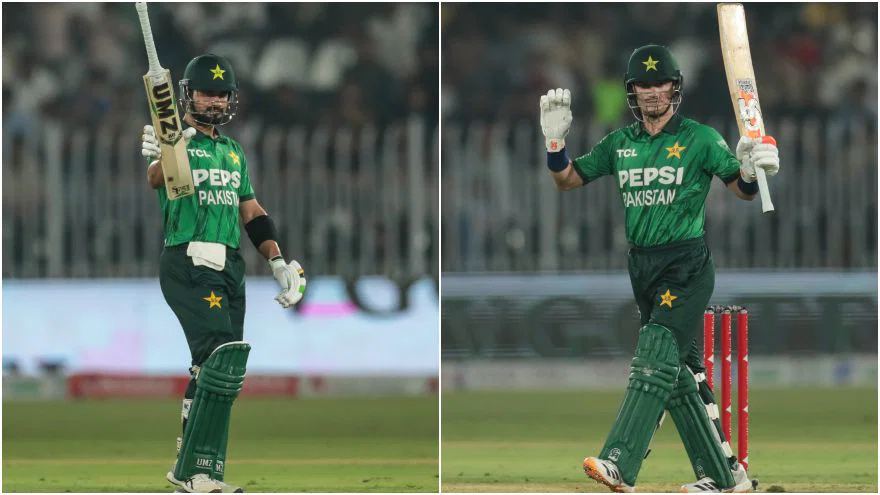
Pakistan beat Sri Lanka by four wickets in the first T20 International at Rawalpindi Cricket Stadium on Friday with captain Sahibzada Farhan’s dominant 89 and Maaz Sadaqat’s half-century leading the home side to a successful chase of 183.
Sri Lanka elected to bat and made 182/8 in their allowed 20 overs, and Pakistan completed the mark despite a late wobble to take a 1-0 lead in the three-match series.
Farhan scored 89 off 53 balls and Sadaqat made 50 off 29 balls as they accumulated 92 runs for the second wicket to put Pakistan in the driving seat for victory.
Sadaqat, Farhan at the helm
Pakistan made a fast start to their chase with Farhan and Fakhar Zaman contributing 54 runs in the first five overs. Sadaqat came to the crease when Fakhar was removed by Eshan Malinga, 21 runs off 13 balls.
The left-hander joined Farhan in a fiery partnership that put Sri Lanka’s bowlers under pressure. Sadaqat scored 50 off 29 balls with three sixes and four fours until Maheesh Theekshana had him leg before wicket.
Farhan’s fifty off 33 balls came up as he continued to anchor the innings, routinely striking the boundaries as Pakistan advanced near the objective.
Sri Lanka’s hopes were briefly renewed in the 16th over as they took three wickets in short succession to take Pakistan from 144/1 to 156/4. Dushmantha Chameera and Theekshana scalped the wickets of Hasan Nawaz and Saim Ayub respectively.
Farhan was the main man in the chase hitting 6 sixes and 10 fours before getting out for 89 with only 4 runs to get.Pakistan overcame Sri Lanka by four wickets in the first T20 International at Rawalpindi Cricket Stadium on Friday, with captain Sahibzada Farhan’s dominant 89 and Maaz Sadaqat’s half-century leading the hosts to a successful chase of 183.
Sri Lanka elected to bat and made 182/8 in their allowed 20 overs, and Pakistan completed the mark despite a late wobble to take a 1-0 lead in the three-match series.
Farhan scored 89 off 53 balls and Sadaqat made 50 off 29 balls as they accumulated 92 runs for the second wicket to put Pakistan in the driving seat for victory.
Sadaqat, Farhan at the helm
Pakistan made a fast start to their chase with Farhan and Fakhar Zaman contributing 54 runs in the first five overs. Sadaqat came to the crease when Fakhar was removed by Eshan Malinga, 21 runs off 13 balls.
The left-hander joined Farhan in a fiery partnership that put Sri Lanka’s bowlers under pressure. Sadaqat scored 50 off 29 balls with three sixes and four fours until Maheesh Theekshana had him leg before wicket.
Farhan’s fifty off 33 balls came up as he continued to anchor the innings, routinely striking the boundaries as Pakistan advanced near the objective.
Sri Lanka’s hopes were briefly renewed in the 16th over as they took three wickets in short succession to take Pakistan from 144/1 to 156/4. Dushmantha Chameera and Theekshana scalped the wickets of Hasan Nawaz and Saim Ayub respectively.
Farhan was the man of the chase, smashing four sixes and 10 fours before he departed for 89 with four runs to go.

Hurricane Isaias weakened quickly Friday, losing windspeed and dropping to a Category 1 storm after making landfall in Destin, Florida, the US National Hurricane Center said. But it warned of danger from storm surges and floods as power links severed.
The storm was about 65 miles (105 km) west-northwest of Panama City, Florida, with maximum sustained winds of 90 mph (150 kph), the NHC stated in its last statement.
The agency warned of a life-threatening storm surge along the Gulf Coast as catastrophic hurricane conditions and flash floods pushed inland.
The organization said the hurricane is likely to move across Alabama and into the Tennessee Valley this weekend.
When the hurricane touched land, Poweroutage.us showed nearly 380,000 people in Florida and more than 210,000 in Alabama without power.Homeland Security Secretary Markwayne Mullin said on X that emergency declarations have been issued in Florida and Alabama to ensure government resources are ready to respond to Isaias.
Emergency services in Florida told citizens to take shelter and wait for hurricane conditions across the northern part of the state as Isaias made landfall as a category 2 storm.

The daily pricing method has resulted in more frequent revisions in petroleum rates. In the current revision of fuel prices, the federal government has decreased the petrol price by 66 paisa per liter but increased the rate of high-speed diesel (HSD) by 52 paisa.
Petrol would be available for Rs398.30 a liter after the amendment as compared to Rs398.96, while high-speed diesel will be sold at Rs396.24 a liter against Rs395.72.
The revised tariffs will be effective from October 10 to 12, 2026, according to Petroleum Division announcement. The revision comes amid instability in international oil markets and a move toward more frequent evaluations of domestic fuel pricing.
Price reviews daily
The government has initiated a daily review of petroleum pricing to respond more rapidly to the changes in international oil prices.
Under the new framework, OGRA will fix petrol and high-speed diesel prices on daily basis on the basis of the average rates in the international market during the prior seven days on an ex-depot basis.
Petroleum Minister Ali Pervaiz Malik said the daily estimates will be based on a seven-day average of international pricing, in line with international traditions.
OGRA has also started releasing daily petroleum prices on its website to provide transparency and allow for changes in foreign markets to be reflected in domestic rates faster.
The regulator can announce revised rates without having to have the previous consent of the prime minister or the federal government for each and every change. But the pricing announced Friday will not change over the weekend.
The switch to daily pricing comes as global oil markets swing with increasing tensions in the Middle East and worries over energy supplies.
After the outbreak of hostilities between Iran, Israel and the United States on 28 February, the government moved to weekly gasoline price reviews. In the past, petroleum products were amended on a fortnightly basis.
Tensions in the Strait of Hormuz have created uncertainty in energy markets. The key canal handled approximately a fifth of the world’s oil and other energy supplies before the conflict and any disruption is a huge issue for worldwide markets.
As per the new structure, OGRA will be bound to post Platts daily reference prices. The procedure also limits the scope for modifications in petroleum levies: the ceiling on levies is determined by the federal cabinet and the levy’s rate requires the permission of the Finance Division.

Pakistan beat Sri Lanka by four wickets as Farhan, Sadaqat star in Rawalpindi

Isaias weakens to Category 1 hurricane after Florida landfall, NHC says

Petrol price cut by 66 paisa, diesel rises 52 paisa per litre

ICC board meeting in India: Mohsin Naqvi gets invitation

23 people have died during the monsoon as rain-related incidents plague Punjab and KP.

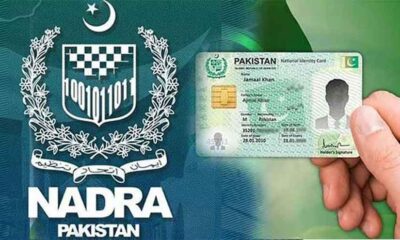
‘Self-Reliance in Digital ID’: NADRA launches locally produced QR code-based National Identity Card
-
 Latest News5 months ago
ICC board meeting in India: Mohsin Naqvi gets invitation
-
 Latest News3 months ago
23 people have died during the monsoon as rain-related incidents plague Punjab and KP.
-
 Latest News2 months ago
‘Self-Reliance in Digital ID’: NADRA launches locally produced QR code-based National Identity Card
-

 Latest News2 months ago
Turkish FM, Dar discuss regional trends, bilateral connections
-
 Business3 months ago
Govt dedicated to resolving Balochistan issues: Dar
-
 Latest News3 months ago
Pakistan making rapid progress in robotics, AI: Shaza Fatima
-

 Entertainment5 months ago
Interim bail given to YouTuber Rajab Butt in gambling app marketing case
-
 Latest News3 months ago
After a divorce, LHC decides that women who have been harmed by their spouses get their dower.