
Latest News
Macron wraps up G7 with AI, Trump dinner

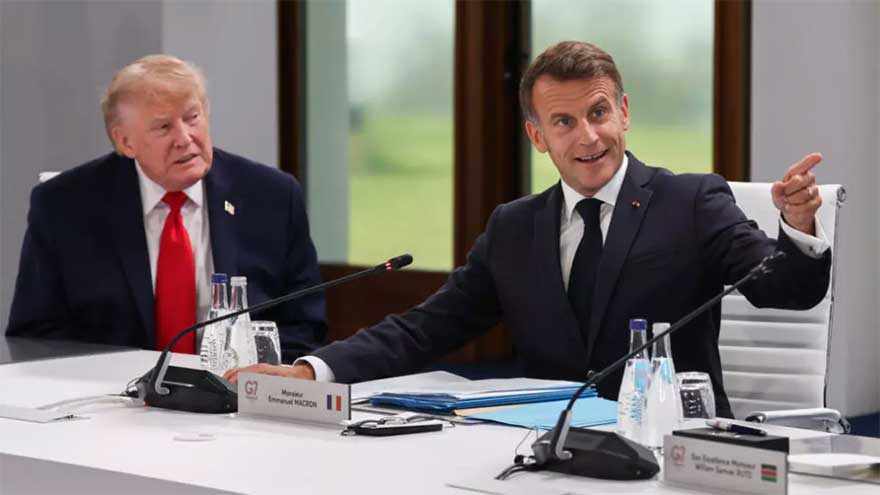
G7 leaders will discuss on Wednesday the security risks posed by AI and social media on the last day of a summit dominated by Donald Trump, before host French President Emmanuel Macron dines with his US counterpart at the Palace of Versailles.
The three-day summit of the leaders of Canada, France, Germany, Italy, Japan, Britain and the United States has focused intensely on Trump’s deal to end the war with Iran and efforts to pressure Russia into brokering peace with Ukraine.
But on Wednesday the digital sphere will take centre stage, with some European G7 members wanting more security in moves that have irked the United States.
Sam Altman, the head of artificial intelligence giant OpenAI, Anthropic chief Dario Amodei and Arthur Mensch of their European rival Mistral AI will attend lunch with the leaders.
British Prime Minister Keir Starmer announced on Monday that children under 16 will be banned from using social media in the UK, with France also eyeing a similar ban.
The discussion at the G7 will focus on how to “improve cyber security and protect our children and our democracies,” Macron said in an Instagram video ahead of the summit.
Final discussions on the key global issues will take place, with all seven powers hoping to agree final statements on both the Middle East and Ukraine before the leaders give separate press conferences from around 1300 GMT.
‘Real deal’
Trump has been the centre of attention throughout his stay at the summit in the lakeside resort of Evian. French officials will be satisfied that the mercurial US president has stayed for the entire event — in contrast to the previous gathering in Canada where he left early.
In an unusual gesture, Macron has invited Trump to dinner at the Palace of Versailles outside Paris after the summit winds down on Wednesday afternoon.

WhatsApp has began rolling out a new “Mentions and Replies” filter that will enable users to easily identify chats where they have been mentioned or their message has been replied to.
WABetaInfo says the feature is now being implemented for select users on WhatsApp beta for Android version 2.26.42.12.
The new filter will be available in the Chats page, allowing users to see conversations where they have been tagged or their messages addressed. It is said to help you keep track of key communications more easily in huge group conversations and groups.
The feature could be particularly useful for people who get a lot of messages and sometimes miss critical queries, answers or comments in crowded chats.
Another important feature is that even after you have cleared the notifications, the relevant chats will still be available through the filter, enabling you get back to conversations that need your attention.
Users will also be able to tweak the feature as per their tastes with choices to disable it through settings or relocate it to the “More” section.
The “Mentions and Replies” filter is now being handed out to a small number of beta users. WhatsApp has not yet announced when it will be sent out to all users.
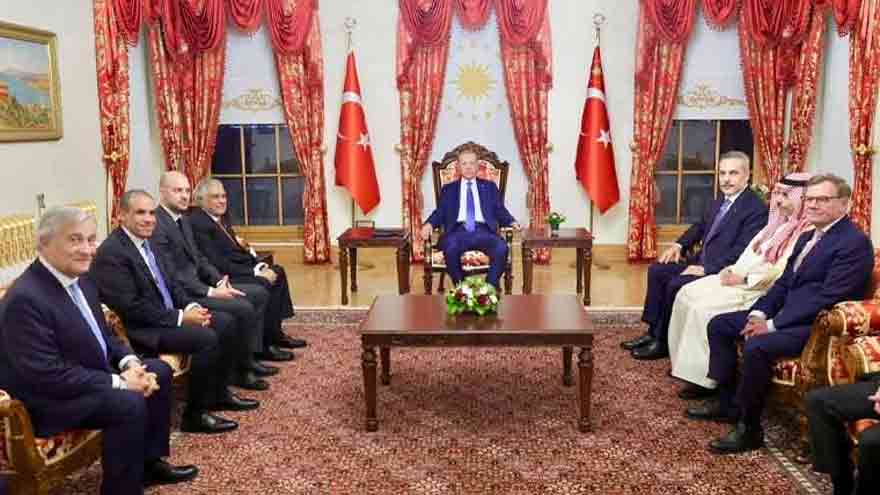
Foreign ministers of eight nations including Pakistan agreed to the urgent need to resolve regional crises through conversation, diplomacy and de-escalation.
The foreign ministers of Turkey, Egypt, Pakistan and Saudi Arabia (R4) and the FMs of France, Germany, Italy and the United Kingdom, met in Istanbul on 23 October 2026, the Foreign Office stated in a statement on Saturday.
Ministers discussed issues of regional and international importance, namely US/Israel-Iran conflict, Israeli-Palestinian conflict and the need for a negotiated two-state solution, appalling Houthi militia attacks against the Kingdom of Saudi Arabia and the Government of Yemen, safety and freedom of navigation, escalated tension in Straits of Hormuz and Bab El Mandeb and the Black Sea.
They pledged their ongoing commitment to contribute to diplomatic efforts to promote peace and stability in the area and beyond and address the security, economic and trade ramifications of these concerns.
They stressed the importance of finding durable negotiated solutions to all ongoing issues in conformity with the applicable UN Resolutions. The Ministers resolved to continue the engagement in this format with a view to averting disputes and promoting peace and stability in the area.
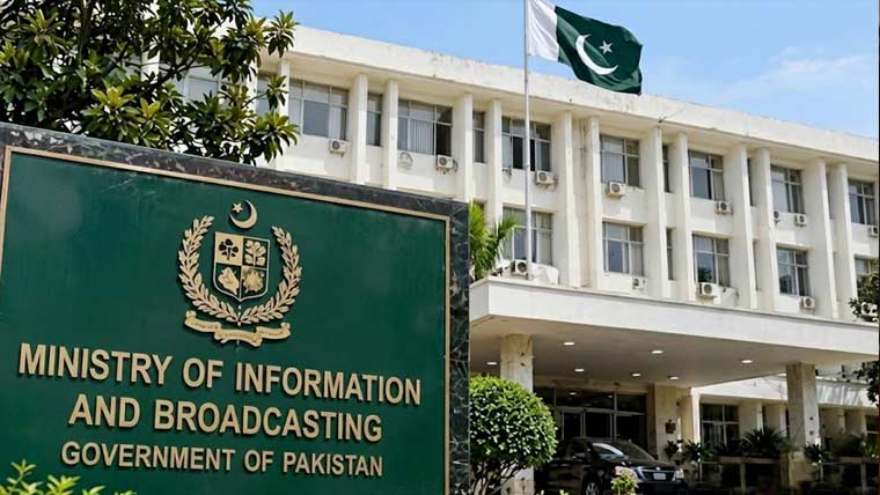
Pakistan reiterated its worries about militant activity emanating from Afghan territory and called on the Afghan Taliban leadership to stop all kinds of support, facilitation and tolerance for the Tehreek-e-Taliban Pakistan (TTP), the Balochistan Liberation Army (BLA) and their affiliated groups.
The Ministry of Information and Broadcasting claimed that the claims against Pakistan’s security institutions could not take away from Islamabad’s long-standing security worries. It underlined that Afghan authorities must ensure that their land is not utilised to plan, prepare or carry out terrorist operations against Pakistan.
The ministry, reacting to the latest statements by the Afghan Taliban regime, said Pakistan’s concerns were not conjectural but were based on international reporting and documented proof. It stated that Afghan authorities were responsible for preventing the use of Afghan land for terrorist actions against Pakistan and that the blame on Pakistani security agencies would not clear them of their obligation.
The ministry said it was referring to a report by the United Nations Security Council’s Analytical Support and Sanctions Monitoring Team, investigating the presence and actions of terrorist groups in Afghanistan, known as document S/2025/796.
It also cited a report presented to the US Congress by the US Lead Inspector General covering Operation Enduring Sentinel from January to March 2026.
The Pakistani ministry’s version of the US report said the Afghan Taliban had continued to allow the TTP to operate from Afghan territory. The report attributed the spike in attacks against Pakistan to growing Taliban backing and greater operational independence for the group.
The statement cited numbers that approximated the size of the TTP at between 4,000 and 6,000 combatants.
The ministry said the foreign evaluations illustrate the seriousness of Pakistan’s worries about terrorist safe havens and support networks in Afghanistan. It said that dismissing the capacity or desire of extremist groups to destabilise Pakistan did not take care of the issues expressed via solid evidence.
The statement also mentioned continuous efforts by armed extremists to get into Pakistan from across the Afghan border. It alluded to the killings of Afghan nationals and members of terrorist groups in Pakistani counter-terrorism operations, and the capture of foreign-made weaponry from militant elements.
“Such issues need to be taken seriously. The concerns raised about Afghan Taliban officials, including in Kandahar, allegedly facilitating terrorist groups need credible explanations and verifiable action, not outright denials,” the ministry said.
Pakistan said its security measures were aimed at terrorist threats, not at the Afghan people. The ministry said peace and stability of the two nations were interlinked and a terrorism-free region would benefit the people of Pakistan and Afghanistan.
It encouraged the Afghan Taliban administration to take concrete measures to remove the support mechanisms accessible to the TTP, BLA and allied organisations. It added these steps must ensure that Afghan land is not utilised for planning, preparing or executing strikes against Pakistan.
The ministry stated that characterising Pakistan’s legitimate security concerns and steps for defence as enmity toward Afghanistan would neither address the root cause of the crisis, nor would it divert attention from it.
The statement stated that Pakistan would continue to take all necessary actions to preserve its citizens, sovereignty and territorial integrity.
At the same time, Islamabad was ready for a responsible engagement based on mutual respect, verifiable assurances and concrete action against terrorist safe havens, support networks and cross-border infiltration.
The ministry said that sustainable peace in the region would depend on the Afghan Taliban government taking real steps to address Pakistan’s core security concerns in a way that could be independently confirmed.
Search Topics

WhatsApp rolls out new ‘Mentions and Replies’ chat filter

Eight countries, including Pakistan, urge diplomacy to resolve regional conflicts

Pakistan warns Taliban regime to stop supporting terror outfits

ICC board meeting in India: Mohsin Naqvi gets invitation

‘Self-Reliance in Digital ID’: NADRA launches locally produced QR code-based National Identity Card

23 people have died during the monsoon as rain-related incidents plague Punjab and KP.
-
 Latest News5 months ago
ICC board meeting in India: Mohsin Naqvi gets invitation
-
 Latest News2 months ago
‘Self-Reliance in Digital ID’: NADRA launches locally produced QR code-based National Identity Card
-
 Latest News3 months ago
23 people have died during the monsoon as rain-related incidents plague Punjab and KP.
-
 Latest News2 months ago
Turkish FM, Dar discuss regional trends, bilateral connections
-
 Business3 months ago
Govt dedicated to resolving Balochistan issues: Dar
-
 Latest News3 months ago
Pakistan making rapid progress in robotics, AI: Shaza Fatima
-

 Entertainment5 months ago
Interim bail given to YouTuber Rajab Butt in gambling app marketing case
-
 Latest News3 months ago
After a divorce, LHC decides that women who have been harmed by their spouses get their dower.