
Business
Tax collection falls short of plan; FBR revenue collection shortfall increases to Rs868 billion


The Federal Board of Revenue (FBR) has registered a revenue shortfall of Rs868 billion in the first 11 months of the fiscal year 2025-26.
The tax office collected Rs11.227 trillion for July to May against a revised target of Rs12.095 trillion leaving a huge gap.
The expanding difference is attributed to two key issues, according to the reports: slower economic activity due to the ongoing Gulf conflict and the impact of the longer Eid festivities. Revenue shortfall reached Rs 184 billion in only May alone.
The FBR has collected Rs966 billion in May on a provisional basis against the monthly target of Rs1.15 trillion. Officials are still hopeful that once changes are made, the final tally for the month could be a little better.
To fulfil the revised yearly income target of Rs13.979 trillion by June 30, the FBR will have to collect almost Rs2.752 trillion in June – a daunting undertaking considering the current trend.
The tax collection target was originally set at Rs14.13 trillion by the Parliament but was then cut down to Rs13.979 trillion after an agreement with the International Monetary Fund (IMF).
As the fiscal year comes to a finish, the FBR appears to be on track for a total shortfall around Rs1 trillion. Crossing the Rs13 trillion collection mark would be a significant achievement in the current economic scenario, officials feel.

The security forces have conducted effective operations in Khyber Pakhtunkhwa and Balochistan which have resulted in a steep drop in the number of terrorist strikes.
The Pakistan Institute for Conflict and Security Studies (PICSS) said in a new report that terrorist assaults had fallen by about sixty-six percent in a five week period.
The report claimed attacks reduced to 21 between October 16 and 22, from 61 registered between September 18 and 24.
There was also a week-on-week drop of 38 per cent in militant attacks from October 16-22. In such attacks, the number of people injured fell from 20 in the previous week to 11 in the same period, a fall of 45 percent.
PICSS said security forces have conducted 10 operations in which 33 insurgents were killed.
The research also looked at the effect of an internal leadership struggle in Fitna al-Hindustan and changes in the propaganda approach of Fitna al-Khawarij on the militant scene.
The data show that insurgent activity has gone down throughout the review period, but security challenges continue in regions of the country.
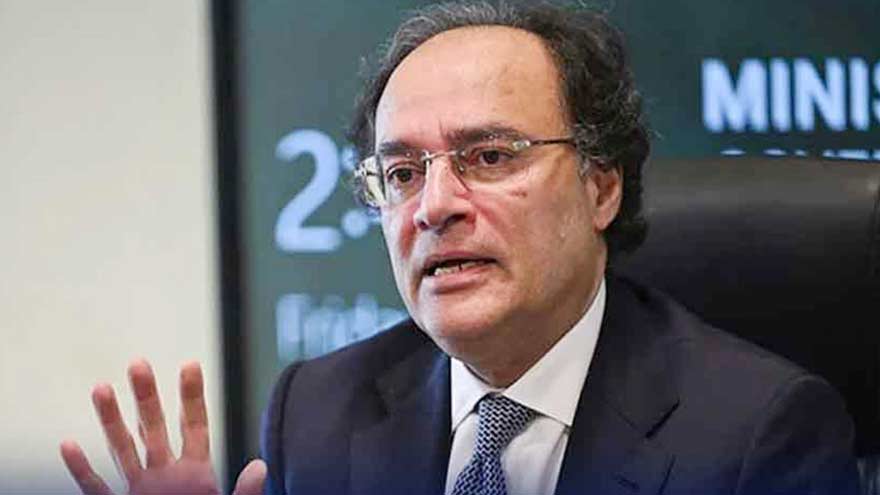
Finance Minister Muhammad Aurangzeb said that Pakistan’s crude oil and other energy supplies are satisfactory. He said the government has made sufficient provisions to cover the country’s energy needs till November and further efforts are being taken to secure supply during winter.
Aurangzeb remarked while addressing a ceremony at a private university in Lahore that Pakistan has not had an energy shortage and there were no queues at gas stations or law and order issues due to an energy crisis.
He did acknowledge, however, that more had to be done to satisfy the country’s gas and liquefied natural gas (LNG) needs.
Talking about the economic performance of the country, the finance minister said that the information technology (IT) export services of Pakistan increased from one billion dollars to 4.6 billion dollars. “We expect IT exports to reach $5.5 billion in the current fiscal year,” he continued.
Aurangzeb said foreign exchange reserves were sufficient to cover more than three months of imports and had reached a record high. He recalled that at one time the reserves had dropped to the equivalent of only two weeks’ imports.
Pakistan’s credit rating has improved three times since April last year and the administration had taken major steps to recover access to international financial markets, he said.
Pakistan carried out a private placement in April this year, tapped the international markets by the issuing of Panda bonds and issued bonds worth three billion euros in the first week of September, the minister said.
Investors from Asia, the Middle East, Europe and the United States showed interest, he said, adding that orders received from investors for Pakistan’s euro bonds were twice the amount offered.
Aurangzeb also said that international investors were reviewing Pakistan’s economic outlook after its interaction with the International Monetary Fund (IMF). The current IMF program is due to expire in October next year, he noted.
On energy supplies, the minister said Pakistan had taken adequate measures for energy procurement and supplies in spite of regional crises. Arrangements were made to meet requirements until November and preparations were in hand for the winter season.
The finance minister said the administration has opted for targeted subsidies instead of blanket subsidies so that the assistance reaches the deserving part of the community.
He said that motorbikes, three wheelers and automobiles with engines below 800cc were given targeted incentives. So far, the relief had reached around 12 million distinct beneficiaries, while an estimated 40 to 50 million people across the country had benefited altogether.
“Pakistan is continuing structural reforms along with efforts to maintain economic stability, and reforms have moved beyond the planning stage and are now being implemented,” Aurangzeb added.

Gold prices in Pakistan continued to tumble on Saturday, recording a fifth straight day of losses as international bullion prices fell below the critical $4,000 per ounce threshold.
The All Sarafa Association said the continued decrease drove gold to a five-month low in both domestic and international markets.
In the local market, the price of 24-carat gold declined by Rs2,500 per tola to Rs422,036. The price of 10 grams also decreased by Rs2,144 to Rs361,686.
The current cut is the latest in a run of sustained deterioration in bullion prices with the domestic market mirroring the slide in foreign rates.
World prices
International gold prices also saw another downturn, dropping by $25 per ounce to $3,995. The move sent bullion below the psychologically important $4,000 barrier, boosting pressure on local prices.
Gold prices fell for the fifth consecutive day in global and domestic markets. The group said the latest numbers “show the scale of the recent retreat” with prices dropping to their lowest in five months.
The jewellery markets in Pakistan observe the international bullion movements closely as global price changes affect local rates, alongside currency fluctuations and other market considerations.
Silver drops
Also prices of silver also came down in domestic trade. Silver prices decreased by Rs7 per tola to Rs5,858.
The simultaneous fall in gold and silver is a reflection of the wider weakness seen across the local precious metals market.

WhatsApp rolls out new ‘Mentions and Replies’ chat filter

Eight countries, including Pakistan, urge diplomacy to resolve regional conflicts

Pakistan warns Taliban regime to stop supporting terror outfits

ICC board meeting in India: Mohsin Naqvi gets invitation

‘Self-Reliance in Digital ID’: NADRA launches locally produced QR code-based National Identity Card

23 people have died during the monsoon as rain-related incidents plague Punjab and KP.
-
 Latest News5 months ago
ICC board meeting in India: Mohsin Naqvi gets invitation
-
 Latest News2 months ago
‘Self-Reliance in Digital ID’: NADRA launches locally produced QR code-based National Identity Card
-
 Latest News3 months ago
23 people have died during the monsoon as rain-related incidents plague Punjab and KP.
-

 Latest News2 months ago
Turkish FM, Dar discuss regional trends, bilateral connections
-

 Business3 months ago
Govt dedicated to resolving Balochistan issues: Dar
-

 Latest News3 months ago
Pakistan making rapid progress in robotics, AI: Shaza Fatima
-

 Entertainment5 months ago
Interim bail given to YouTuber Rajab Butt in gambling app marketing case
-

 Latest News3 months ago
After a divorce, LHC decides that women who have been harmed by their spouses get their dower.