
Latest News
Disturbing disclosures emerge regarding Anmol Don as the ‘distributor of Pinky Brand cocaine.’

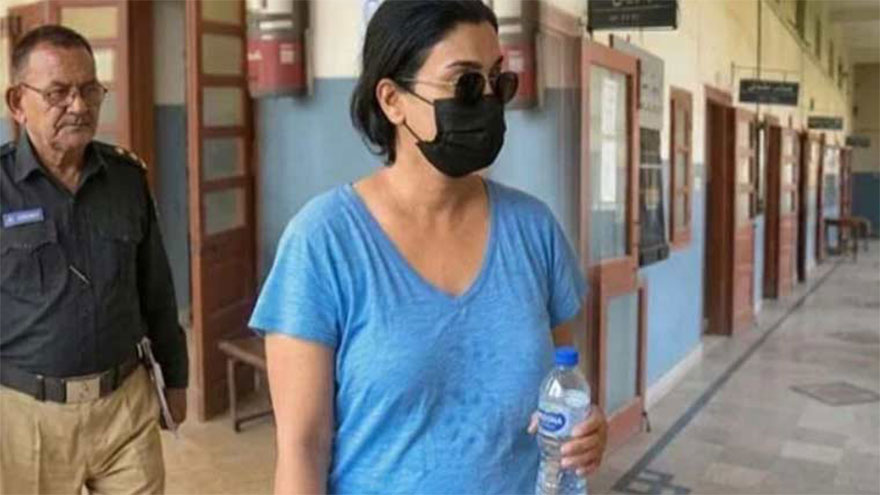
Disturbing details have emerged regarding the apprehended drug queen Anmol, also known as Pinki, the purported cocaine dealer, during the initial inquiry by the police.
The investigations disclosed that Anmol purportedly managed a mobile laboratory and was apprehended with roughly 1 kilogram of semi-processed cocaine, in addition to precursor chemicals for the synthesis of methamphetamine, ketamine, and premium “white” and “golden” cocaine.
Investigations reveal that her network distributed drugs to rich residential neighborhoods such as Defence and Clifton in Karachi, catering to clients described as “privileged youth” from wealthy families.
Anmol Pinky has allegedly been implicated in over 10 criminal offenses. Information has emerged regarding the network’s operational methods. In Karachi, she purportedly oversaw drug supply operations for the Hira and Bebo gangs, while former police officer Kamran is reported to be a significant part of the organization.
Police officials report that the group distributed drugs online in affluent neighborhoods via designated couriers. Female riders were purportedly employed to evade police scrutiny. The group allegedly employed the code word “egg” for cocaine transactions.
A two-gram “egg” was reportedly sold on the market for Rs 40,000 to Rs 50,000. Reports indicate that Pinky’s brother, Nasir, was apprehended by the Counter Terrorism Department in 2018.
Recently, law enforcement apprehended two bus drivers and a passenger implicated in the transportation of narcotics. Subsequent to these arrests, the remaining members of the network allegedly went into hiding. Investigations indicated that the drugs were purportedly transferred to Karachi from interior Punjab.
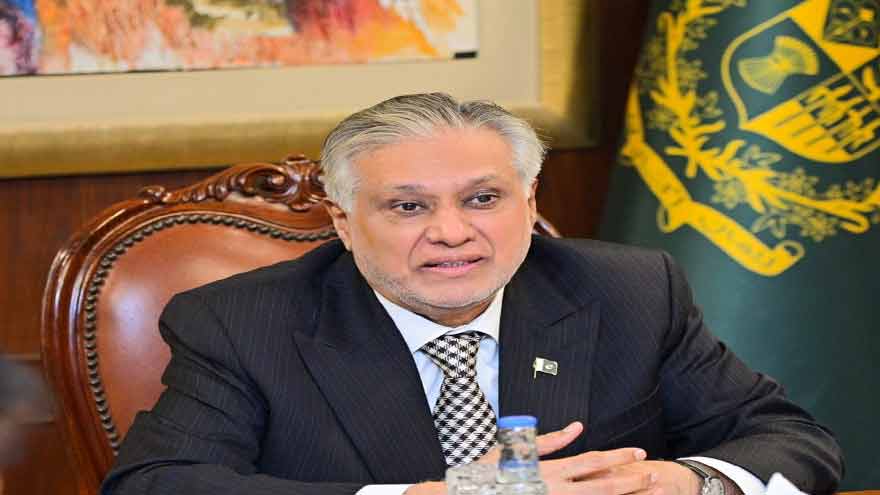
Deputy Prime Minister and Foreign Minister Ishaq Dar arrived in New York on Sunday afternoon to participate in the 81st Session of the United Nations General Assembly.
He was met at Kennedy International airport by Pakistan UN Ambassador, Asim Iftikhar Ahmad, Ambassador to the United States Rizwan Saeed Sheikh, Consul General in New York Aamer Ahmed Atozai and senior officials of Pakistan Mission and consulate General.
DPM/FM Dar will have a busy schedule of meetings at the United Nations.
He will attend the meeting of the OIC Contact Group on J&K where he would reiterate Pakistan’s unfailing support for the right to self-determination of the Kashmiris.
The Deputy Prime Minister will also participate in a number of OIC Ministerial meetings on the sidelines of the UNGA including OIC Foreign Ministers’ Annual Coordination Meeting as well as other OIC Contact Group meetings.
He will also participate in a number of high-level meetings on Palestine, including the meeting of the Group of Eight Arab Islamic countries, the High-Level Ministerial Meeting of the Global Alliance for the Implementation of the Two-State Solution, and others.
He will also attend the High-Level Meeting on Pandemic prevention, readiness and response and deliver a statement during the UN Security Council high-level briefing on the issue of Artificial Intelligence, the Deputy Prime Minister and Foreign Minister said.
He will also chair a meeting of the ECO Council of Ministers.
DPM/FM Dar will join the Prime Minister to high-level bilateral meetings and engagements, and will also hold bilateral meetings with his colleagues from a number of countries.
During the meetings, he would underscore Pakistan’s continued efforts for regional and international peace and stability and share perspectives on significant regional and worldwide concerns.
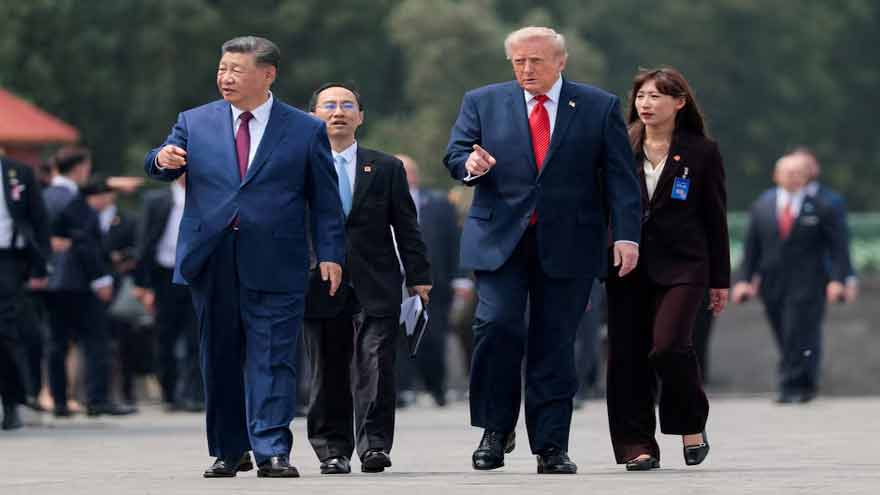
– In the four months since the leaders of the two global superpowers last met, Xi Jinping has overseen a surge in China’s trade with the world while Donald Trump has struggled with falling approval ratings at home.
That shift in fortunes has tempered expectations for their summit in Washington this week, analysts say, with Xi in no rush to make concessions and Trump constrained by a costly war with Iran that has hurt both his popularity and Americans’ wallets.
While thorny issues like Taiwan may surface, the main focus of the September 24 meeting is whether the leaders will signal an extension to a trade truce struck last year that averted a major shock to the global economy.
“Xi is not really looking for anything tangible. He wants to extend the gentleman’s agreement with Trump so that China has time to fortify itself,” said Jon Czin, a foreign policy expert at the Brookings Institution who formerly served as China director at the US National Security Council.
‘LIVING IN XI’S WORLD’
White House officials have sought to downplay the potential for major breakthroughs. US Treasury Secretary Scott Bessent and Chinese Vice Premier He Lifeng helmed preparatory talks in New York on Sunday aimed at teeing up some potential agreements on AI guardrails and trade in non-sensitive products.
That is a far cry from Trump’s vow when he returned to office in 2025 to use tariffs to address a trade imbalance with China that was “killing” the United States.
But since agreeing the truce with Xi in October of that year, his attention has been divided among myriad other foreign policy battles, from the wars in Iran and Ukraine to disputes with Europe over free speech.
China has faced its own challenges, such as slowing domestic demand and a protracted property crisis, but the export juggernaut that Trump sought to tame has kept roaring in what economists are increasingly referring to as China Shock 2.0.
China’s global trade surplus is on pace to top $1 trillion for a second straight year.
While US efforts to curb the cheap parcels that online retailers such as Shein and Temu rely on have worked, more than half of the roughly 6,500 product categories China sold to the US so far this year have grown compared to 2025.
A delegation of Chinese business leaders, potentially including some firms facing US regulatory scrutiny as they seek greater market access, is set to accompany Xi to Washington.
The Trump administration “thought they could use massive unilateral pressure to force China to make concessions, and that did not occur,” said Scott Kennedy, an expert on the US-China economic relationship at Washington-based think tank CSIS.
“Now this is Xi Jinping’s world, and we’re all living in it.”
If Xi is in the driver’s seat as analysts suggest, that will further unnerve US allies in Asia who expect the Chinese leader to push Trump to soften Washington’s support for Taiwan, the democratically governed island claimed by Beijing.
Xi repeatedly asked him about Taiwan when they met in Beijing in May, including about arms sales and Washington’s resolve to defend the island, Trump told reporters.
The US president described a pending $14 billion arms package for Taiwan as a “negotiating chip” with Beijing.
Some officials in Taipei and Tokyo worry he may be tempted to cash in that chip for political wins ahead of November’s midterm elections, which could prove challenging for his Republican Party.
That could include Chinese purchases of Boeing (BA.N), opens new tab jets or farm goods, or commitments to curb the flow of fentanyl precursor chemicals that have fuelled the US opioid crisis.
“China-US ties have become more transactional,” said Wu Xinbo, a professor at Shanghai’s Fudan University who advises China’s foreign ministry.
While Washington may want to prioritise trade talks, for Beijing, the US approach to Taiwan could be key, he said.
“If you accommodate our concern on the Taiwan issue, then we would be willing to accommodate your concerns on other issues, be it law enforcement or on purchases of US agricultural products,” Wu said.
PUTTING PRESSURE ON IRAN
Washington also sees Xi as uniquely able to exert pressure on Iran to bring an end to the war that has dragged Trump’s approval rating to the lowest of his political career.
However, Xi has shown little inclination to do so. Reuters earlier this month reported that Beijing is selling billions of dollars’ worth of goods to Iran through a sanctions-evasion scheme. China’s foreign ministry says it is not aware of such a scheme.
US threats last month of secondary sanctions on countries doing business with Iran – which Bessent called an “Economic D-Day” – appear not to have yet been wielded against Tehran’s largest trading partner.
That is more evidence, analysts say, that Trump is eager to keep relations with Xi steady as he focuses his energies elsewhere – an arrangement that also suits the Chinese leader.
“Both Xi and Trump feel it’s quite helpful to have stability in the relationship so that they can focus on more pressing things,” said Ruby Osman, senior geopolitical researcher at the Tony Blair Institute for Global Change.
“For Trump, that is Iran. For Xi, that is building out China’s domestic resilience for whatever comes after Trump.”
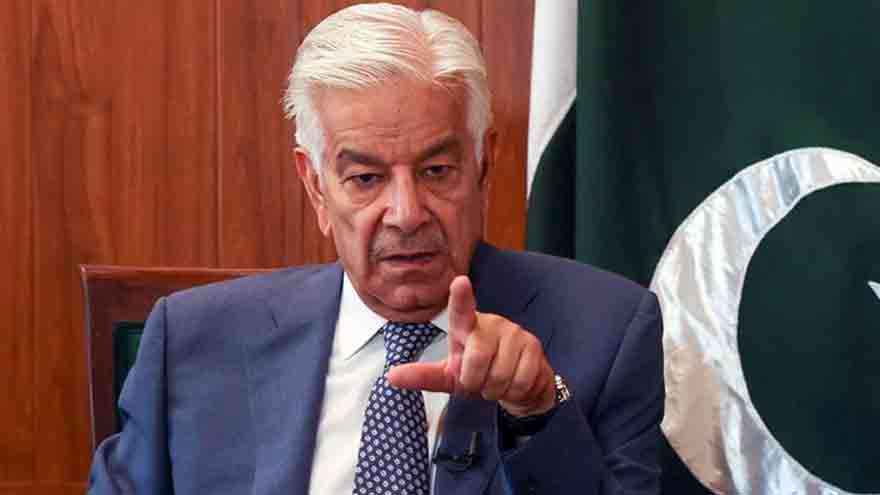
– Defence Minister Khawaja Asif has criticised Pakistan Tehreek-e-Insaf (PTI) Khyber-Pakhtunkhwa President Junaid Akbar over his remarks regarding the party’s planned September 27 protest in Islamabad.
Responding on social media, Asif said Islamabad was neither Somnath nor Junaid Akbar Mahmood of Ghaznavi, referring to Akbar’s statement that the PTI would “turn Islamabad into Somnath” during its planned march.
Asif said Islamabad represented the federation and was an important symbol of Pakistan. He questioned the impact of such statements at a time when bloodshed was continuing in Khyber-Pakhtunkhwa.
The defence minister also questioned whether the attack mentioned by Akbar for September 27 would involve militants or Afghan nationals living in Pakistan, saying the federal government would defend Islamabad with full force.
Asif further referred to the May 9 and November 26 incidents, saying the statements surrounding the upcoming protest would allow people to form their own view of the PTI leadership’s intentions.
A day earlier, Junaid Akbar had warned the government against using force during the PTI’s planned Islamabad march. Speaking at a gathering in Peshawar, he claimed the party expected he state to open fire on protesters but said its workers would not simply collect bodies and return.
He then used the phrase “We will turn Islamabad into Somnath” while addressing the gathering.

FM Dar arrives in New York for 81st session of UN General Assembly

Xi arrives for Trump summit with China’s trade engine in full operation

Khawaja Asif slams PTI’s Junaid Akbar for ‘Somnath’ statement ahead of protest

ICC board meeting in India: Mohsin Naqvi gets invitation

23 people have died during the monsoon as rain-related incidents plague Punjab and KP.

Govt dedicated to resolving Balochistan issues: Dar
-
 Latest News4 months ago
ICC board meeting in India: Mohsin Naqvi gets invitation
-
 Latest News2 months ago
23 people have died during the monsoon as rain-related incidents plague Punjab and KP.
-
 Business2 months ago
Govt dedicated to resolving Balochistan issues: Dar
-
 Latest News1 month ago
‘Self-Reliance in Digital ID’: NADRA launches locally produced QR code-based National Identity Card
-
 Latest News2 months ago
Pakistan making rapid progress in robotics, AI: Shaza Fatima
-
 Latest News2 months ago
After a divorce, LHC decides that women who have been harmed by their spouses get their dower.
-

 Entertainment4 months ago
Interim bail given to YouTuber Rajab Butt in gambling app marketing case
-

 Latest News4 months ago
A meta program to monitor mouse clicks made by employees in violation of EU privacy regulations