
Latest News
Israeli strikes kill 14 in Lebanon as Pentagon holds security talks

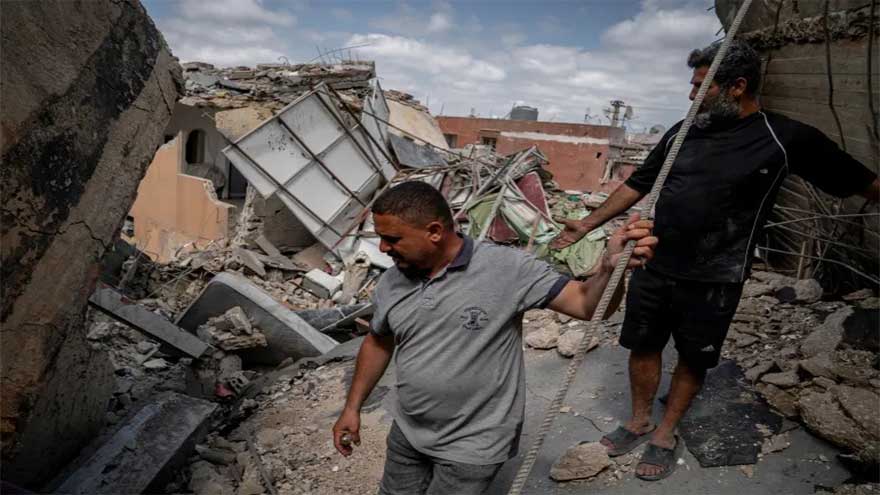
State-run media reported at least 14 people were killed in Israeli air attacks on villages in southern Lebanon. Lebanese and Israeli military delegations are holding security talks at the Pentagon.
The Friday assaults came as Prime Minister Benjamin Netanyahu announced Israeli forces had crossed the Litani River in Lebanon, which runs about 30 kilometres (about 19 miles) north of their shared border, in an extended ground incursion.
The “ceasefire” that came into effect on April 17 and was extended for 45 days on May 17 after indirect discussions mediated by the United States, failed to prevent Israel’s current military operation from beginning.
ISRAEL-LEBANON NEGOTIATIONS
Lebanon was expected to urge Israel to halt its continuous attacks, which have accelerated in recent days, during Friday’s talks at the Pentagon.
The Lebanese delegation comprises six officers, headed by the army’s director of operations, Georges Rizkallah.
Brigadier General Amichai Levin, head of the strategic division in the army’s planning directorate, is in Washington for the negotiations on the Israeli side, an Israeli military official said.
Lebanese President Joseph Aoun informed US Secretary of State Marco Rubio that a ceasefire with Israel is vital. Aoun “emphasised the need to exert all efforts to reach a ceasefire, considering it an essential gateway to moving on to any other step”, said a statement from his office, referring to a phone call.
The statement noted that Rubio repeated the US administration’s commitment to building on the results of earlier ambassador-level conversations between Israel and Lebanon in Washington, and expressed his support for Lebanon’s stability, independence and sovereignty.
During the call, Rubio praised Aoun’s “courage and vision in pursuing direct negotiations with Israel”, Tommy Pigott, a spokesperson for the US Department of State, told reporters.
Hezbollah “is fully responsible for the ongoing fighting,” Rubio said, adding that the armed group must immediately cease its attacks.
‘KILLING OR INJURING THE EQUIVALENT OF 11 KIDS EVERY 24 HRS’
In Friday’s attacks on southern Lebanon, four persons were killed in an Israeli hit on a building in the village of Abbasiyeh, near the city of Tyre, the National News Agency (NNA) said. NNA claimed that another individual was killed in a separate strike on Deir Qanoun en-Nahr.
Eight Syrians were killed in attacks on the al-Harthiyeh region on the fringes of the town of Adloun in Lebanon’s Sidon district.
Earlier on Friday, an Israeli drone strike on the town of Aba in Nabatieh province killed a Lebanese police officer.
Israeli forces also carried out a new wave of air strikes on the cities of as-Sarafand and Khirbet Selm, NNA stated. Israeli aeroplanes also bombed a house in the town of Harayib, wounding a number of people. And Israel launched further strikes, targeting the towns of Gandouriyeh, Froun and al-Mansouri in southern Lebanon.
The United Nations reported 15 children had been killed and 62 injured in Lebanon during the past week.
The UN children’s agency, UNICEF, called the findings “staggering”, and highlighted that children must be safeguarded at all times during conflict under international humanitarian law.
The Lebanese Ministry of Public Health has said that 77 children have been murdered or injured in the last week alone, UNICEF spokesperson Ricardo Pires told a media briefing in Geneva.
“Seven days, 15 kids dead 62 hurt. This is an average of 11 youngsters every single day. Most of these children were hit by air attacks in south Lebanon, we understand. “Yesterday seven children were killed and 30 injured,” he stated.
A HUMANITARIAN DISASTER
Several relief agencies are concerned that they would be forced to withdraw from southern Lebanon due to continuous attacks.
Since March 2, Israel’s military has displaced hundreds of thousands of Lebanese from their homes and they need urgent humanitarian aid.
“If the security situation worsens, we might have to evacuate some areas. “There are some red lines that we cannot cross for the security of our teams,” Jeremy Ristord, with medical NGO Doctors Without Borders (MSF), told Al Jazeera.
“Some 40 hospitals in the south are already closed,” he said.
“On top of that, rescue teams are already under a lot of strain as they adapt their interventions to the degrading security situation,” said Ristord, adding that rescuers are worried about “double-tap strikes” by Israel.
“Sometimes they can’t even get in.”
He said 126 civil defence workers have been killed and 310 wounded during the fighting since March – “that’s four casualties a day.”
ISRAELI MILITARY ‘FIRING HEAVY ARTILLERY’ AT HEZBOLLAH
The Israeli military also issued compulsory evacuation warnings Friday for seven more towns in southern Lebanon, two of them roughly 40 kilometres (25 miles) north of Israel.
Israeli Prime Minister Benjamin Netanyahu visited troops along the border, his office said in a video.
He said Israeli forces had crossed the Litani River in Lebanon and advanced, and were also acting in Beirut and the Bekaa Valley as part of efforts against Hezbollah across the Lebanese front.
“Netanyahu made a surprise visit to the Lebanese border on Friday confirming that Israeli troops are now positioned north of the Litani River; there has been a focus of Israeli firepower … throughout Nabatieh district,” said Al Jazeera’s Obaida Hitto reporting from Tyre in Lebanon.
Israeli troops have breached Hezbollah’s second lines of security, and are currently “heavily bombarding” the armed group’s third lines of defence, Hitto added.
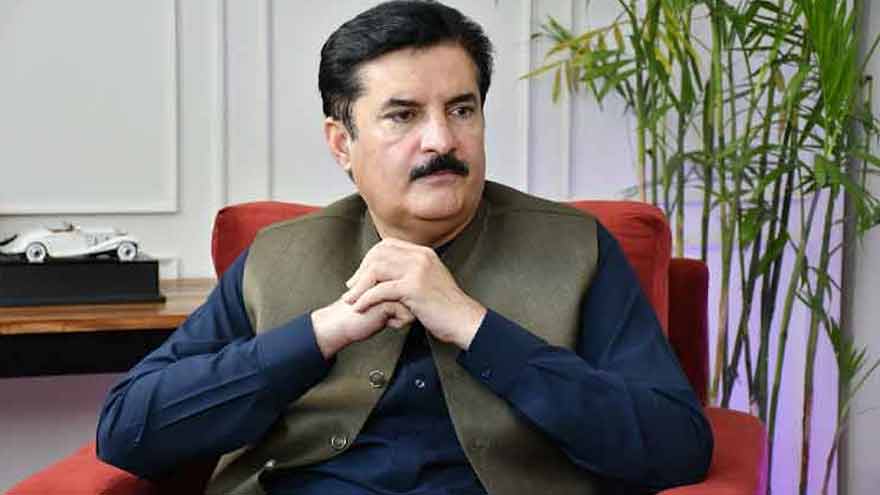
Khyber Pakhtunkhwa Governor Faisal Karim Kundi has said that an emergency will be imposed if necessary to save the province, arguing that the prevailing situation could provide grounds for such a measure.
Speaking to a private television channel, Kundi said that when the situation in the province reaches such a point, the president, prime minister and other relevant institutions may consider imposing an emergency.
The KP governor said that if an emergency or similar measure was imposed, he alone would be enough to deal with the situation. He claimed that those involved were currently hiding and getting themselves arrested.
Kundi said he did not make provocative statements like his opponents and would deal with them when the situation arose. Questioning the ongoing long march, he asked whether anything was actually happening in Peshawar, whether any corner meetings had been held or whether any banners had been seen.
He said the long march had so far only resulted in what he described as self-arrests and people going into hiding. Kundi challenged the participants to cross Swabi and said there appeared to be no proper planning behind the march.
The governor claimed that the protesters wanted the march to continue for a month but did not want to reach Swabi.
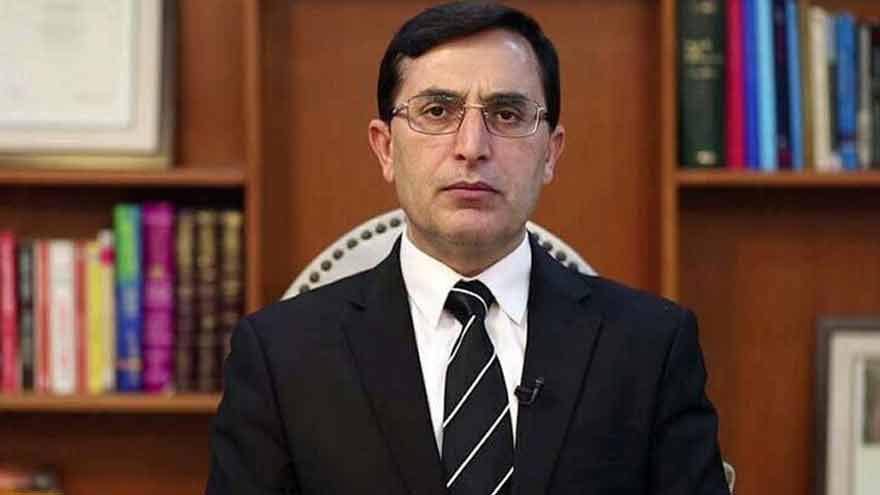
Pakistan Tehreek-e-Insaf (PTI) Chairman Barrister Gohar Ali Khan has said the party wants the negotiations with the government to be successful but the two parties had yet to decide when the next round of talks will take place.
Talking to reporters after a standoff arose between the government and PTI Gohar said that the party’s lengthy march would go forward as per schedule calling it the party’s right.
He said no step should be taken under the garb of the long march that could cause animosity, division or conflict among the people of Khyber Pakhtunkhwa or undermine the mandate, autonomy and powers of the province.
“There is no room for any measure against provincial rights or the public mandate, which will also be against the spirit of the 18th Amendment,” Gohar stated.
PTI chairman said: “The response to the long march should not be imposition of emergency or governor’s rule. He said there was still no decision on when the next government-PTI delegates meeting would be held.
Meanwhile, Federal Minister Talal Chaudhry said that several issues were agreed upon in the negotiations but the form of agreement was amended numerous times on the directions of the Khyber Pakhtunkhwa government.
He said the province government was not prepared to implement the National Action Plan and that was why the talks could not move forward.
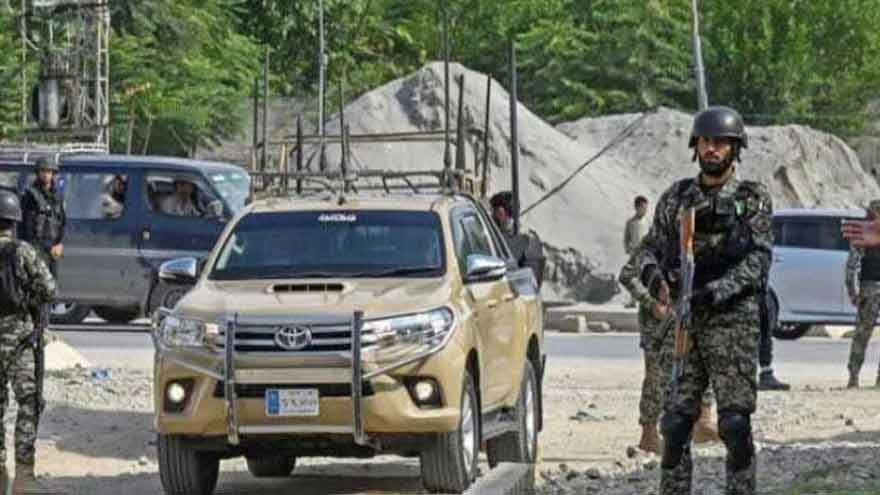
- Eight terrorists sponsored by India were killed in an intelligence-based operation carried out by security forces in Khyber Pakhtunkhwa’s Dera Ismail Khan province, security sources said on Sunday.
The operation was begun after sources said that intelligence assessments had suggested the presence of militants in the region. The operation left eight members of the group, including three of its top commanders, dead.
Security sources stated they had retrieved a considerable number of guns and ammunition and foreign currency from the insurgents.
Sources said that the operation was conducted under the government’s Azm-e-Istehkam vision to fight terrorism and to provide enduring peace and stability in the country.
Prime Minister Shehbaz Sharif congratulated the security forces for an excellent and timely operation against the extremists.
“The entire nation is behind the security forces in their fight against terrorism,” the prime minister added. He underlined the government’s intention to continue its operations against Fitna al-Khawarij until the menace of terrorism is removed.
Elimination of terrorism was vital for peace and stability in the country, the prime minister stated.
Interior Minister Mohsin Naqvi also praised the security forces for the successful operation against militants in Dera Ismail Khan.

KP governor warns of emergency in province if needed to rescue it

PTI long march to go forward as per schedule: Barrister Gohar

Security forces kill eight India-backed militants in KP’s DI Khan operation

ICC board meeting in India: Mohsin Naqvi gets invitation

23 people have died during the monsoon as rain-related incidents plague Punjab and KP.

‘Self-Reliance in Digital ID’: NADRA launches locally produced QR code-based National Identity Card
-
 Latest News5 months ago
ICC board meeting in India: Mohsin Naqvi gets invitation
-
 Latest News2 months ago
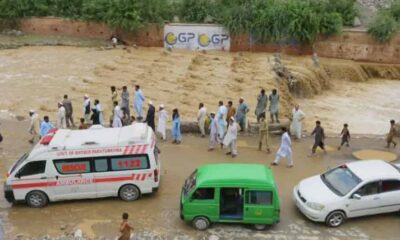
23 people have died during the monsoon as rain-related incidents plague Punjab and KP.
-
 Latest News2 months ago
‘Self-Reliance in Digital ID’: NADRA launches locally produced QR code-based National Identity Card
-
 Business3 months ago
Govt dedicated to resolving Balochistan issues: Dar
-

 Latest News2 months ago
Pakistan making rapid progress in robotics, AI: Shaza Fatima
-

 Latest News1 month ago
Turkish FM, Dar discuss regional trends, bilateral connections
-

 Entertainment5 months ago
Interim bail given to YouTuber Rajab Butt in gambling app marketing case
-
 Latest News2 months ago
After a divorce, LHC decides that women who have been harmed by their spouses get their dower.