
Business
Trump-backed Boeing China deal finalized, first order of 200 aircraft revealed

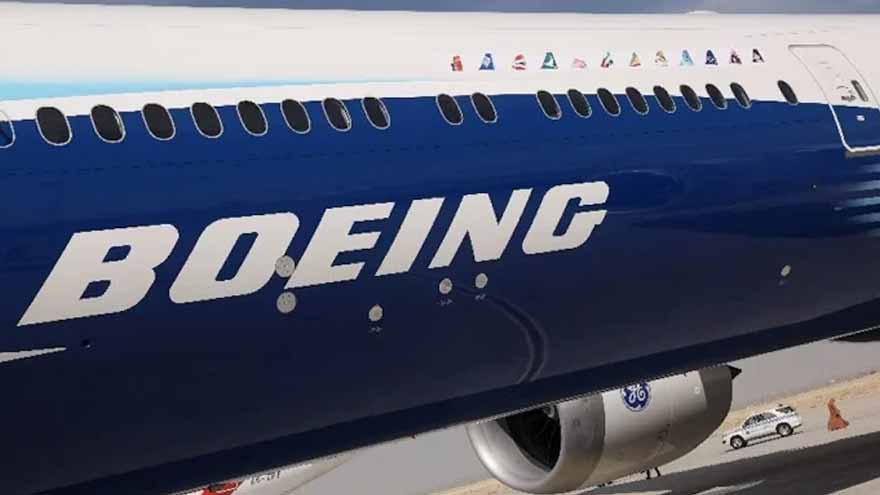
Boeing, the aerospace giant, revealed on Friday that China had agreed to purchase 200 airplanes, as promised previously by US President Donald Trump on his visit to Beijing.“We had a very successful trip to China and achieved our major goal of reopening the China market to orders for Boeing aircraft,” the business, whose CEO Kelly Ortberg was part of the US delegation to China, said in a statement.This includes an initial commitment for 200 aircraft and we expect further commitments to come following this initial tranche,” Boeing said, thanking the Trump administration “for making this milestone happen.”“We now look forward to meeting China’s aircraft demand on a continuing basis,” it added.
China’s most recent Boeing order was placed in 2017, when Trump visited Beijing at the beginning of his first term in the White House. During that period, it ordered 300 single-aisle and wide-body aircrafts — a massive transaction for $37 billion.
On Thursday, Trump had said of the new Boeing commitment, telling Fox News anchor Sean Hannity during an interview: “I think it was a commitment.””That’s a lot of jobs,” the president said.
Speaking to reporters traveling with him on Air Force One was when he returned from China, when Trump said the agreement came with “a promise of 750 planes, which will be by far the largest order ever, if they do a good job with the 200.”
For some months, US media have speculated that Beijing was preparing to place a big Boeing order comprising 500 single-aisle 737 MAXs and roughly 100 bigger 787 Dreamliners and 777s.”He pledged 200 Boeings, big ones, 777s, and 737s and lots of big, big ones, big, beautiful Boeing planes,” Trump claimed in the interview with Fox News aired Friday evening.
For China, such a large order would lock in capacity to continue expanding its aviation sector while output of its home-grown COMAC C919 narrow-body misses ambitious expectations.
It would also help Boeing lessen its deficit with rival Airbus, which has forged forward in China in recent years.
An estimate from aviation intelligence and advisory group IBA valued the 200-aircraft deal at around $17 billion to $19 billion assuming an 80% mix of MAX jets.”This number could rise to $25 billion, however, if a larger proportion (around 40%) of the total order is announced for the widebody aircraft,” said Samuel Kenekueyero of IBA.
The accord would be a much-needed success for Trump, whose tough tariffs and other trade policies so far have failed to make much of a dent in the massive US trade deficit.
If it materialises, an order for more than 500 jets would be the biggest in aviation history, exceeding IndiGo’s contract for 500 Airbus narrowbody aircraft. However, China’s order would likely be shared amongst its three major state-run airlines.
Order size under forecasts
U.S. planemaker shares fell about 4% on Thursday after Trump claimed Fox News Channel China had agreed to buy 200 jets, significantly below analysts’ forecasts. Friday they were down around 2.6%, and GE Aerospace shares sank 2%.
Initially, Boeing was in negotiations for at least 500 narrowbody jets linked to the Beijing summit and dozens of widebody jets, with potentially as many as 200 to follow at a later date, industry sources said.
Trump said Xi will make a reciprocal visit to Washington in September, perhaps making it the centerpiece of the next round of possible jet orders.
However, Li Hanming, an independent specialist on China’s aviation business, said concerns over after-sales service had affected purchase decisions. “The reason China isn’t buying is really simple. Nobody wants to buy something without assured after sales maintenance and assistance. Last May, the U.S. was still threatening to restrict exports of parts. If they apply embargoes on parts like that, who would still dare buy Boeing?”
The Privatisation Commission Board has shortlisted nine companies to take over 51% to 100% of the shares and control of Gujranwala Electric Power Company (GEPCO).
This decision was made during a meeting of the Privatisation Commission Board, led by Prime Minister’s Adviser Muhammad Ali, where the progress on GEPCO’s privatisation and other state-owned companies was discussed.
The board received 11 applications for GEPCO’s privatisation, and nine of them were approved to move forward.
The companies that made it through the first round include Aktor Electric and Genvira Energy from Türkiye, and Engro Energy, Hub Power, Sapphire, Shirazi Investments, Artistic Milliners, and AKD Securities from Pakistan.
K-Electric officially pulled out of the bidding, and Al-Sharif Contracting did not submit the required paperwork.
The Privatisation Commission said the nine approved companies will now start the due diligence process using a virtual data room.
The meeting also looked at the progress on outsourcing Islamabad, Karachi, and Lahore airports.
The board agreed to reorganize the team handling the airport outsourcing deals.
Additionally, the board has decided to speed up the privatisation of Zarai Taraqiati Bank Limited (ZTBL) and the House Building Finance Company Limited (HBFCL), asking advisers to work quickly on these deals.
A spokesperson from the Privatisation Commission stated that all privatisation deals will be handled in a fair, competitive, and professional way.
Ongoing talks between Pakistan and the International Monetary Fund (IMF) are likely to end this week, which might lead to a staff-level agreement and the release of about $1.2 billion, according to officials from the Finance Ministry.
The discussions have centered around Pakistan’s economic performance and how well the country is meeting important goals set by the IMF program.
Officials said the IMF is happy with Pakistan’s foreign exchange reserves and liked the performance of the Federal Board of Revenue in reaching its revenue targets during the July-September period.
Meeting the tax collection target was called a major achievement for the first quarter of the current financial year, according to the sources.
Both sides also talked about a plan to start a fixed tax system for farmers by the end of the current financial year.
The State Bank of Pakistan shared details with the IMF team about steps taken to keep foreign exchange reserves stable and reduce inflation.
The central bank told the delegation that foreign exchange reserves are at $21.4 billion, and commercial banks hold an additional $5.4 billion, the sources added.
The IMF delegation is set to give Pakistan’s economic team a draft of the Memorandum of Economic and Financial Policies (MEFP).
Reaching an agreement on the MEFP would help move forward with a staff-level agreement, which could lead to the release of a $1.2 billion funding amount, the sources said.
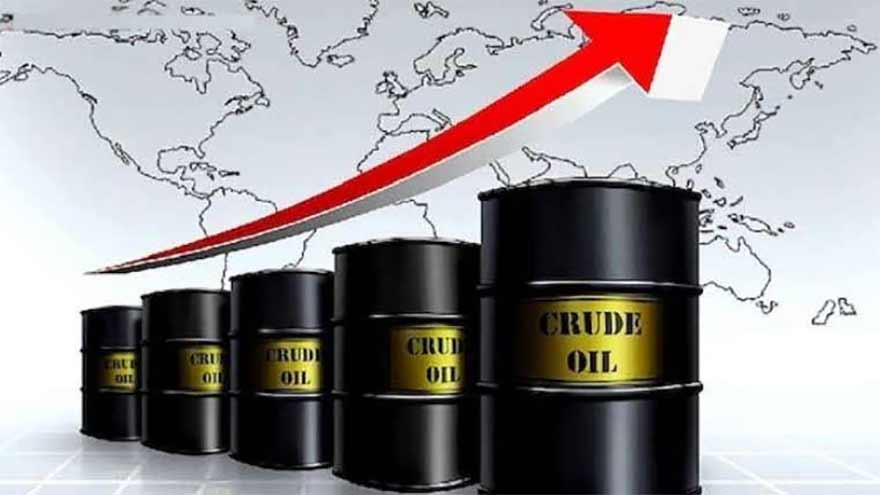
After the Iran-aligned Houthi rebels in Yemen claimed to have attacked Saudi Aramco, the kingdom’s state oil corporation, the price of oil increased internationally.
On October 4, Reuters reported that the Houthis claimed to have fired drones and ballistic missiles targeting Aramco installations in the Khurais region and in Riyadh, the Saudi capital.
Prices increased due to worries that Saudi Arabia, one of the main exporters of crude in the Middle East, would experience production disruptions.
Brent crude futures were up 81 cents, or 0.79%, at $103.06 per barrel as of 10:02 p.m. GMT. West Texas Intermediate crude futures in the United States increased by 46 cents, or 0.50%, to $91.57 per barrel.
One of Saudi Arabia’s primary oil-producing regions is Khurais, which the Houthis designated as a target.
Whether the attack actually damaged any infrastructure or interfered with the production of crude oil was not immediately apparent.

Pakistan test-fires upgraded Fatah-4 with enhanced precision and survivability

Syria, Saudi Arabia discuss reconstruction, investment

Vance says Iran must cut enrichment to end war

ICC board meeting in India: Mohsin Naqvi gets invitation

23 people have died during the monsoon as rain-related incidents plague Punjab and KP.

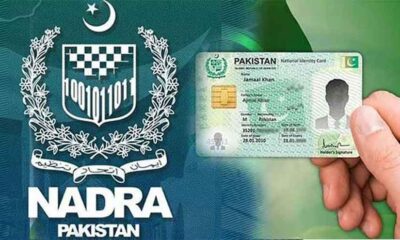
‘Self-Reliance in Digital ID’: NADRA launches locally produced QR code-based National Identity Card
-
 Latest News5 months ago
ICC board meeting in India: Mohsin Naqvi gets invitation
-
 Latest News3 months ago
23 people have died during the monsoon as rain-related incidents plague Punjab and KP.
-
 Latest News2 months ago
‘Self-Reliance in Digital ID’: NADRA launches locally produced QR code-based National Identity Card
-
 Business3 months ago
Govt dedicated to resolving Balochistan issues: Dar
-
 Latest News1 month ago
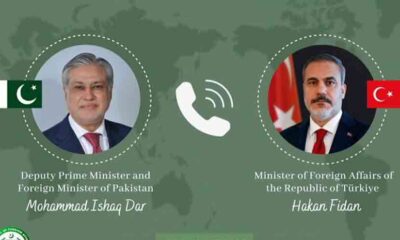
Turkish FM, Dar discuss regional trends, bilateral connections
-
 Latest News2 months ago
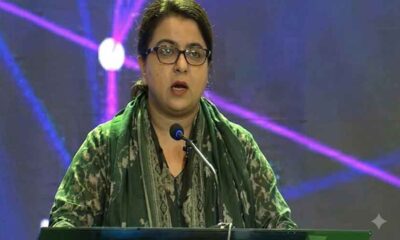
Pakistan making rapid progress in robotics, AI: Shaza Fatima
-

 Entertainment5 months ago
Interim bail given to YouTuber Rajab Butt in gambling app marketing case
-
 Latest News2 months ago
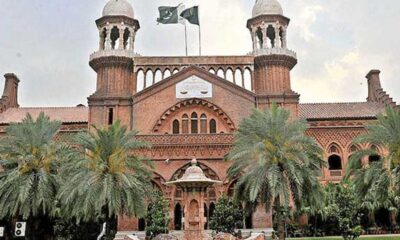
After a divorce, LHC decides that women who have been harmed by their spouses get their dower.