
Business
Solar panel prices jump before Budget


Market sources have reported sharp spikes in solar panel costs across the board ahead of the introduction of the next fiscal year’s budget.
Each solar panel’s price has gone up by Rs7,000 to Rs9,000, according to market sources. The cost of a 585-watt panel has gone up from Rs18,000 to Rs27,000.
Similarly, the price of a 645-watt solar panel has increased from Rs22,000 to Rs31,200 while a 720-watt panel now costs Rs33,500 as opposed to Rs25,000. Traders also cautioned that inverter costs may soar in the days ahead.
The price hike comes ahead of the government budget where a proposal has reportedly been made to increase the General Sales Tax (GST) on solar panels from 10 percent to 18 percent. But even though the proposal has not been implemented yet, costs of solar panels have already soared on the market.
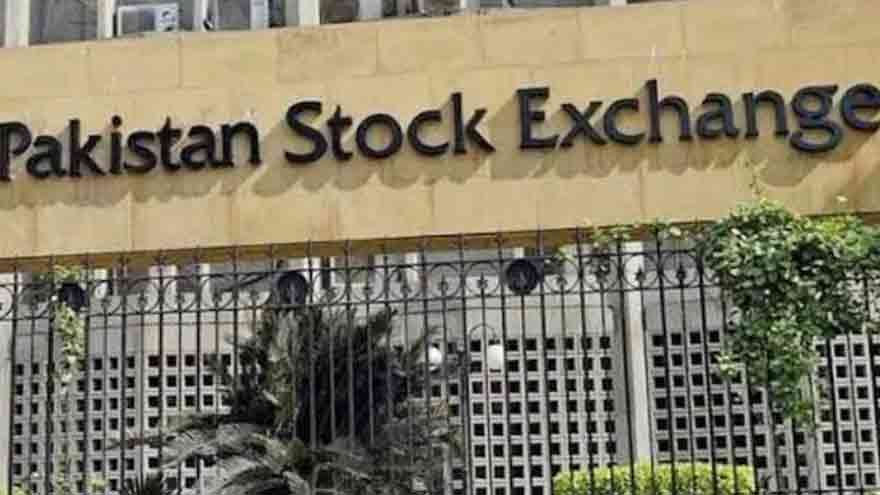
The Pakistan Stock Exchange turned bearish in early trade on Wednesday, with the KSE-100 index dropping over 600 points.
At the start of the third session of the week, the index had fallen more than 600 points to 168,732 points. Previously on Tuesday, the benchmark index showed an upward trend, increasing by 1,421.67 points (up 0.85%) to close at 169,392.33 points compared to 167,970.66 points in the previous session.
In the ready market, the trading volume was 372,016,000 shares as against 570,472,000 shares in the previous trade and the trading value was Rs 17,210 million as against Rs 24,672 million. The market capitalization increased to Rp 18,857 billion from Rp 18,728 billion the previous day.
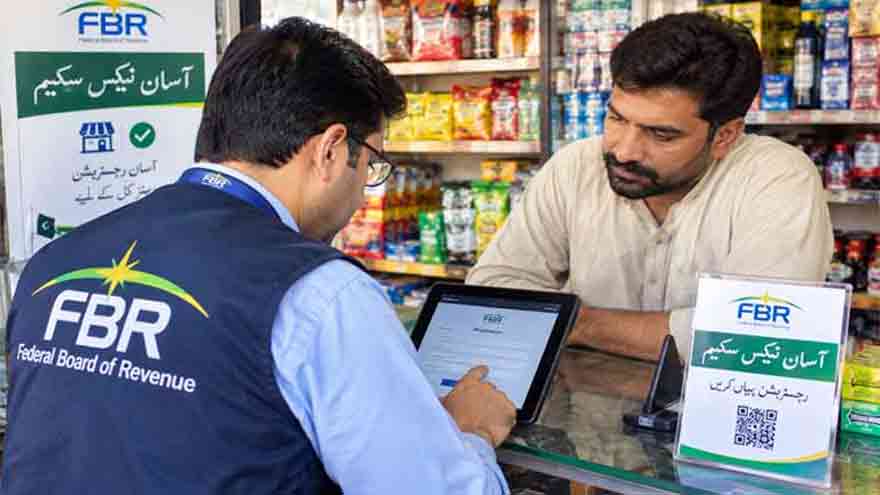
The Federal Board of Revenue (FBR) has set targets for its field offices to accelerate the registration of traders under the Trader Friendly Easy Tax Scheme.
Field offices in major cities have been assigned responsibility for registering traders, according to sources.
Sources said FBR field offices will establish registration centres in major cities to facilitate traders under the scheme. So far, only around 200 traders have filed tax returns under the Easy Tax Scheme.
The number of returns submitted by traders under the scheme has remained below the set targets. As a result, FBR field formations have been tasked with increasing trader registration.
Sources said small traders would continue to receive relief even if they register after September 30. Meanwhile, around 5,000 traders have already registered through the app introduced under the scheme.
The Easy Tax Scheme is aimed at bringing small businesses and shopkeepers into the formal tax net and encouraging them to register with the tax authorities.
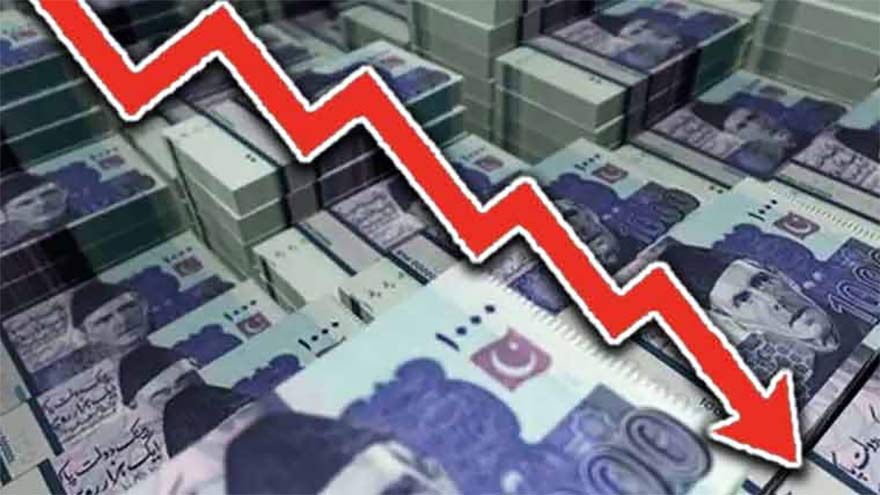
– From July to December 2025, the total loss of loss-making state-owned enterprises was recorded at Rs342.8 billion, while profitable state-owned enterprises earned a profit of Rs423.3 billion.
A meeting of the Cabinet Committee on State-Owned Enterprises was held under the chairmanship of the Finance Minister, in which the performance of SOEs was reviewed.
According to the Ministry of Finance, the government has provided support of Rs804 billion to SOEs, during this period the government received Rs839 billion from government agencies.
According to the announcement, overall, state-owned enterprises provided a net financial profit of Rs35 billion.
The committee directed for improving financial discipline in government institutions and reducing dependence on public resources.
It also directed for accelerating reforms in institutions that are continuously incurring losses.
The meeting also reviewed the operational weaknesses, circular debt, and financial risks of the power and infrastructure sectors.
According to the Ministry of Finance, the committee appreciated the progress made in the digital monitoring system of the performance of SOEs.
The meeting also approved the appointment of independent directors on the board of the Printing Corporation of Pakistan.

The PCB will host the Sri Lanka U-17 Men’s Championship bilateral series in October.

New attacks in Hormuz and Saudi test nerves as war’s spread worsens oil disruption

Petrol hits Rs384.34, diesel reaches Rs415.83 per litre

ICC board meeting in India: Mohsin Naqvi gets invitation

23 people have died during the monsoon as rain-related incidents plague Punjab and KP.

Govt dedicated to resolving Balochistan issues: Dar
-
 Latest News4 months ago
ICC board meeting in India: Mohsin Naqvi gets invitation
-
 Latest News2 months ago
23 people have died during the monsoon as rain-related incidents plague Punjab and KP.
-
 Business2 months ago
Govt dedicated to resolving Balochistan issues: Dar
-
 Latest News2 months ago
Pakistan making rapid progress in robotics, AI: Shaza Fatima
-

 Latest News1 month ago
‘Self-Reliance in Digital ID’: NADRA launches locally produced QR code-based National Identity Card
-

 Latest News2 months ago
After a divorce, LHC decides that women who have been harmed by their spouses get their dower.
-

 Latest News4 months ago
A meta program to monitor mouse clicks made by employees in violation of EU privacy regulations
-

 Entertainment4 months ago
Interim bail given to YouTuber Rajab Butt in gambling app marketing case