
Latest News
The swift adoption of AI in China, its largest testing environment, may influence worldwide AI utilisation.

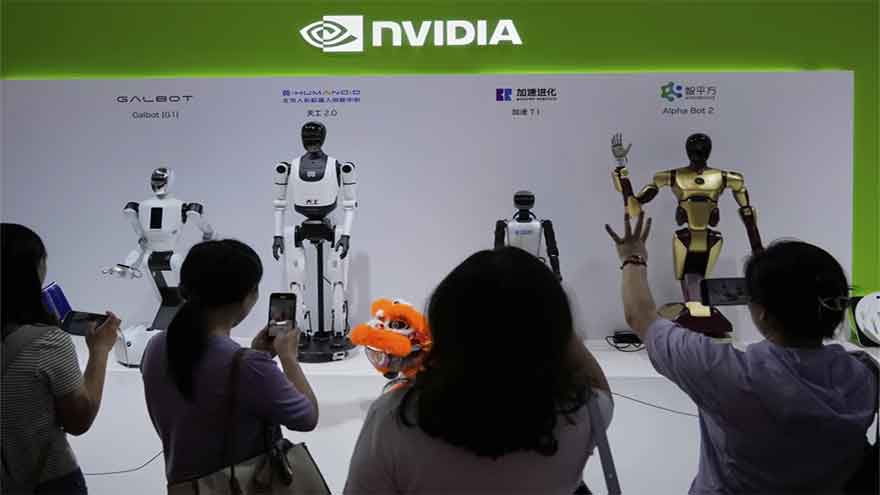
On a recent weekday, some 50 individuals congregated outside the headquarters of a Chinese mobile internet firm, seeking assistance with the installation of an artificial intelligence assistant.
The scenario in Beijing, the capital of China, recurred for several days at other events and was also observed in the southern technological hub of Shenzhen in March, when engineers assisted audiences in configuring the popular AI “agent” OpenClaw on their laptops.
“I am concerned about lagging in technological advancements,” stated Sun Lei, a 41-year-old human resources manager at the Cheetah event. She expressed her ambition that the tool may assist her in sourcing and screening resumes from many recruitment sources.
Over a year following the revelation of DeepSeek’s sophisticated AI model, China’s landscape has evolved into a proving ground for the widespread use of AI technologies. AI models developed in the United States continue to excel in computational capacity; nevertheless, Chinese individuals and enterprises have rapidly adopted the technology, enabling its rapid and extensive integration across nearly all sectors.
With the rapid global use of AI in businesses and daily life, ordinary Chinese individuals are utilising AI for various tasks, including travel booking and planning, meal ordering, and ride-hailing. As of December, over 600 million individuals from a population of 1.4 billion were utilising generative AI, reflecting a 142% rise from the previous year, according to a research by the government-controlled China Internet Network Information Center.
Jason Tong, a 64-year-old retiree in Shanghai and former IT engineer, has utilised AI chatbots like Doubao and Kimi for routine enquiries since their inception a few years ago.
He commenced a more vigilant focus on his health and, in early March, enrolled in a blood glucose monitoring program operated by a Shanghai-based company that employs an AI model to provide personalised health recommendations. He has found its customised, prompt responses beneficial.
Tong asserts that the extensive integration of AI applications into daily life is unavoidable, stating, “Just as carriages were ultimately supplanted by trains, this will inevitably occur.”
Chinese products utilising AI, including automobiles and robotics, are experiencing significant progress, ranging from humanoid robots with sophisticated cognitive capacities to AI systems that assist drivers with complex tasks such as restaurant reservations.
Lizzi Lee, a fellow at the Asia Society Policy Institute’s Center for China Analysis specialising in economics and technology, stated, “The competition in artificial intelligence is evidently transitioning from models to ecosystems.” “Chinese users are effectively functioning as large-scale real-time testers.”
Chinese technology firms such as Tencent, Alibaba, and Baidu are competing to commercialise artificial intelligence. Tencent included OpenClaw into WeChat, China’s proprietary “super-app,” which primarily functions as a messaging platform but also facilitates activities such as food ordering and payment processing. Alibaba is integrating “agentic” AI into its operational processes.
OpenClaw facilitates the broader adoption of artificial intelligence applications in China.
OpenClaw, developed by Austrian software engineer Peter Steinberger last year, gained rapid and fervent adoption due to its capacity to utilise diverse tools for executing complex tasks.
Zhao Yikang, a Chinese university student in Macao, utilises OpenClaw for both his academic pursuits and everyday activities.
He was impressed by its affordability and efficiency, utilising it to automatically produce promotional videos and oversee social media accounts during his internship at a real estate business in Zhuhai, a city in southern China.
Zhao stated, “AI can comprehend information instantaneously.” “You simply need to assume the role of a commander and instruct it accordingly.”
Zhao requested AI to create a corporate website in preparation for launching a picture services firm post-graduation. In about 10 minutes, it produced a fully operational website for less than 5 yuan (70 cents).
Chinese authorities issued multiple warnings regarding potential security hazards associated with OpenClaw AI “agents,” such as data breaches, despite the continued high interest and increased installations.
Janet Tang, a partner and managing director specialising in technology at consultancy AlixPartners, stated that Chinese organisations are progressively establishing internal objectives to enhance AI utilisation for efficiency improvement.
Wang Xiaogang, co-founder of the Chinese AI software firm SenseTime and chairman of ACE Robotics, stated that there are numerous application scenarios. The sector is advancing rapidly, and individuals are receptive and enthusiastic about experimenting with AI in various contexts.
U.S. export regulations simultaneously facilitate and obstruct the utilisation of AI in China.
China has endeavoured to gain an advantage by significantly spending in talent cultivation and securing access to ample, cost-effective electricity for its energy-intensive AI advancements and innovations.
Chinese leaders have committed to an annual average growth of at least 7% in national research and development expenditure within the country’s five-year plan until 2030 to attain technological advancements, particularly in AI. A national framework for “AI plus” delineates measures to incorporate AI across several sectors, including healthcare and education. Judges in Shenzhen adjudicated 50% more cases last year, according to a court, partially aided by an AI technology facilitating judicial procedures.
Nonetheless, restricted access to certain advanced computer chips due to U.S. regulations continues to impede China’s AI progress.
Samm Sacks, a senior scholar at New America specialising in Chinese technology policies, stated, “Export controls on tools have impeded China’s chipmaking capabilities and represent the Achilles’ heel of numerous AI laboratories reliant on advanced AI chips.”
However, the regulations have resulted in enhanced coordination of design, manufacturing, and implementation throughout China’s technology supply chain. Sacks stated, “Over time, this dynamic could enhance, rather than hinder, China’s ambitions.”
Last month, when China’s DeepSeek unveiled its highly anticipated V4 AI model preview, a significant alteration was the incorporation of computer processors produced by the Chinese technology conglomerate Huawei. This signifies less reliance on leading U.S. semiconductor manufacturers like Nvidia.
A recent analysis from Stanford University’s Institute for Human-Centered AI indicates that the performance disparity in leading AI models between the U.S. and China has “effectively closed.”
U.S. officials and leading AI companies, such as Anthropic and OpenAI, have alleged that Chinese AI startups are appropriating U.S. AI innovations. China asserts that these charges are unfounded.
Lian Jye Su, a lead analyst at the research and consultancy firm Omdia, posits that the AI disparity between the U.S. and China will persist in diminishing, notwithstanding U.S. export restrictions and China’s Great Firewall, the extensive internet filtration and censorship apparatus employed by the Chinese Communist Party.
Analysts, including Su, contend that obstacles like the Great Firewall will likely affect China’s AI utilisation in constrained manners, considering that the technology is already being tested, integrated, and scaled within China’s regulated internet framework.
“China will soon transition from being a fast follower to a parallel innovator,” he stated.

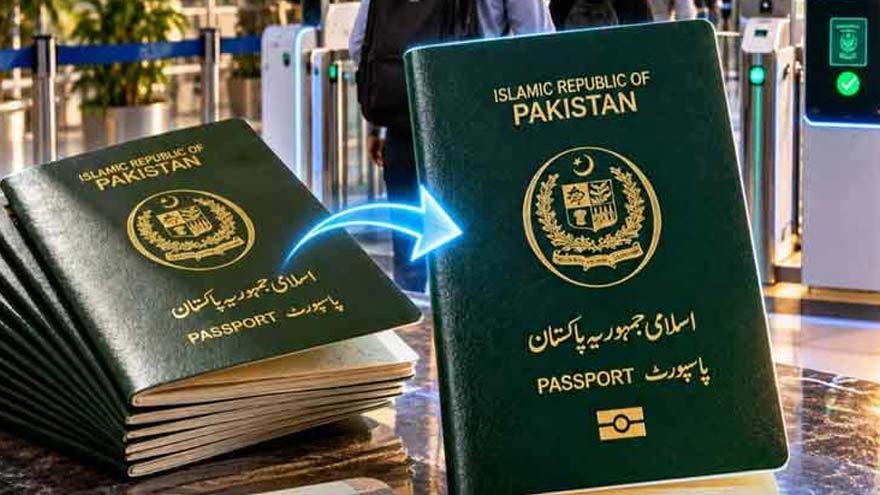
Director General Immigration and Passports said that Pakistan has started issuing electronic passports (e-passports) at Pakistani diplomatic missions across the world, a major milestone achieved under the vision of the prime minister and orders of Interior Minister Mohsin Naqvi.
This launch was accomplished due to the ongoing effort of the team of Directorate General of Immigration and Passports.
The e-passport is equipped with state-of-the-art security measures and constructed according to international standards and is a step forward in modernising the passport services in Pakistan.
The director general said machine-readable passports currently issued would stay valid until their expiry dates, and e-passports would be issued to anyone applying for new passports.
The effort has been termed as a key step in modernising Pakistan’s passport services in line with the vision of “One Nation, One Passport, One Identity”.
Search Topics

Interior Minister Mohsin Naqvi has warned the residents about the increasing hazards of online fraud, cybercrime and blackmail and advised them not to post personal images and videos with unconnected persons.
New types of online fraud were coming to light, including situations where women and girls were coaxed into revealing their images and videos and later blackmailed, Naqvi said during a press briefing on cyber crime in the province capital.
He warned people, especially women, to be very careful about sharing personal images, as some people use pictures and films to blackmail. He made a special appeal to moms and sisters to keep their private images private.
The interior ministry also warned individuals not to transfer money online without verification, even if someone claimed to be sick and asked for financial help online, to avoid falling victim to online financial scam. He called on people to check the names of those who asked for money and to beware of bogus accounts.
Fraudsters impersonated residents on social media with bogus identities, Naqvi added. He said the cyber police are being mobilised to check cybercrime and measures are being taken to provide assistance to the victims in time.
He said he will start a public awareness campaign to educate individuals about online fraud, phoney identities and extortion. He also committed his complete support to the National Cyber Crime Investigation Agency (NCCIA).
The interior minister stated the NCCIA was getting the largest number of instances of harassment of girls. He said he encountered three girls who tried to commit suicide.
“It is important to prevent online harassment and blackmail, protect victims and provide timely assistance,” Naqvi said when talking about the occurrences.
He appealed to residents to be careful when using the internet and social media and to avoid unnecessarily sharing personal information and images and to report the proper authorities if they came across any suspicious online behaviour.
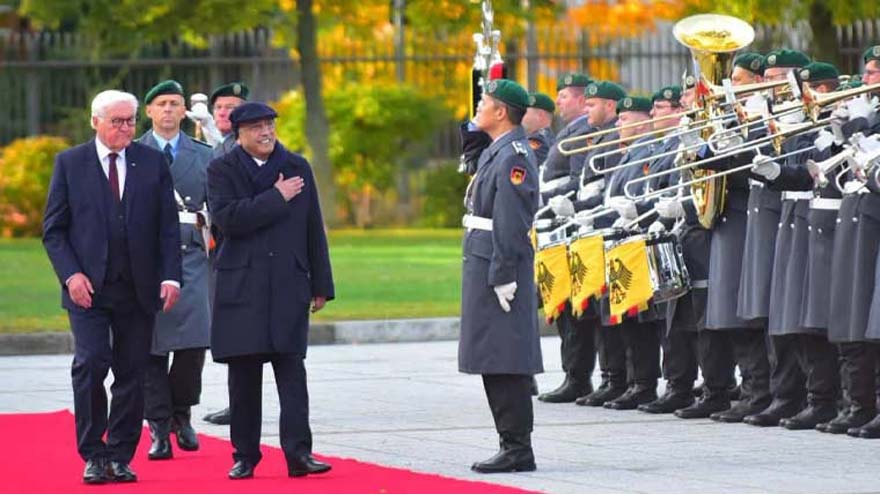
A magnificent celebration was hosted in honour of President Asif Ali Zardari at the Ministry of Defence in Germany. Additionally, a guard of honour was presented to him at this event.
Upon President Zardari’s arrival at the German Ministry of Defence, German President Frank-Walter Steinmeier extended a warm welcome to him. The ceremony included the playing of the national anthems of both countries, as well as the presentation of a guard of honour to the president of Pakistan.
In response to President Steinmeier’s invitation, President Zardari is currently taking a trip to Germany. Due to the fact that this is the first time in almost 23 years that a Pakistani head of state has travelled to Germany, the visit is of great significance.
During this year, Pakistan and Germany are also commemorating the 75th anniversary of the foundation of their diplomatic relations with one another.
During the course of his tour, President Zardari will meet with his German counterpart as well as senior officials from the German government. He will also be accompanied by a high-level team.
The topics that will be discussed include bilateral ties, events in the area and the world as a whole, and strategies to improve economic and trade cooperation between the two countries.
Pakistan and Germany are expected to deepen their collaboration in a variety of fields as a result of President Zardari’s visit, which is likely to add new momentum to the bilateral relations between the two countries.

Pakistan begins issuing e-passports at diplomatic missions worldwide

Interior Minister Naqvi warns against online fraud, cybercrime and blackmail

German defence ministry accords guard of honour to President Zardari

ICC board meeting in India: Mohsin Naqvi gets invitation

‘Self-Reliance in Digital ID’: NADRA launches locally produced QR code-based National Identity Card

23 people have died during the monsoon as rain-related incidents plague Punjab and KP.
-
 Latest News5 months ago
ICC board meeting in India: Mohsin Naqvi gets invitation
-
 Latest News2 months ago
‘Self-Reliance in Digital ID’: NADRA launches locally produced QR code-based National Identity Card
-
 Latest News3 months ago
23 people have died during the monsoon as rain-related incidents plague Punjab and KP.
-
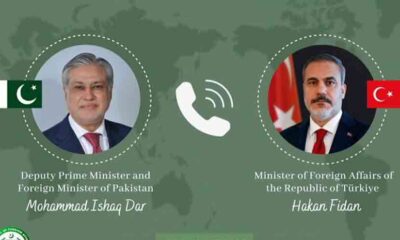
 Latest News2 months ago
Turkish FM, Dar discuss regional trends, bilateral connections
-

 Business3 months ago
Govt dedicated to resolving Balochistan issues: Dar
-

 Latest News3 months ago
Pakistan making rapid progress in robotics, AI: Shaza Fatima
-

 Entertainment5 months ago
Interim bail given to YouTuber Rajab Butt in gambling app marketing case
-

 Latest News3 months ago
After a divorce, LHC decides that women who have been harmed by their spouses get their dower.