
Latest News
Trump says Iran deal ‘largely negotiated’ as fight over strait reopening

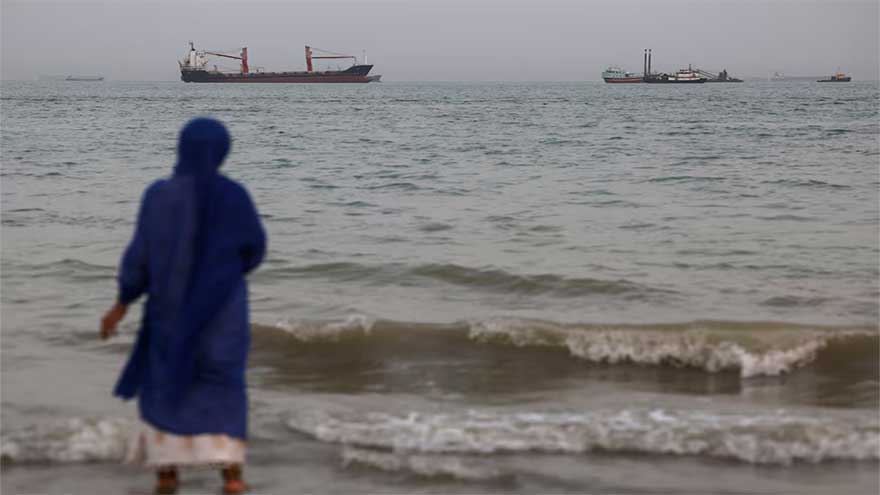
US President Donald Trump stated on Saturday a “largely negotiated” memorandum of understanding on an Iran peace deal will reopen the Strait of Hormuz, but Iranian Fars news agency contradicted that report.
Trump said on social media that the emerging deal would restore the strait, the critical shipping corridor whose closure roiled global energy markets after the conflict began in February with US and Israeli assaults on Iran. He did not disclose what would be in an agreement. ““Final aspects and details of the Deal are being discussed right now, and will be announced shortly,” Trump posted on Truth Social.
But Fars, early Sunday, reported that the deal would give Iran control of the channel of Hormuz, and Trump’s statement about the channel was “inconsistent with reality.”
Iran’s top officials met with Pakistan’s army chief Asim Munir and said they were moving toward a memorandum of understanding on ending the war.
The Pakistani army said the talks had made “encouraging” progress. “The deal being negotiated is fairly comprehensive to terminate the war,” two Pakistani sources involved in the talks said.
Sharif, the prime minister of Pakistan, complimented Trump on X for his “extraordinary efforts to pursue peace.”
The suggested framework would take place in three stages: legally ending the war, addressing the issue in the Strait of Hormuz and initiating a 30-day window for negotiations on a broader accord, which can be extended, sources told Reuters.
One of the Pakistani sources said if the US agrees to the memorandum, more negotiations might take place after the Eid holiday finishes on Friday.
TRUMP TALKS TO MIDDLE EAST LEADERS
The US president, whose favour ratings have been hurt by the impact of the war on oil prices for US consumers, announced on Friday he would not attend his son’s wedding this weekend, citing Iran among the reasons he wanted to stay in Washington.
Trump said on Truth Social he had a phone chat Saturday with the leaders of Saudi Arabia, Qatar, the United Arab Emirates, Jordan, Egypt, Turkey and Pakistan. The leaders reportedly urged Trump to sign onto the evolving framework, Axios said.
Trump said that a second call with Israeli Prime Minister Benjamin Netanyahu went “very well.
Pakistan has sought to reduce gaps between Iran and the US after weeks of war have closed the critical Hormuz strait to most shipping despite a tentative ceasefire.
Trump has frequently asserted the US hit Iran to prevent it from acquiring nuclear weapons. Iran denies developing nuclear weapons and maintains it has a right to enrich uranium for civilian purposes.The trend this week has been toward a reduction in disagreements, but there are still concerns that need to be resolved through mediators. “We will have to wait and see how the situation ends in the next three or four days,” said Esmail Baghaei, spokesman for the Iranian Foreign Ministry.
Iran has asked for control over the strait and for the US to stop the blockade on its ports and abolish the restrictions on Iranian oil shipments.
Baghaei said the issue of the US blockade on Iran’s shipping was essential but that its priority was stopping the danger of further US assaults and the current struggle in Lebanon, where Iran-allied Hezbollah fighters are fighting Israeli troops who have moved into the south.
Pakistan’s army chief Munir departed Tehran Saturday after discussions with Iran’s chief negotiator Mohammad Baqer Qalibaf and foreign minister Abbas Araqchi.
Qalibaf claimed Iran’s military forces have rebuilt their capabilities during the ceasefire and if the US “foolishly restarts the war,” the results would be “more forceful and bitter” than at the outset of the conflict.
Iran has maintained its stockpile of near-weapons-grade enriched uranium, and its missile, drone and proxy capabilities, despite weeks of conflict.

WhatsApp has began rolling out a new “Mentions and Replies” filter that will enable users to easily identify chats where they have been mentioned or their message has been replied to.
WABetaInfo says the feature is now being implemented for select users on WhatsApp beta for Android version 2.26.42.12.
The new filter will be available in the Chats page, allowing users to see conversations where they have been tagged or their messages addressed. It is said to help you keep track of key communications more easily in huge group conversations and groups.
The feature could be particularly useful for people who get a lot of messages and sometimes miss critical queries, answers or comments in crowded chats.
Another important feature is that even after you have cleared the notifications, the relevant chats will still be available through the filter, enabling you get back to conversations that need your attention.
Users will also be able to tweak the feature as per their tastes with choices to disable it through settings or relocate it to the “More” section.
The “Mentions and Replies” filter is now being handed out to a small number of beta users. WhatsApp has not yet announced when it will be sent out to all users.
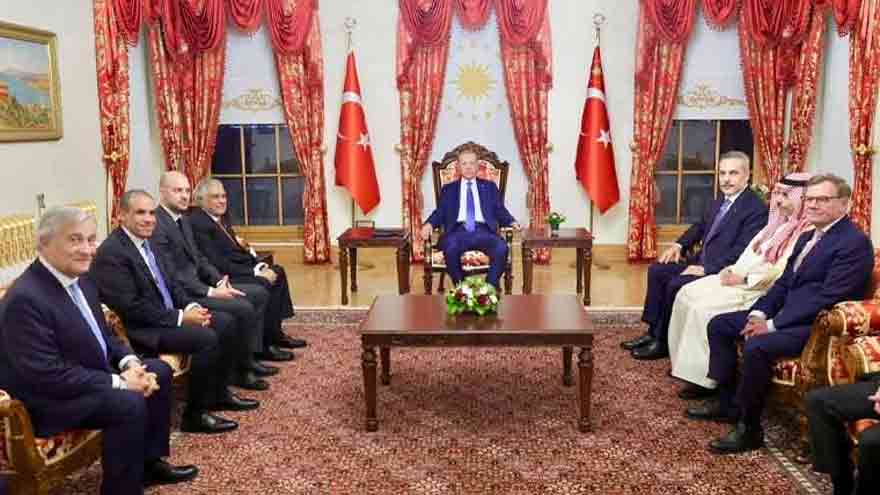
Foreign ministers of eight nations including Pakistan agreed to the urgent need to resolve regional crises through conversation, diplomacy and de-escalation.
The foreign ministers of Turkey, Egypt, Pakistan and Saudi Arabia (R4) and the FMs of France, Germany, Italy and the United Kingdom, met in Istanbul on 23 October 2026, the Foreign Office stated in a statement on Saturday.
Ministers discussed issues of regional and international importance, namely US/Israel-Iran conflict, Israeli-Palestinian conflict and the need for a negotiated two-state solution, appalling Houthi militia attacks against the Kingdom of Saudi Arabia and the Government of Yemen, safety and freedom of navigation, escalated tension in Straits of Hormuz and Bab El Mandeb and the Black Sea.
They pledged their ongoing commitment to contribute to diplomatic efforts to promote peace and stability in the area and beyond and address the security, economic and trade ramifications of these concerns.
They stressed the importance of finding durable negotiated solutions to all ongoing issues in conformity with the applicable UN Resolutions. The Ministers resolved to continue the engagement in this format with a view to averting disputes and promoting peace and stability in the area.
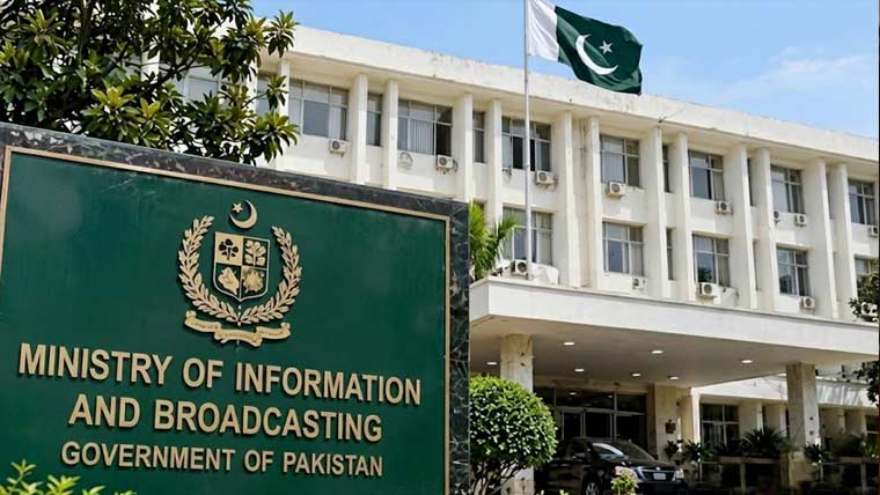
Pakistan reiterated its worries about militant activity emanating from Afghan territory and called on the Afghan Taliban leadership to stop all kinds of support, facilitation and tolerance for the Tehreek-e-Taliban Pakistan (TTP), the Balochistan Liberation Army (BLA) and their affiliated groups.
The Ministry of Information and Broadcasting claimed that the claims against Pakistan’s security institutions could not take away from Islamabad’s long-standing security worries. It underlined that Afghan authorities must ensure that their land is not utilised to plan, prepare or carry out terrorist operations against Pakistan.
The ministry, reacting to the latest statements by the Afghan Taliban regime, said Pakistan’s concerns were not conjectural but were based on international reporting and documented proof. It stated that Afghan authorities were responsible for preventing the use of Afghan land for terrorist actions against Pakistan and that the blame on Pakistani security agencies would not clear them of their obligation.
The ministry said it was referring to a report by the United Nations Security Council’s Analytical Support and Sanctions Monitoring Team, investigating the presence and actions of terrorist groups in Afghanistan, known as document S/2025/796.
It also cited a report presented to the US Congress by the US Lead Inspector General covering Operation Enduring Sentinel from January to March 2026.
The Pakistani ministry’s version of the US report said the Afghan Taliban had continued to allow the TTP to operate from Afghan territory. The report attributed the spike in attacks against Pakistan to growing Taliban backing and greater operational independence for the group.
The statement cited numbers that approximated the size of the TTP at between 4,000 and 6,000 combatants.
The ministry said the foreign evaluations illustrate the seriousness of Pakistan’s worries about terrorist safe havens and support networks in Afghanistan. It said that dismissing the capacity or desire of extremist groups to destabilise Pakistan did not take care of the issues expressed via solid evidence.
The statement also mentioned continuous efforts by armed extremists to get into Pakistan from across the Afghan border. It alluded to the killings of Afghan nationals and members of terrorist groups in Pakistani counter-terrorism operations, and the capture of foreign-made weaponry from militant elements.
“Such issues need to be taken seriously. The concerns raised about Afghan Taliban officials, including in Kandahar, allegedly facilitating terrorist groups need credible explanations and verifiable action, not outright denials,” the ministry said.
Pakistan said its security measures were aimed at terrorist threats, not at the Afghan people. The ministry said peace and stability of the two nations were interlinked and a terrorism-free region would benefit the people of Pakistan and Afghanistan.
It encouraged the Afghan Taliban administration to take concrete measures to remove the support mechanisms accessible to the TTP, BLA and allied organisations. It added these steps must ensure that Afghan land is not utilised for planning, preparing or executing strikes against Pakistan.
The ministry stated that characterising Pakistan’s legitimate security concerns and steps for defence as enmity toward Afghanistan would neither address the root cause of the crisis, nor would it divert attention from it.
The statement stated that Pakistan would continue to take all necessary actions to preserve its citizens, sovereignty and territorial integrity.
At the same time, Islamabad was ready for a responsible engagement based on mutual respect, verifiable assurances and concrete action against terrorist safe havens, support networks and cross-border infiltration.
The ministry said that sustainable peace in the region would depend on the Afghan Taliban government taking real steps to address Pakistan’s core security concerns in a way that could be independently confirmed.
Search Topics

WhatsApp rolls out new ‘Mentions and Replies’ chat filter

Eight countries, including Pakistan, urge diplomacy to resolve regional conflicts

Pakistan warns Taliban regime to stop supporting terror outfits

ICC board meeting in India: Mohsin Naqvi gets invitation

‘Self-Reliance in Digital ID’: NADRA launches locally produced QR code-based National Identity Card

23 people have died during the monsoon as rain-related incidents plague Punjab and KP.
-
 Latest News5 months ago
ICC board meeting in India: Mohsin Naqvi gets invitation
-
 Latest News2 months ago
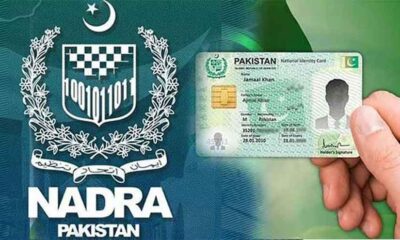
‘Self-Reliance in Digital ID’: NADRA launches locally produced QR code-based National Identity Card
-
 Latest News3 months ago
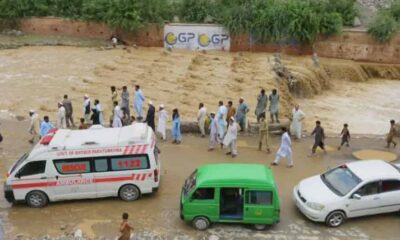
23 people have died during the monsoon as rain-related incidents plague Punjab and KP.
-
 Latest News2 months ago
Turkish FM, Dar discuss regional trends, bilateral connections
-
 Business3 months ago
Govt dedicated to resolving Balochistan issues: Dar
-
 Latest News3 months ago
Pakistan making rapid progress in robotics, AI: Shaza Fatima
-

 Entertainment5 months ago
Interim bail given to YouTuber Rajab Butt in gambling app marketing case
-
 Latest News3 months ago
After a divorce, LHC decides that women who have been harmed by their spouses get their dower.