
Latest News
Trump says Iran deal ‘largely negotiated’ as fight over strait reopening

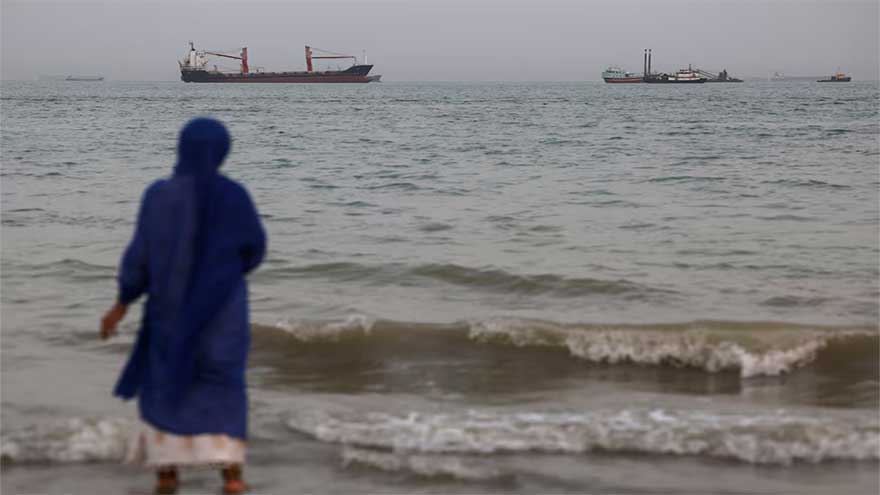
US President Donald Trump stated on Saturday a “largely negotiated” memorandum of understanding on an Iran peace deal will reopen the Strait of Hormuz, but Iranian Fars news agency contradicted that report.
Trump said on social media that the emerging deal would restore the strait, the critical shipping corridor whose closure roiled global energy markets after the conflict began in February with US and Israeli assaults on Iran. He did not disclose what would be in an agreement. ““Final aspects and details of the Deal are being discussed right now, and will be announced shortly,” Trump posted on Truth Social.
But Fars, early Sunday, reported that the deal would give Iran control of the channel of Hormuz, and Trump’s statement about the channel was “inconsistent with reality.”
Iran’s top officials met with Pakistan’s army chief Asim Munir and said they were moving toward a memorandum of understanding on ending the war.
The Pakistani army said the talks had made “encouraging” progress. “The deal being negotiated is fairly comprehensive to terminate the war,” two Pakistani sources involved in the talks said.
Sharif, the prime minister of Pakistan, complimented Trump on X for his “extraordinary efforts to pursue peace.”
The suggested framework would take place in three stages: legally ending the war, addressing the issue in the Strait of Hormuz and initiating a 30-day window for negotiations on a broader accord, which can be extended, sources told Reuters.
One of the Pakistani sources said if the US agrees to the memorandum, more negotiations might take place after the Eid holiday finishes on Friday.
TRUMP TALKS TO MIDDLE EAST LEADERS
The US president, whose favour ratings have been hurt by the impact of the war on oil prices for US consumers, announced on Friday he would not attend his son’s wedding this weekend, citing Iran among the reasons he wanted to stay in Washington.
Trump said on Truth Social he had a phone chat Saturday with the leaders of Saudi Arabia, Qatar, the United Arab Emirates, Jordan, Egypt, Turkey and Pakistan. The leaders reportedly urged Trump to sign onto the evolving framework, Axios said.
Trump said that a second call with Israeli Prime Minister Benjamin Netanyahu went “very well.
Pakistan has sought to reduce gaps between Iran and the US after weeks of war have closed the critical Hormuz strait to most shipping despite a tentative ceasefire.
Trump has frequently asserted the US hit Iran to prevent it from acquiring nuclear weapons. Iran denies developing nuclear weapons and maintains it has a right to enrich uranium for civilian purposes.The trend this week has been toward a reduction in disagreements, but there are still concerns that need to be resolved through mediators. “We will have to wait and see how the situation ends in the next three or four days,” said Esmail Baghaei, spokesman for the Iranian Foreign Ministry.
Iran has asked for control over the strait and for the US to stop the blockade on its ports and abolish the restrictions on Iranian oil shipments.
Baghaei said the issue of the US blockade on Iran’s shipping was essential but that its priority was stopping the danger of further US assaults and the current struggle in Lebanon, where Iran-allied Hezbollah fighters are fighting Israeli troops who have moved into the south.
Pakistan’s army chief Munir departed Tehran Saturday after discussions with Iran’s chief negotiator Mohammad Baqer Qalibaf and foreign minister Abbas Araqchi.
Qalibaf claimed Iran’s military forces have rebuilt their capabilities during the ceasefire and if the US “foolishly restarts the war,” the results would be “more forceful and bitter” than at the outset of the conflict.
Iran has maintained its stockpile of near-weapons-grade enriched uranium, and its missile, drone and proxy capabilities, despite weeks of conflict.
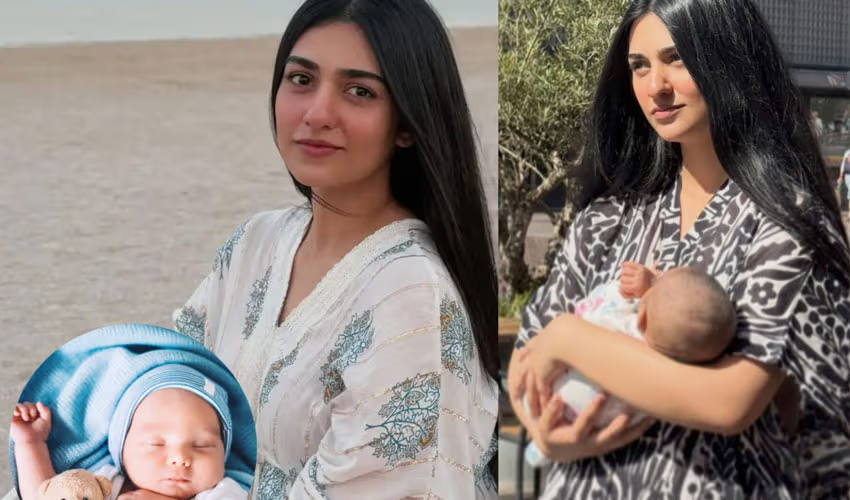
Pakistani actress Sarah Khan has addressed a question about whether she had hoped for a son during her second pregnancy, saying that she and her husband, singer Falak Shabir, only wished for a healthy child.
During a question-and-answer session on her Instagram account, a fan asked if she wanted a baby boy while expecting her second child.
Responding to the question, Sarah said, “We just wanted a child.”

The actress, who is the mother of two daughters, Alyana and Rania, also reflected on how motherhood has transformed her life.
When asked what she misses most about her life before marriage and children, Sarah replied that uninterrupted sleep is the only thing she misses after becoming a mother of two.
She also shared a light-hearted response when a follower asked whether she was watching the FIFA World Cup 2026.
“The only thing I’m watching these days is my daughters,” she joked.
Speaking about motherhood, Sarah described her daughters as the greatest blessing in her life.
“My life has become more beautiful. I am busier than ever. It’s the best time of my life, and I love my daughters. They are Allah’s greatest blessing upon me,” she said.
The actress added that her biggest goal as a mother is to raise kind and compassionate human beings and wished for all married women to be blessed with healthy children.
Sarah also revealed that she is “obsessed” with her husband, Falak Shabir, while joking that their daughters are even more attached to their father.
The actress recently earned praise for her performance in the drama Sher alongside Danish Taimoor and is set to appear in an upcoming Geo TV drama opposite Feroze Khan.
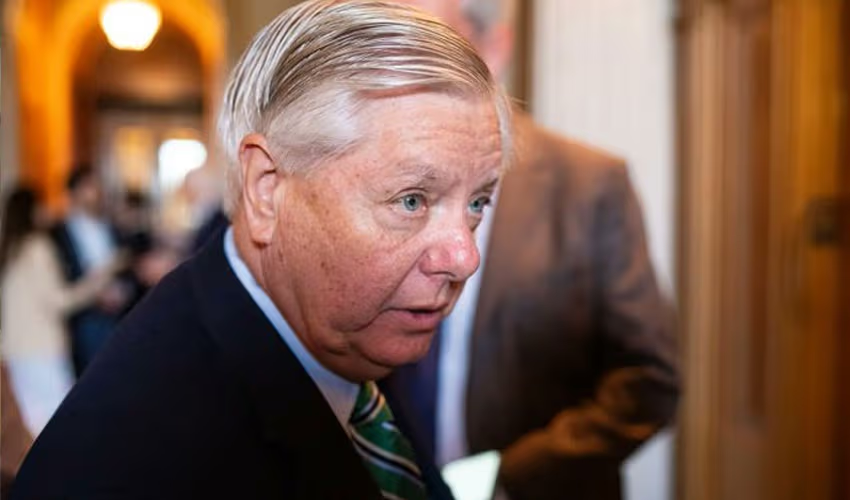
According to a statement sent by his office early on Sunday, Graham passed away on Saturday night.The statement read, “Senator Graham’s family requests privacy during this extremely trying time and appreciates prayers at this time.”
Among the first public figures to honor Graham was President Donald Trump, who described him as “one of the greatest people and Senators I have ever known.”
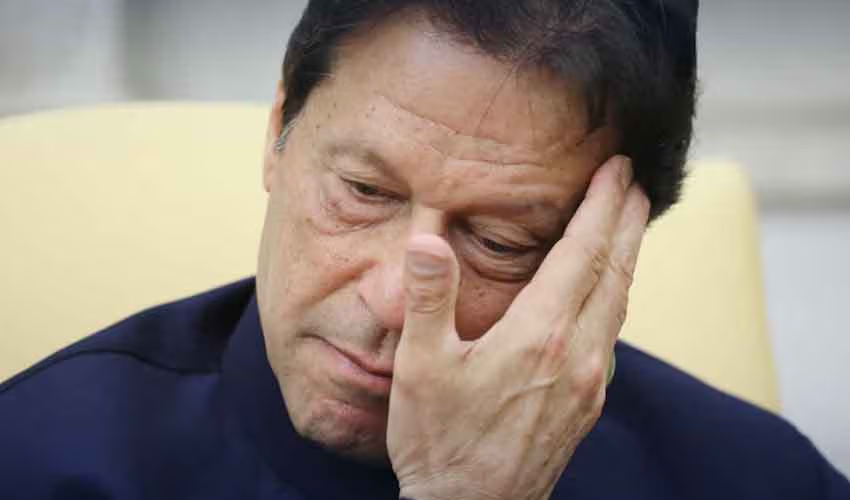
Imran Khan, the founder of Pakistan Tehreek-e-Insaf (PTI), had an eye exam at Rawalpindi’s Adiala jail.
Imran’s eye is thoroughly examined by medical professionals.
The inspection was conducted yesterday (Friday), according to information leaked on Saturday. Dr. Arif from PIMS and Dr. Nadeem Qureshi from Al-Shifa Trust were among the specialists who performed the examination.
Imran Khan’s eye was thoroughly examined by the physicians, according to sources.
Medication is prescribed by doctors as part of follow-up care.
Sources claim that as part of the follow-up treatment, the doctors recommended medication.

According to Sarah Khan, she never made a specific wish for a son.

US Senator Lindsey Graham passes away at age 71 following a brief illness

At Adiala jail, Imran Khan has his eyes examined.

ICC board meeting in India: Mohsin Naqvi gets invitation

The IMF mission has arrived in Pakistan for discussions regarding the budget.

Is the US-Iran standoff exposing deep fault lines in US intelligence coordination?
-
 Latest News2 months ago
ICC board meeting in India: Mohsin Naqvi gets invitation
-
 Business2 months ago
The IMF mission has arrived in Pakistan for discussions regarding the budget.
-
 Latest News1 month ago
Is the US-Iran standoff exposing deep fault lines in US intelligence coordination?
-

 Business2 months ago
Oil hits 2-week high following drone strike on UAE nuclear power facility
-
 Latest News1 month ago
Shehbaz, Zardari discuss key issues as PPP hints at budget support
-
 Latest News2 months ago
To commemorate the anniversary of Marka-e-Haq, top civic and military leaders assemble at Pakistan Monument.
-

 Latest News1 month ago
7.8 magnitude quake hits southern Philippines\
-

 Business2 months ago
In the open market, flour prices increase by Rs 700 per mound.