
Latest News
FIFA World Cup to create wealth and CO2 unprecedented

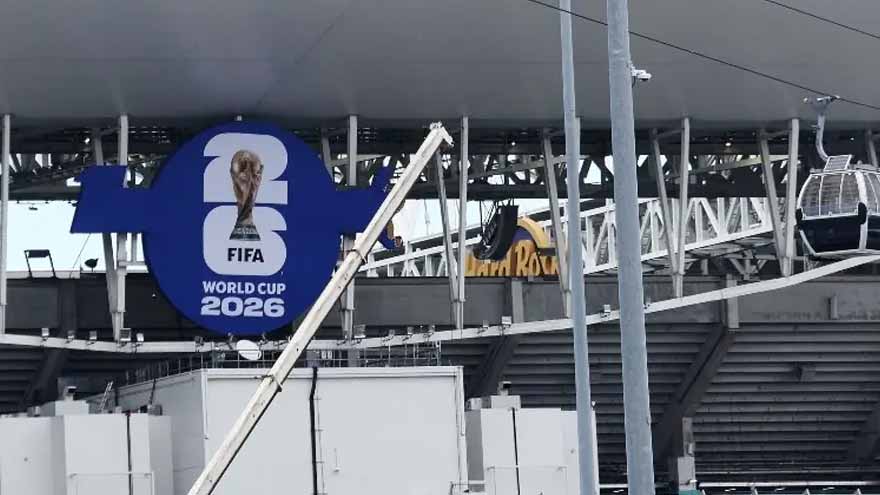
Environmental scientists claim that the biggest and most lucrative World Cup ever this summer will also be the most polluted athletic event in history.
“Unlike the case of the Olympic Games, where the carbon footprints have been reducing over the last several editions, this is totally opposite in the case of FIFA men’s World Cup,” David Gogishvili, a geographer at the University of Lausanne (Unil), told AFP.
The summer’s World Cup is bigger than ever, with 48 teams for the first time. It will also for the first time be played in three countries – Mexico, Canada and the United States.
It will generate revenues on an unprecedented scale, but Unil’s research reveals it will “produce the largest carbon footprint in the history of international sport”.
Gogishvili continued: “Unil has calculated that emissions generated by CO2 will be between five and nine million tonnes, compared to “some 1.75 million tonnes” for the Paris Olympics in 2024.
That figure dwarfs the estimated 2.17m tonnes of CO2 produced by Russia in 2018, in a far-flung World Cup that included 40 fewer matches, and the 3.17m tonnes from Qatar in 2022, in a highly compact event condemned for its quickly built, oversized and air-conditioned stadiums.
All 16 venues for this summer, from the “smallest” in Toronto with 45,000 seats to the largest in Arlington, Texas, which has 94,000 seats, were already in place when the Games were given, a point made clear in 2018 by the “United 2026” bid.
The biggest problem is the great distance between stadiums.
Miami and Vancouver are over 4,500 km apart.
That will raise the main source of CO2 emissions for international events: plane travel for teams, officials, media and especially the “more than five million fans” targeted by FIFA.
At least Bosnia-Herzegovina will travel 5,040 km to play group games in Toronto, Los Angeles and eventually Seattle.
‘FIFA’s environmental denial
FIFA president Gianni Infantino, who declared his “determination” to tackle climate change at COP26 in Glasgow, has vowed to “measure, reduce and offset” emissions linked to its World Cups.
FIFA, however, has shied away from making any promises for 2026, after being admonished in June 2023 by the Swiss Fairness Commission (CSL) for false promotion of the “climate neutrality” of the 2022 World Cup.
A strategy to lessen the impact of mega-competitions is to cut their size, said Gogishvili, who was trained as an environmental analyst. The International Olympic Committee has set a quota of 10,500 athletes for the Summer Games.
FIFA, a year after boosting its World Club Cup from seven to 32 teams, is doing the exact opposite by increasing its flagship tournament from 32 to 48 teams.
The climate cost of each international match, is “26 to 42 times greater than an elite match” at the country level, stated a 2025 analysis published by New Weather Institute think-tank.
“A single match in the final stages of the men’s World Cup is responsible for 44,000 to 72,000 tonnes of CO2,” the report’s authors from the British-based Scientists for Global Responsibility claimed.
That, they concluded, was the equivalent of the emissions of 31,500 to 51,500 British cars over a whole year.
“It’s a never-ending cycle of more athletes, more fans, more hotel infrastructure, more flights, because of FIFA’s insatiable appetite for growth,” Gogishvili added.
The 2030 World Cup will be played across three continents and six countries. It begins with three matches in Argentina, Uruguay and Paraguay before the competition heads to hosts Morocco, Spain and Portugal for the remaining 101 matches.
The 2034 World Cup will be in Saudi Arabia, a Qatar-like environment but 40 more games in a far bigger country. Saudi Aramco, the world’s largest oil business, became a key FIFA sponsor in 2024.
“It looks like FIFA’s environmental denial will go on,” said Gilles Pache, professor at Aix-Marseille University, in the Journal of Management Research in 2024.
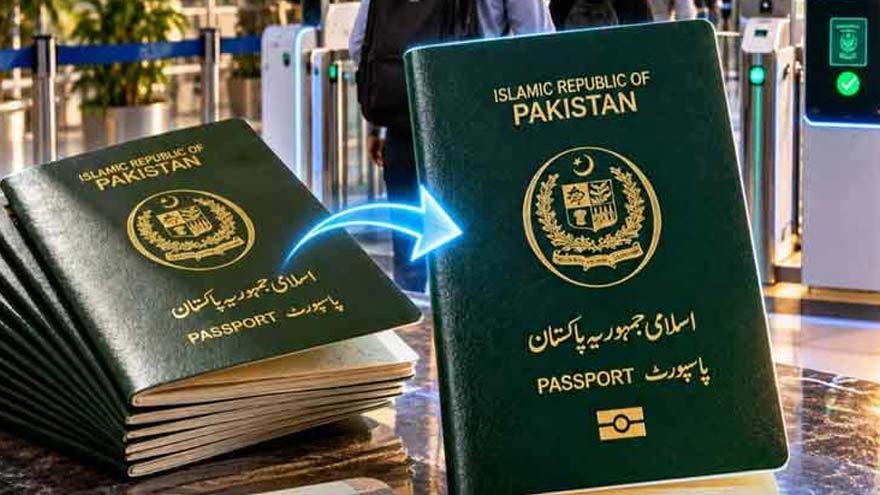
Director General Immigration and Passports said that Pakistan has started issuing electronic passports (e-passports) at Pakistani diplomatic missions across the world, a major milestone achieved under the vision of the prime minister and orders of Interior Minister Mohsin Naqvi.
This launch was accomplished due to the ongoing effort of the team of Directorate General of Immigration and Passports.
The e-passport is equipped with state-of-the-art security measures and constructed according to international standards and is a step forward in modernising the passport services in Pakistan.
The director general said machine-readable passports currently issued would stay valid until their expiry dates, and e-passports would be issued to anyone applying for new passports.
The effort has been termed as a key step in modernising Pakistan’s passport services in line with the vision of “One Nation, One Passport, One Identity”.
Search Topics
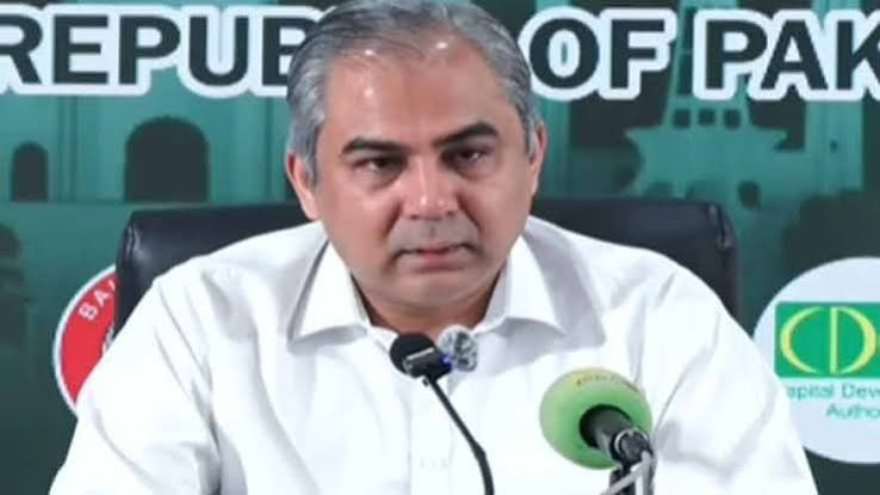
Interior Minister Mohsin Naqvi has warned the residents about the increasing hazards of online fraud, cybercrime and blackmail and advised them not to post personal images and videos with unconnected persons.
New types of online fraud were coming to light, including situations where women and girls were coaxed into revealing their images and videos and later blackmailed, Naqvi said during a press briefing on cyber crime in the province capital.
He warned people, especially women, to be very careful about sharing personal images, as some people use pictures and films to blackmail. He made a special appeal to moms and sisters to keep their private images private.
The interior ministry also warned individuals not to transfer money online without verification, even if someone claimed to be sick and asked for financial help online, to avoid falling victim to online financial scam. He called on people to check the names of those who asked for money and to beware of bogus accounts.
Fraudsters impersonated residents on social media with bogus identities, Naqvi added. He said the cyber police are being mobilised to check cybercrime and measures are being taken to provide assistance to the victims in time.
He said he will start a public awareness campaign to educate individuals about online fraud, phoney identities and extortion. He also committed his complete support to the National Cyber Crime Investigation Agency (NCCIA).
The interior minister stated the NCCIA was getting the largest number of instances of harassment of girls. He said he encountered three girls who tried to commit suicide.
“It is important to prevent online harassment and blackmail, protect victims and provide timely assistance,” Naqvi said when talking about the occurrences.
He appealed to residents to be careful when using the internet and social media and to avoid unnecessarily sharing personal information and images and to report the proper authorities if they came across any suspicious online behaviour.
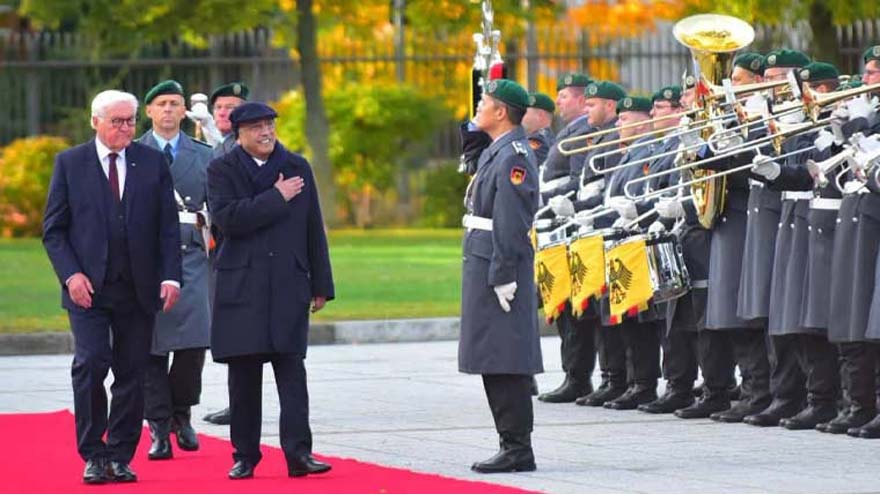
A magnificent celebration was hosted in honour of President Asif Ali Zardari at the Ministry of Defence in Germany. Additionally, a guard of honour was presented to him at this event.
Upon President Zardari’s arrival at the German Ministry of Defence, German President Frank-Walter Steinmeier extended a warm welcome to him. The ceremony included the playing of the national anthems of both countries, as well as the presentation of a guard of honour to the president of Pakistan.
In response to President Steinmeier’s invitation, President Zardari is currently taking a trip to Germany. Due to the fact that this is the first time in almost 23 years that a Pakistani head of state has travelled to Germany, the visit is of great significance.
During this year, Pakistan and Germany are also commemorating the 75th anniversary of the foundation of their diplomatic relations with one another.
During the course of his tour, President Zardari will meet with his German counterpart as well as senior officials from the German government. He will also be accompanied by a high-level team.
The topics that will be discussed include bilateral ties, events in the area and the world as a whole, and strategies to improve economic and trade cooperation between the two countries.
Pakistan and Germany are expected to deepen their collaboration in a variety of fields as a result of President Zardari’s visit, which is likely to add new momentum to the bilateral relations between the two countries.

Pakistan begins issuing e-passports at diplomatic missions worldwide

Interior Minister Naqvi warns against online fraud, cybercrime and blackmail

German defence ministry accords guard of honour to President Zardari

ICC board meeting in India: Mohsin Naqvi gets invitation

‘Self-Reliance in Digital ID’: NADRA launches locally produced QR code-based National Identity Card

23 people have died during the monsoon as rain-related incidents plague Punjab and KP.
-
 Latest News5 months ago
ICC board meeting in India: Mohsin Naqvi gets invitation
-
 Latest News2 months ago
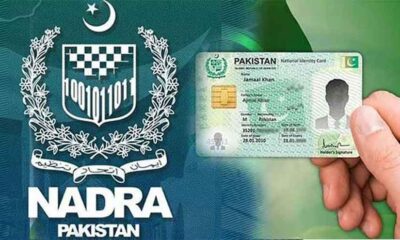
‘Self-Reliance in Digital ID’: NADRA launches locally produced QR code-based National Identity Card
-
 Latest News3 months ago
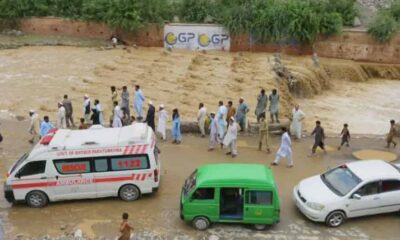
23 people have died during the monsoon as rain-related incidents plague Punjab and KP.
-
 Latest News2 months ago
Turkish FM, Dar discuss regional trends, bilateral connections
-
 Business3 months ago
Govt dedicated to resolving Balochistan issues: Dar
-
 Latest News3 months ago
Pakistan making rapid progress in robotics, AI: Shaza Fatima
-

 Entertainment5 months ago
Interim bail given to YouTuber Rajab Butt in gambling app marketing case
-
 Latest News3 months ago
After a divorce, LHC decides that women who have been harmed by their spouses get their dower.