
Latest News
Global plant species at peril from climate change as habitats shrink

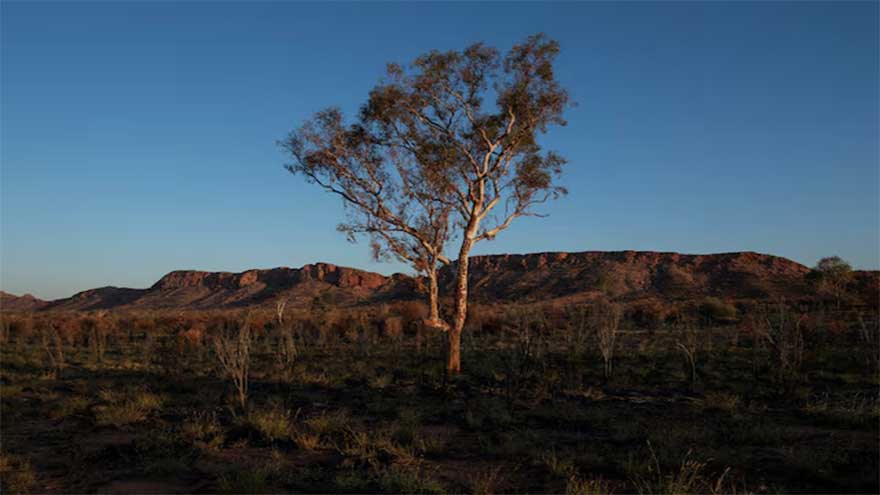
As climate change becomes an ever more major cause of species extinction, changing and frequently diminishing the habitats that the plants require to exist, some of the plants that make familiar landscapes unmistakable may not survive by century’s end, scientists say.
Researchers modelled future ranges for many species of vascular plants, a category that includes practically all the world’s plants – those with water- and nutrient-carrying tissues. They analysed more than 67,000 species, almost 18 percent of the world’s known vascular plants.
They showed that between 7% and 16% might lose more than 90% of their range and face a significant danger of extinction. They include the rare California indigenous tree Catalina ironwood or island ironwood, azure spike-moss from a plant lineage stretching back more than 400 million years and about one-third of Eucalyptus species, one of Australia’s most recognisable plant families.
They arrived at their figures by studying millions of records of where plants are found and scenarios of greenhouse-gas emissions in 2081-2100.
A plant’s habitat is not just a location on a map, but the whole set of variables it needs: temperature, rainfall, soils, land use and landscape elements such as shade.One way to think about this is to imagine plants trying to track a moving “climate envelope.” As the temperatures warm up, many species can move north or uphill to stay cool enough. But temperature is only half of the story,” Junna Wang, a postdoctoral researcher at Yale University, and Xiaoli Dong, a professor of environmental science and policy at the University of California, Davis, said in a joint comment to Reuters.
Wang and Dong contributed to lead the study published in the journal Science .
In many places, the study found, climate change is causing these combinations to diminish, leaving fewer places where all the conditions that a species needs are still found together.
Movement, or dispersal, for plants normally happens over generations, through seeds or spores carried by wind, water, animals or gravity. But when the researchers compared realistic migration to a scenario where plants could reach any new suitable environment, the rates of extinction were fairly similar.If slow mobility were the main concern, then dispersal should be allowed to be infinite, and that should drastically minimise extinction danger. But that is not what we discovered,” Wang and Dong said.
That matters conservation. “If dispersion constraint is the main cause, then measures such as aided migration – physically enabling species to relocate to new places – could eliminate most of the problem. But if climate change is diminishing the quantity of the right habitat on the whole, then simply assisting animals relocate may not be enough,” they added.
The expected impacts differ by region. Extreme cold regions are disappearing and Arctic cold-adapted flora may lose habitat. Drier places like the western United States and Mediterranean-climate areas are likely to see more severe drought, lower soil moisture and more frequent wildfires. Coastline movements towards the pole may be restricted in southern and eastern coastal Australia.
At the same time, local plant diversity could increase across about 28% of Earth’s land surface as species move into newly suitable areas, including parts of the tropics and subtropics where increased rainfall, rather than temperature alone, could make conditions suitable for additional species, the researchers found.
They called it a worldwide reshuffling, with some species vanishing from sections of their historical range while others relocate into new places, but noted local improvements do not suggest plants are doing better overall.
These changes might also result in the creation of “novel communities” – combinations of plants that have not coexisted historically, but would start to meet each other for the first time. What might these exchanges be like? The researchers said they do not know.
Most terrestrial ecosystems are underpinned by plants. They retain carbon, stabilise soils, sustain wildlife and supply food, timber, medicines and other commodities . So changes in plant diversity can cascade through ecosystems and humanity.If vegetation cover decreases because of climate change, ecosystems might absorb less carbon dioxide from the atmosphere, which might make warming worse. That produces a feedback loop, in which climate change hurts plants, and decreasing plant cover/productivity, in turn, worsens climate change,” Wang and Dong added.”Ultimately, conserving plant diversity is not just about saving nature for nature’s sake – it is about conserving the ecological systems that underpin human societies,” they stated.

Director General Immigration and Passports said that Pakistan has started issuing electronic passports (e-passports) at Pakistani diplomatic missions across the world, a major milestone achieved under the vision of the prime minister and orders of Interior Minister Mohsin Naqvi.
This launch was accomplished due to the ongoing effort of the team of Directorate General of Immigration and Passports.
The e-passport is equipped with state-of-the-art security measures and constructed according to international standards and is a step forward in modernising the passport services in Pakistan.
The director general said machine-readable passports currently issued would stay valid until their expiry dates, and e-passports would be issued to anyone applying for new passports.
The effort has been termed as a key step in modernising Pakistan’s passport services in line with the vision of “One Nation, One Passport, One Identity”.
Search Topics
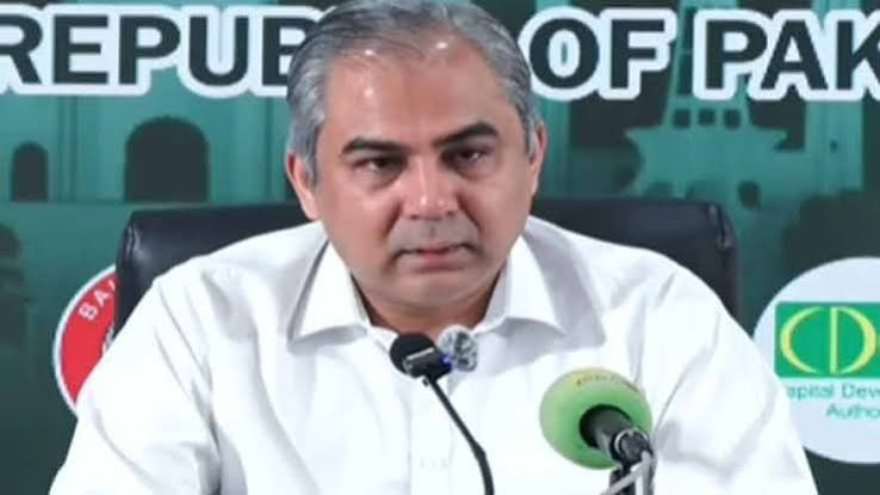
Interior Minister Mohsin Naqvi has warned the residents about the increasing hazards of online fraud, cybercrime and blackmail and advised them not to post personal images and videos with unconnected persons.
New types of online fraud were coming to light, including situations where women and girls were coaxed into revealing their images and videos and later blackmailed, Naqvi said during a press briefing on cyber crime in the province capital.
He warned people, especially women, to be very careful about sharing personal images, as some people use pictures and films to blackmail. He made a special appeal to moms and sisters to keep their private images private.
The interior ministry also warned individuals not to transfer money online without verification, even if someone claimed to be sick and asked for financial help online, to avoid falling victim to online financial scam. He called on people to check the names of those who asked for money and to beware of bogus accounts.
Fraudsters impersonated residents on social media with bogus identities, Naqvi added. He said the cyber police are being mobilised to check cybercrime and measures are being taken to provide assistance to the victims in time.
He said he will start a public awareness campaign to educate individuals about online fraud, phoney identities and extortion. He also committed his complete support to the National Cyber Crime Investigation Agency (NCCIA).
The interior minister stated the NCCIA was getting the largest number of instances of harassment of girls. He said he encountered three girls who tried to commit suicide.
“It is important to prevent online harassment and blackmail, protect victims and provide timely assistance,” Naqvi said when talking about the occurrences.
He appealed to residents to be careful when using the internet and social media and to avoid unnecessarily sharing personal information and images and to report the proper authorities if they came across any suspicious online behaviour.

A magnificent celebration was hosted in honour of President Asif Ali Zardari at the Ministry of Defence in Germany. Additionally, a guard of honour was presented to him at this event.
Upon President Zardari’s arrival at the German Ministry of Defence, German President Frank-Walter Steinmeier extended a warm welcome to him. The ceremony included the playing of the national anthems of both countries, as well as the presentation of a guard of honour to the president of Pakistan.
In response to President Steinmeier’s invitation, President Zardari is currently taking a trip to Germany. Due to the fact that this is the first time in almost 23 years that a Pakistani head of state has travelled to Germany, the visit is of great significance.
During this year, Pakistan and Germany are also commemorating the 75th anniversary of the foundation of their diplomatic relations with one another.
During the course of his tour, President Zardari will meet with his German counterpart as well as senior officials from the German government. He will also be accompanied by a high-level team.
The topics that will be discussed include bilateral ties, events in the area and the world as a whole, and strategies to improve economic and trade cooperation between the two countries.
Pakistan and Germany are expected to deepen their collaboration in a variety of fields as a result of President Zardari’s visit, which is likely to add new momentum to the bilateral relations between the two countries.

Pakistan begins issuing e-passports at diplomatic missions worldwide

Interior Minister Naqvi warns against online fraud, cybercrime and blackmail

German defence ministry accords guard of honour to President Zardari

ICC board meeting in India: Mohsin Naqvi gets invitation

‘Self-Reliance in Digital ID’: NADRA launches locally produced QR code-based National Identity Card

23 people have died during the monsoon as rain-related incidents plague Punjab and KP.
-
 Latest News5 months ago
ICC board meeting in India: Mohsin Naqvi gets invitation
-
 Latest News2 months ago
‘Self-Reliance in Digital ID’: NADRA launches locally produced QR code-based National Identity Card
-
 Latest News3 months ago
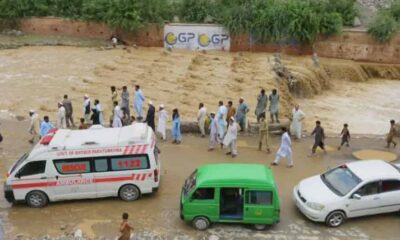
23 people have died during the monsoon as rain-related incidents plague Punjab and KP.
-

 Latest News2 months ago
Turkish FM, Dar discuss regional trends, bilateral connections
-

 Business3 months ago
Govt dedicated to resolving Balochistan issues: Dar
-

 Latest News3 months ago
Pakistan making rapid progress in robotics, AI: Shaza Fatima
-

 Entertainment5 months ago
Interim bail given to YouTuber Rajab Butt in gambling app marketing case
-

 Latest News3 months ago
After a divorce, LHC decides that women who have been harmed by their spouses get their dower.