
Business
Pakistan needs to win economically after Marka-e-Haq: minister

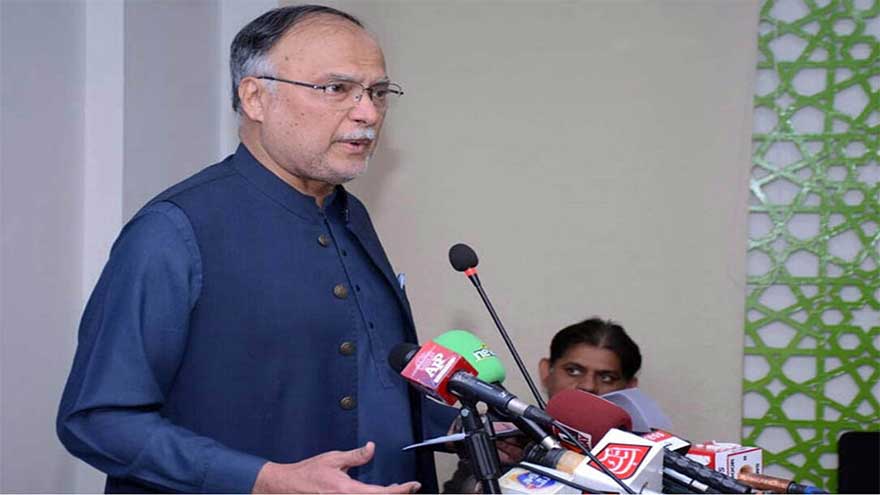
Planning, Development, and Special Initiatives Minister at the Federal Level Following the achievement of the “Marka-e-Haq,” Ahsan Iqbal stated on Saturday that Pakistan must now achieve a “Marka-e-Maeeshat” (economic victory), since a robust defense cannot exist without a robust economy.
During his visit to the Lahore Chamber of Commerce and Industry (LCCI), he engaged with the business community and stated that Pakistan may become one of the world’s top economies if it concentrates on exports, industrial growth, and economic reforms over the next ten years.
Because history has demonstrated that weak economies cannot support powerful defense systems, Ahsan Iqbal stated that the nation as a whole now has an obligation to rebuild the economy in light of the “Battle of Truth.”
According to him, the government is collaborating with the business sector to advance exports, industrial development, and tax net expansion.
The goal of reaching 100 billion dollars in exports by 2035, he continued, is just as crucial for Pakistan as obtaining nuclear capability previously was.
He claimed that by taking a reasonable and balanced approach, Pakistan fostered peace, stability, and communication, further enhancing the nation’s favorable reputation abroad.
According to Ahsan Iqbal, Pakistan’s recent military and diplomatic successes have enhanced the nation’s reputation abroad; now, the same attitude needs to be demonstrated in the economic sphere.
He stated that the government is eliminating needless rules, red tape, and business obstacles to promote exports because they are the only viable route for Pakistan’s economic growth.
In attendance were LCCI President Faheem Ur Rehman Saigol, Senior Vice President Tanveer Ahmed Sheikh, past President Muhammad Ali Mian, former Vice President Shahid Nazir Chaudhry, Pakistan’s Ambassador to China Khalil Hashmi, and members of the Executive Committee.

– Petrol and diesel prices have been increased once again under the latest fuel-price revision.
The revised prices will take effect from October 3, 2026.

According to a notification issued by the Petroleum Division, the price of petrol has been increased by Rs2.10 per litre. Following the latest increase, petrol will now cost Rs392.76 per litre.
The price of high-speed diesel has also been raised by 30 paisa per litre, taking its new rate to Rs399.64 per litre.
The Petroleum Division said the announced rates are linked to movements in international petrol and diesel prices.
According to the notification, changes in the global market, Platts rates, premiums and other associated costs were taken into account when determining the revised prices.
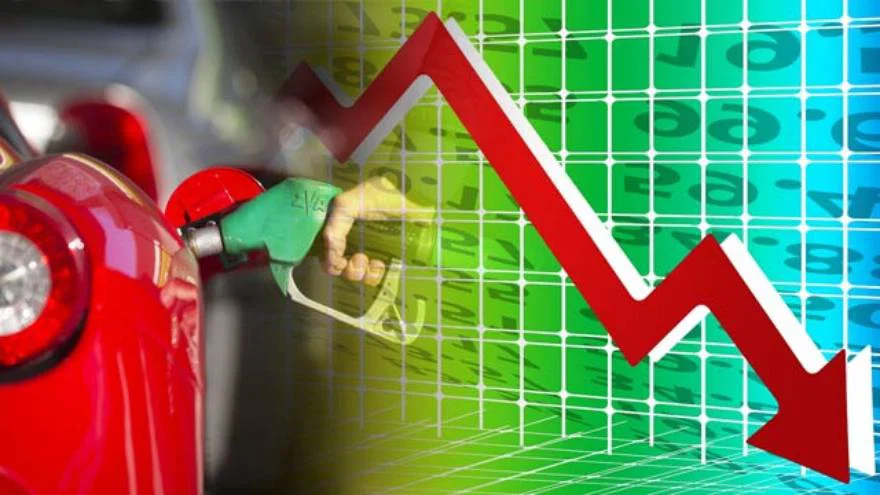
The recent revision in fuel-price has again lowered petrol and diesel costs.
Petrol has been cheaper by Rs1.49 per liter and diesel by a higher Rs2.73.
The new rates will come into effect from 30 September 2026.
Under the latest revision, the price of petrol will be Rs387.54 per liter and diesel would be Rs402.24 per liter for motorists starting September 30.
The latest change is another straight fall in the price of petrol.
Petrol has come down by Rs3.76 per liter and diesel by Rs6.29 per liter in the last two revisions.
The dollar was near this year’s high against the euro and heading for its biggest monthly gain against it in 14 months on Wednesday, thanks to US growth and rising US interest rates relative to oil and debt worries swirling in Europe.
The euro dropped to an 11-month low of $1.1312 on Tuesday and was last quoted at $1.1339 in Asia on Wednesday. The euro is also challenging support at about 178 yen.
The dollar is up almost 2.5% against the euro in September and is on track for a third consecutive quarterly gain.
The Aussie dollar fell below 70 cents for the first time since early August as the stronger greenback dragged it down to a nine-week low of $0.6959 after inflation data came in a tad below predictions.”The US economy is running hot, Europe is losing the global AI race and energy supplies and French politics remain big concerns for the euro,” said Brent Donnelly, president of foreign exchange trading at analytics firm Spectra Markets.
European benchmark gas prices jumped earlier this month to their highest since 2022.
French markets are being squeezed by debt and political paralysis ahead of next year’s presidential election with the margin with German rates blowing out above 115 basis points to its largest since 2012.
Options prices have just shifted dramatically to suggest investors prefer buying protection from potential euro declines – though Donnelly argues the dollar probably needs strong US data to make advances from here.
The dollar also struck a 16-1/2-month high against the Swiss franc of 0.8358 francs on Tuesday. The franc has been hit in part because investors have been searching for low-yielding alternatives to yen to sell so they can get carry elsewhere.
The yen has fallen out of favor as a short against the dollar, with US-Japan currency buying in July and August, then warnings not to test their resolve and a rise in the pace of Japanese rate hikes.
The dollar has lost 2% against the yen so far this month and almost 3.8% for the quarter to date, hitting a nearly two-week low of 156.38 in Asia trade.
The Fed’s favored inflation gage, US core PCE, is coming later on Wednesday but the market is looking forward Friday’s US jobs data which if strong might bolster predictions that US interest rates are headed higher.
Some of those hopes got knocked overnight when prominent New York Fed President John Williams indicated there is “no need for urgency” in raising rates. The yield on the two-year Treasury declined by 3.5 basis points and the odds in Fed funds futures of a rate hike next month fell to 50% from 71%.
The New Zealand dollar on Tuesday hit its lowest since last November and was last at $0.5645.
Sterling dropped to a three-month low on Tuesday and last traded near that level at $1.3230. The yuan was headed for a seventh quarterly increase in a row against the dollar in its last session before China’s Oct. 1-7 holidays.

PTI launches fundraising drive for Oct 4 long march

Sri Lanka overcame Bangladesh to claim Asian Games bronze in cricket

Cornell students protest university’s handling of sex assault claims

ICC board meeting in India: Mohsin Naqvi gets invitation

23 people have died during the monsoon as rain-related incidents plague Punjab and KP.

‘Self-Reliance in Digital ID’: NADRA launches locally produced QR code-based National Identity Card
-
 Latest News5 months ago
ICC board meeting in India: Mohsin Naqvi gets invitation
-
 Latest News2 months ago
23 people have died during the monsoon as rain-related incidents plague Punjab and KP.
-
 Latest News2 months ago
‘Self-Reliance in Digital ID’: NADRA launches locally produced QR code-based National Identity Card
-
 Business3 months ago
Govt dedicated to resolving Balochistan issues: Dar
-

 Latest News2 months ago
Pakistan making rapid progress in robotics, AI: Shaza Fatima
-

 Latest News1 month ago
Turkish FM, Dar discuss regional trends, bilateral connections
-

 Entertainment5 months ago
Interim bail given to YouTuber Rajab Butt in gambling app marketing case
-
 Latest News2 months ago
After a divorce, LHC decides that women who have been harmed by their spouses get their dower.